
Somatic Pilates for People Who Can't Switch Off - An Interview with Vanessa Michielon
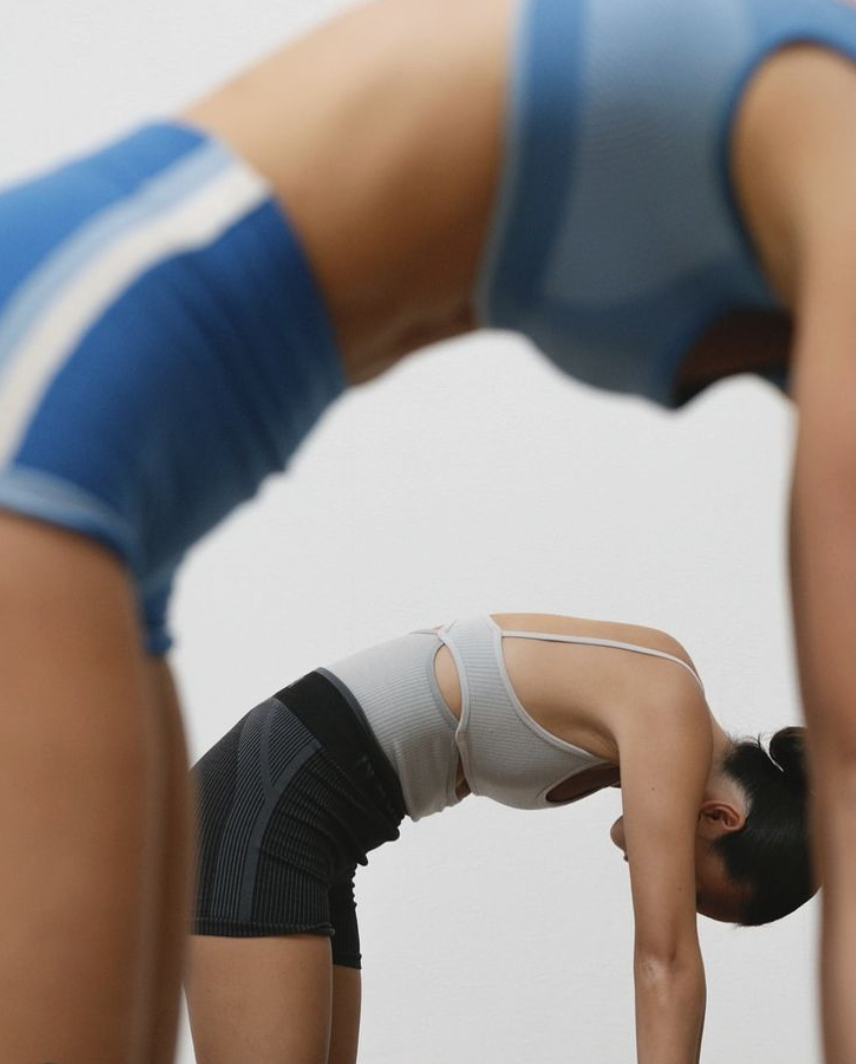
Pilates has always said it was about the mind as much as the body. Somewhere between the reformer waitlists and the core-burn playlists, though, that part got lost. Classes became something to get through: counted reps, shaking legs, a workout you could track.
Somatic Pilates goes the other way, back to where pilates was routed where the pace drops, the cues turn inward, and you're asked to notice what's happening in your body instead of just pushing past it. To some people it sounds like the most useful change in movement for years. To others it sounds like normal Pilates with the lights turned down. I sat down with Vanessa Michielon, Movement Specialist, Nervous System Educator and Sleep, Stress and Recovery coach really understand why so many of us find it hard to connect with our bodies, and where the claims made for this kind of movement run ahead of evidence.
How would you explain somatic Pilates to someone who has only ever done a reformer or mat class? What actually changes in the room?
I would say that Somatic Pilates combines the principles of Pilates with Somatic Movement, developing a much deeper awareness of how movement is experienced from within the body. It is less about treating our body as something we look at from the outside, trying to correct, shape or control, and more about experiencing it as an integrated whole. One of the main goals is to cultivate embodiment: being more present to ourselves and developing a richer sense of what is happening as we move.
If you are familiar with mat or reformer, you might recognise many exercises, like a bridge, a spinal roll or a specific abdominal exercise, but what changes is the way you approach them.
In a more conventional Pilates class, there is often a clear movement goal: this is the exercise, this is the alignment, this is how you perform it. Precision, control and flow are important principles. With a somatic approach, I might give you the same movement and ask: What happens if you do it this way? What changes if you initiate the movement from a different body part or with a different intention/image in your mind? Does one version feel more effortless than another?
The answer comes from the person moving, rather than from me deciding what the "correct" sensation should be. So I think what actually changes in the room is the relationship between the teacher, the movement and the person practicing. I am not simply asking you to copy me, I am actually guiding you into your own sensory experience offering movement opportunities and invitations.
“I think that can be incredibly empowering, especially for people who, for whatever reason, have become disconnected from their own sense of agency or have spent years being told what their body should look like, how it should move or what they should be able to do.”
Is it fair to call it "Pilates with a better playlist"? Where does the difference between somatic and traditional Pilates lie, and where do the two overlap?
I don't know about the better playlist, as quite often we are actually moving in silence. But there is for sure a real overlap between the two.
Somatic Pilates isn't a completely different catalogue of exercises because many traditional Pilates exercises can be taught through a somatic lens. The difference is in the relationship to the movement.
Traditional Pilates often places a strong emphasis on precision, control and alignment. Somatic movement places more emphasis on perception and exploration. Instead of asking only "am I doing this exercise correctly?”, we might ask "how does this version feel? What happens if I change the amount of effort? Can I find another way?" That doesn't mean that technique becomes irrelevant, because the work is actually very meticulous (a common misconception is that when you bring in a somatic approach you simply do whatever you want without structure). It just means that technique becomes something you can explore rather than something imposed from the outside without question.
Another key element of Somatic Pilates, which you don't typically find to the same extent in a traditional Pilates class, is the time we deliberately spend in stillness between sequences. After exploring a movement pattern, we might pause and simply notice what has changed: how the body feels against the floor, whether one side feels different from the other, how the breath has changed, etc.. This gives our nervous system and our sensory-motor system time to register and integrate the experience before we move on to the next section.
We also often finish with a longer guided relaxation, sometimes incorporating a body scan, which gives us another opportunity to notice subtle sensations and changes, and help us leave the practice with a clearer sense of ourselves.
What do you mean by "connection to your body"? How would you define it in physiological terms, not only in wellness language?
For me, "connection to the body" has a lot to do with developing a more refined and flexible representation of our body in our brain.
Our brains are constantly integrating information from muscles and joints, touch and pressure, the vestibular system and our internal physiological state to create a working sense of where we are, how we are moving and what is going on in our inner environment. This is also where I find the concept of sensory-motor amnesia, from Thomas Hanna's (the father of Somatics) work, interesting. It describes how habitual patterns of tension caused by stress, injury, repetitive movement or social conditioning, can become so familiar that we stop consciously perceiving them. A specific area of the body can be gripping all the time without us really noticing that we are holding it.
Through somatic movement, we can bring attention to these areas again and explore the difference between contracting, releasing and using just the amount of effort that is actually needed. So perhaps instead of thinking about “connecting” to our body, I like to think about turning up the volume and improving the resolution of the information we are already receiving from it and therefore becoming better skilled at sensing, interpreting and responding to this information on and off the mat.
Interoception, the sense of what is happening inside the body, is increasingly discussed in pain and movement research. How does it show up in your teaching, and what do you see in clients who have lost it?
In my teaching I use a lot of enquiry-based movement. Instead of simply giving someone a task to execute, I might invite them to notice what comes into their awareness as they move. For instance, we might perform the same movement several different ways, change the speed or the amount of effort, and then compare the experience.
The important thing is not to simply say: "listen to your body", because for so many people that doesn't actually mean anything. You have to give them somewhere to direct their attention. For example, when we are lying on our backs, I might explicitly direct someone's attention towards the relationship between their feet and the floor, their pelvis and their skull, the location and pattern of their breath, or the pressure of different parts of their spine against the mat.
When someone has a less developed sense of interoception, sometimes even quite simple questions can be difficult to answer: where do you feel the effort? Where do you feel tension? Is there a difference between right and left sides?
Often, these are people, who simply haven't been encouraged to pay attention in this way or maybe have disconnected from their sensations and emotions as a coping mechanism. They may know that something hurts, but have very little vocabulary for describing their sensations, or they may only notice tension once it has become quite intense, perhaps after they got injured. So part of my job is to make these sensations more accessible and give people the time and language to explore them. Slowly they can start to distinguish between degrees of effort and tension.
Why do so many people struggle to feel their own bodies? What do you think modern life, screens and performance-driven fitness have done to that sense?
I think we have become very good at monitoring and optimising, but not necessarily at listening to ourselves.
We can now easily track our sleep, steps, heart rate, HRV, calories, workouts and even use AI to interpret all these different parameters for us. And while some of that information can be useful, I think we may have taken health optimisation a little too far, as many of us might have stopped listening to their own bodies and started outsourcing that job completely to their devices.
I know how easy it is, because I did it too. A few years ago I started wearing a smart ring and became really obsessed with my HRV. Every morning, if the numbers were low, I would panic thinking something really scary was about to happen. Eventually, I stopped wearing it because my mental health was suffering and I realised I didn't actually need a ring to tell me whether I felt rested, depleted, stressed or energised. My body was already giving me that information, and I had always been quite good at listening to it.
Read - What Does Your Resilience Score Say About Your Summer?
I think performance-driven fitness can do something similar. We can become so focused on how many repetitions we did, how much we lifted, how fast we went or whether our form was "correct", that we forget to notice how the movement actually feels (which sometimes can lead to injury or burnout).
I absolutely believe there is a place for being analytical and goal-oriented. But we also need to train another set of skills alongside that - listening to and sensing ourselves, and this is why for me somatic approaches to movement can be so precious.
What does a client's first session usually feel like? Is it common for people to find it uncomfortable to slow down and notice?
Absolutely, I recognise that from my own experience.
It actually took me years to become comfortable with doing less. I remember one of my teachers once telling me, in a very motherly way, "You are so performative." It hurt a little at the time, but she was right.
“As a professional dancer and a perfectionist, I had spent years learning how to make movement look good, achieve difficult goals and push through challenges. So slowing down and simply noticing could feel surprisingly uncomfortable. There was always a part of me thinking, “but what am I supposed to be achieving here?” ”
I see something similar in many new students. They can be incredibly capable and strong movers, and still find it difficult to stop performing and pushing, and start softening and perceiving.
A first session can therefore feel quite unfamiliar. Some people could find it deeply relaxing; others initially feel restless, bored or even slightly frustrated. But I think that is part of the learning.Letting go is a discipline in itself, as it takes patience, practice and commitment to slow down enough to actually listen.
Some people find it harder to relax into this kind of movement, particularly high achievers and people who are used to being scored. What have you seen, and how do you work with it?
I see it particularly in people who have spent years developing a strong performance identity, or who are used to being assessed, measured or rewarded for doing things well. I have had the honour of working with very high-level professionals who are incredibly committed and skilled at controlling their bodies, but initially find the invitation to not control everything and to do less quite disorientating, sometimes even frustrating. I definitely don't try to force them to relax. Instead, I meet them where they are and gradually introduce a different way of moving. In a 1-2-1 setting, it can help to explain why we are doing this and connect it to things they already value, like feeling less tension, moving with more ease, especially in their back, or improving recovery and reducing stress for optimal mental capacity.
Read - Do High Achievers Train Themselves To Stay Stressed?
I also tend to alternate more familiar movement, like a classical Pilates abdominal sequence, and less familiar somatic exploration. Sometimes I might start with something more dynamic or physically demanding, which gives them an opportunity to use some energy, and then gradually move towards slower, more introspective work. Once they feel that they have "done" something, it can be easier for the mind to tolerate stillness and curiosity.
Is there a risk of overstating what somatic movement can do? What claims in this space make you uneasy?
Definitely. I am particularly uncomfortable with claims that somatic movement can somehow "heal trauma" on its own, or that a particular movement will "release stored trauma" in a simple, literal way.
I also find the idea that somatic movement will reduce belly fat particularly problematic (this has been huge on Social media for a while). There are relationships between chronic stress, sleep, hormones, metabolism and body composition, but claiming that you can lose your belly fat by regulating your nervous system with movement is a huge oversimplification, especially for women going through perimenopause and menopause, when hormonal changes can significantly influence their body composition.
Who is it particularly well suited to, and who might be better served by something more conventional or more structured?
Somatic movement in general can be particularly interesting for people who feel disconnected from their bodies, who are tired of always pushing harder (especially new
mums like me), or who want to develop more awareness and choice in the way they move for health span purposes.
But this isn't automatically the right choice for everyone.
If someone has very limited time and their immediate goals require a significant focus on cardiovascular fitness or progressive strength training, a somatic session may not be the most efficient use of that time. In this case I see somatic Pilates more as something that
can complement strength and cardiovascular work rather than necessarily replace it. There are also people for whom stillness or inward attention can initially feel uncomfortable or even threatening, especially in a phase of post-traumatic growth. This is something we need to take seriously, because restorative practices are not universally calming or safe for everyone.
In that situation, I might suggest beginning with a more conventional, appropriately paced movement practice, ideally with a trauma-informed teacher who can help the person find the right level of intensity, and gradually exploring more inward-facing work if and when it feels appropriate.
In general, as much as this work has changed my life (and positively impacted my students’ life), I don't think somatic movement has to be for everyone, all the time. You have to be willing to experiment and temporarily let go of the idea that there is a right answer. And this is completely fine, I would much rather someone find a form of movement that feels appropriate and useful to them than force themselves into a particular methodology because it is fashionable.
What is one thing someone could try at home today, with no equipment, to start reconnecting with their body?
I would try something very simple, such as a Pelvic clock.
You can practice this by laying on your back with your knees bent and your feet on the floor. Imagine your pelvis as the face of a clock. Very slowly explore moving towards 12 o'clock, 6 o'clock, 3 o'clock and 9 o'clock, and then continue circling in a smooth way, noticing what changes for you (the pressure of the lower back against the floor, the feeling of heaviness or lightness in your hips, the shape of your spine, the sensation of stretch in your abdomen).
This can be really useful to release tension in the lower back and around the hips, and to bring awareness to the lumbar spine, which for many of us can be a particularly tender and stiff area.
If someone tried a somatic Pilates class for a month, what would you hope they noticed, and what would tell you it was working?
I would hope they started noticing more choice in the way they hold themselves or move. Perhaps they are aware of all the times they are using far more effort than a movement actually requires. Perhaps they can recognise when they are holding their breath or clenching their jaw, and they have tools to release that tension. Perhaps they notice that one side of the body feels different from the other, or that a movement they previously found uncomfortable has become more accessible. And perhaps they start taking that awareness outside the studio.
Recently, someone spent just 30 minutes moving with me at an event and afterwards she told me she hadn't felt so grounded like that in a long time.
For me, that is meaningful, because it tells me that the experience of moving had changed her relationship with her body, even if just for a short amount of time. With regular practice, I hope people can become more and more familiar with this feeling of being safe enough in their body to let go of the need to perform and look perfect all the time.
Finally, what do you wish people understood about this kind of movement before they walk into a studio?
That if you try a somatic Pilates class and think, I don't know what I am supposed to be doing or feeling, that can actually be part of the experience.
Words by Eleanor Hoath for The Well Edit, with Vanessa Michielon.
The content published by The Well Edit is for informational and educational purposes only. It is not intended as, and should not be relied upon as, a substitute for professional medical, health, nutritional, legal, or financial advice. While articles may reference insights from qualified practitioners or experts, the views expressed are their own and do not necessarily reflect the views of The Well Edit. Always seek the guidance of a qualified professional before making changes to your diet, lifestyle, supplementation, or healthcare routine.
Use of any information provided is at your own discretion and risk.