Why Is Silver Turning Up In Skincare?
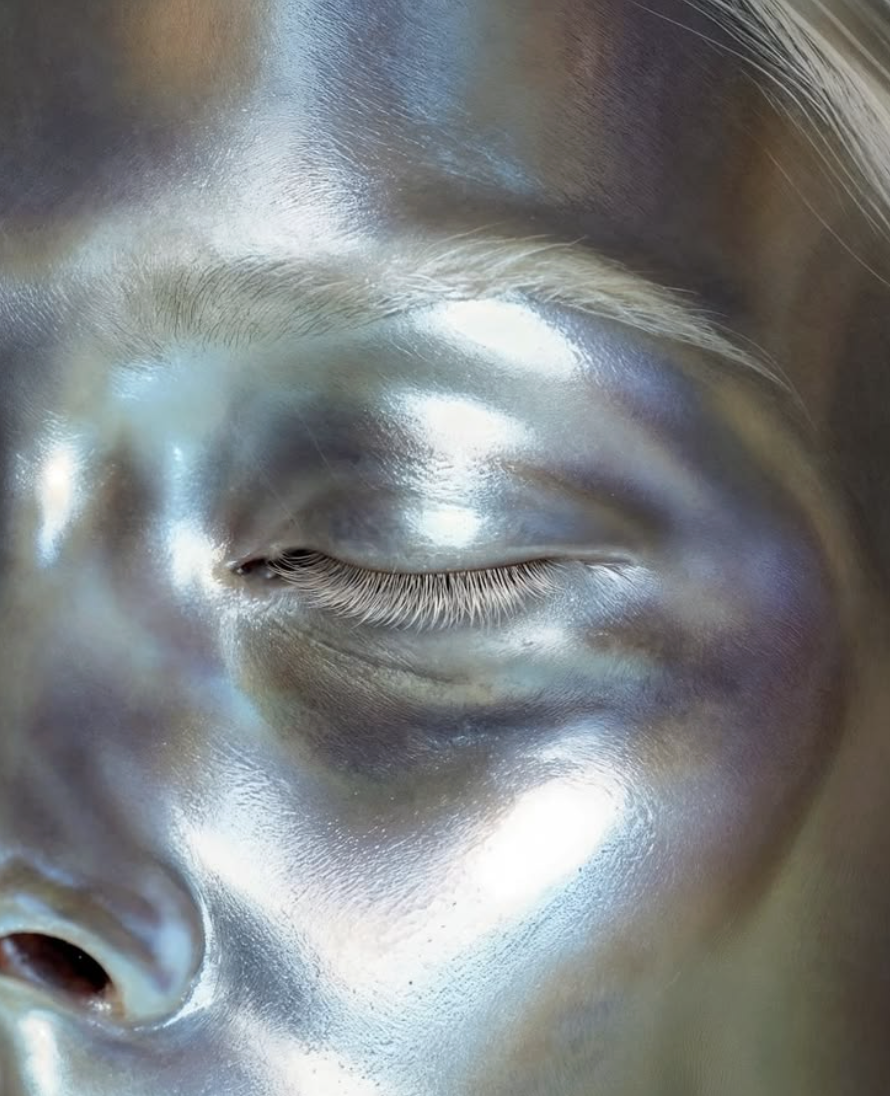
Silver probably isn't the first thing that comes to mind when you think about skincare ingredients. Jewellery, yes. Cutlery, perhaps. Your blemish serum? Probably not.
Yet silver has been used on skin for far longer than most of the ingredients currently filling our bathroom cabinets. Its antimicrobial properties have earned it a longstanding place in medicine, particularly in dressings and topical treatments used for burns and wounds.
Now, it's finding a new audience in skincare, particularly in products aimed at blemish-prone skin. 47 Skin is one of the brands putting it front and centre. In fact, the 47 in its name comes from silver's atomic number. Its formulas are powered by a proprietary ingredient called Silver Chitoderm®, which combines Silver with Chitoderm™ and is designed to target blemish-associated bacteria while maintaining hydration.
So why is an ingredient with such an old medical history suddenly feeling so current in skincare?
Why are we putting silver on our skin?
"Silver is one of those ingredients that sounds very modern when it appears in skincare, but medically we have been using it for a very long time," says skin expert and aesthetic doctor Dr Hansel Misquitta, whose background includes burns, plastic and reconstructive surgery.
Silver's appeal largely comes down to its antimicrobial activity. When biologically active silver ions are released, they can interfere with bacterial cell membranes, proteins and other processes bacteria need to function.
Dr Misquitta was familiar with the ingredient long before it appeared in skincare. She has used silver-containing dressings and ointments extensively in burns and wound care, where managing bacteria can help create better conditions for skin to heal.
There is, however, much more to a silver formula than silver alone. "Saying a product 'contains silver' is a bit like saying a product contains vitamin C," she explains. "My next question would be: what form, how much, how stable is it and can the skin actually make useful use of it?"
Different forms and delivery systems can behave differently on the skin, which puts the formulation itself firmly in the spotlight.
What does silver have to do with spots?
Bacteria have long been associated with acne, particularly Cutibacterium acnes, or C. acnes. Yet this isn't an unwelcome visitor that only appears when you break out. "C. acnes has had slightly unfair PR," says Dr Misquitta. "It lives on normal, healthy skin too."
She describes acne as a traffic jam. Sebum, skin cells that aren't shedding normally, congestion within the follicle, inflammation, different strains of C. acnes and the wider skin microbiome can all meet in the same place.
It changes the way we think about antibacterial skincare. Healthy skin has its own population of microorganisms and we're increasingly aware of keeping that ecosystem happy, even while dealing with breakouts.
"The sensible aim is not sterile skin," says Dr Misquitta. "It is healthier skin with less pathological inflammation and disruption." For blemish-prone skincare, that leaves room for formulas that address bacteria while still treating the skin itself with some care.
Meet Silver Chitoderm®
For 47 Skin founder Nic Taylor, the discovery started with his own skin. After struggling with spots and blemishes for years and trying countless products, his grandmother sent him a pot of cream containing silver. He was sceptical enough to leave it unused at first, before eventually taking it on a business trip to Spain and giving it a try.
"I didn't choose Silver. Silver chose me," he says. Impressed by what happened to his own skin, Taylor began researching the formula, eventually tracking down the scientist behind it and founding 47 Skin.
The brand now centres its formulas around Silver Chitoderm®, a combination of Silver and Chitoderm™ designed to keep the ingredient working on the skin's surface.
Chitoderm™ has mucoadhesive properties and forms a lattice-like layer across the skin. Taylor explains that this helps keep the formula in contact with the skin, while Silver provides its antimicrobial action. Chitoderm™ is also used to aid the skin's natural renewal process.
Crucially for anyone who has ever left a spot treatment on overnight only to wake up with a flaky ring around it, the formula isn't designed to work by drying or exfoliating the skin.
47 Skin has been putting this combination through its own testing too. In a 12-week study of 30 people, the brand recorded reductions in blemishes, post-blemish marks and redness alongside increased hydration. Almost all participants also reported that their skin remained comfortable throughout the study. For a category that has traditionally equated effective with drying, that last point is worth noting.
Do we need to stop drying out our spots?
If you've ever responded to a breakout by throwing every active in your bathroom at it, you'll know how quickly a skincare routine can escalate.
"People see oil and assume the answer must be to dry the skin out," says Dr Misquitta. "Then comes the foaming cleanser, acid toner, salicylic acid, benzoyl peroxide and retinoid, occasionally all introduced in the same week. Two weeks later their acne is still there and their face is furious."
Ingredients such as Salicylic Acid, Benzoyl Peroxide and retinoids all have good reasons for being staples of blemish routines, but dryness, peeling and irritation can come with the territory, particularly when too much is introduced at once.
As Dr Misquitta points out, the best routine on paper isn't much use if your skin becomes so uncomfortable that you abandon it ten days later.
Silver Chitoderm® takes another route. It doesn't rely on exfoliating the pore or accelerating cell turnover. Instead, 47 Skin has designed it to provide antimicrobial action while keeping hydration intact.
It's a welcome idea for anyone who has spent years believing that a spot treatment needs to sting, tingle or leave skin feeling tight to be doing something. Skin can be blemish-prone and still need moisture. In fact, keeping the barrier comfortable may make it far easier to stick with a routine consistently.
What does the science say about silver for blemishes?
Silver's antimicrobial credentials are well established, and research into its potential for blemish-prone skin is growing. "Silver unquestionably has antimicrobial activity," says Dr Misquitta. "There is also early clinical research looking specifically at acne."
For her, its appeal lies in how a well-formulated silver product could sit within a routine rather than requiring another potentially irritating exfoliating step. "I can see the rationale for it in blemish-prone skincare, particularly if the formulation is gentle and well designed," she says.
47 Skin's own results add to that picture. Its 12-week study found an average 46.7% reduction in blemishes by week 12, while 76% of participants saw an improvement. Post-blemish marks reduced by an average of 41.8% and hydration increased by 73.2%.
Taylor says the brand is continuing to build on that research with plans for longer-term studies, including further investigation into Silver Chitoderm® and the skin microbiome.
Can silver help with the marks spots leave behind?
The spot may last a week but its reminder can hang around for considerably longer. What we tend to collectively call "acne scars" can actually describe a few different things. A flat brown mark after a spot is usually post-inflammatory hyperpigmentation, while a pink or red mark is more likely to be post-inflammatory erythema. True acne scars involve a structural change to the skin, such as rolling, boxcar or ice-pick depressions. That changes what you can expect from a topical product.
47 Skin's study found a reduction in post-blemish marks, while Silver's potential to help manage inflammation and new breakouts may also be relevant to what gets left behind.
True indented acne scars are different. "Once you have structural tissue loss, we are having a very different conversation," says Dr Misquitta.
For everyday post-spot marks, preventing repeated inflammatory breakouts, resisting the urge to pick and wearing daily SPF can all help alongside targeted skincare.
Where does silver fit into a skincare routine?
Silver doesn't necessarily require clearing out the rest of your skincare stash. Salicylic Acid can be useful for congestion, retinoids help regulate cell turnover and comedone formation, and Benzoyl Peroxide has long been used for its antimicrobial effects. Silver brings another mechanism into the mix.
"Silver is the newcomer at this particular table," says Dr Misquitta. "I would currently use it as an adjunct rather than automatically replacing those established ingredients."
That flexibility is part of the appeal. 47 Skin says Silver Chitoderm® can be used alone or alongside ingredients including Salicylic Acid, retinoids and Benzoyl Peroxide, making it relatively easy to work into an existing routine. As with any new active, introducing it gradually and patch testing first is always wise.
Silver may be having its skincare moment, but this isn't a story about an ingredient appearing from nowhere. Its antimicrobial properties have been useful to medicine for generations. What feels new is how brands such as 47 Skin are formulating it for the skin concerns we deal with every day.
For anyone whose approach to a breakout has historically been to dry, scrub or exfoliate it into submission, Silver Chitoderm® offers a refreshingly different proposition. Target the bacteria, keep the hydration and give the skin space to do what it already knows how to do.
Words by Samantha Nice for The Well Edit.
The content published by The Well Edit is for informational and educational purposes only. It is not intended as, and should not be relied upon as, a substitute for professional medical, health, nutritional, legal, or financial advice. While articles may reference insights from qualified practitioners or experts, the views expressed are their own and do not necessarily reflect the views of The Well Edit. Always seek the guidance of a qualified professional before making changes to your diet, lifestyle, supplementation, or healthcare routine.
Use of any information provided is at your own discretion and risk.