Wired Headphone Sales Are Surging - Here’s Why Health-Conscious Consumers Are Switching Back
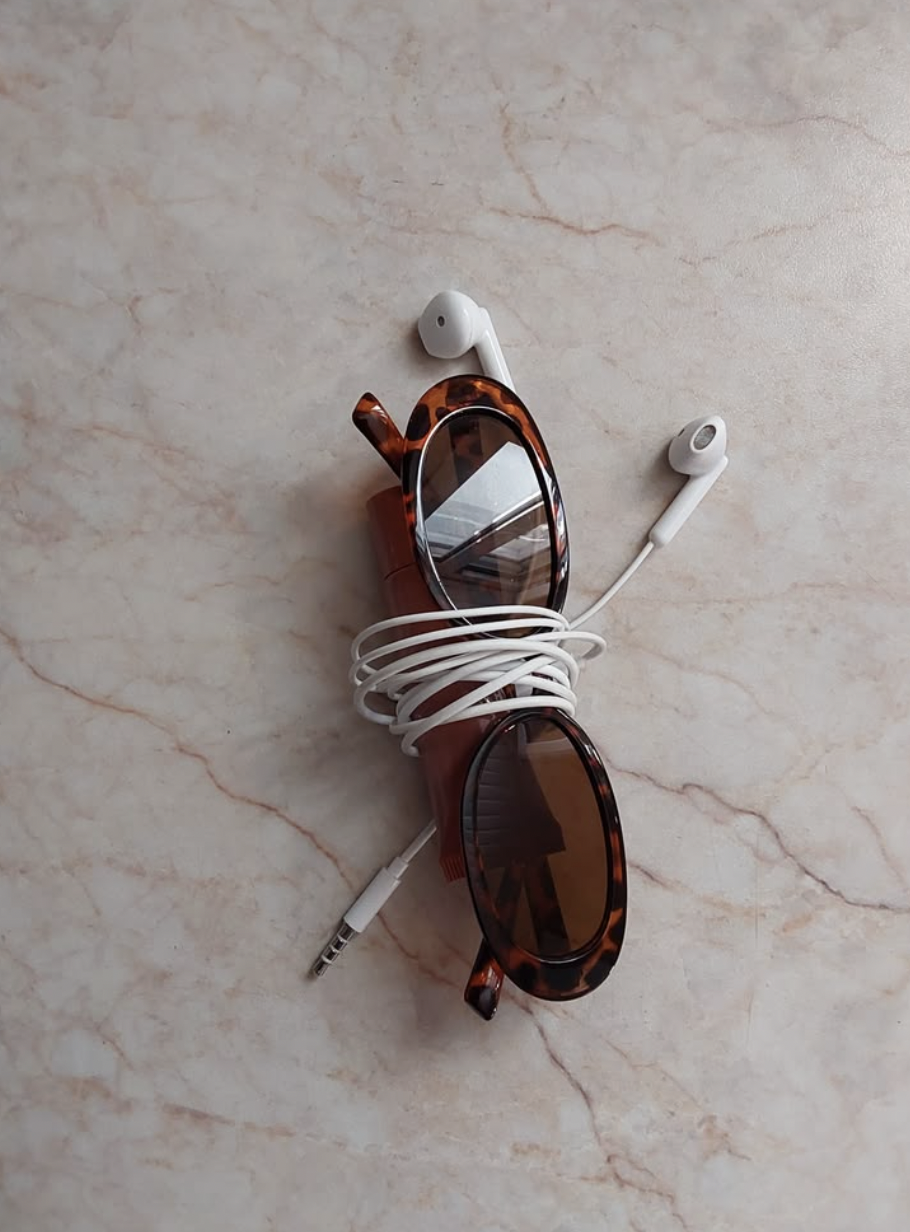
In an age where convenience reigns supreme, it’s ironic that one of tech's most “outdated” accessories is suddenly back at the centre of culture. Wired headphones - yes, the ones you once stuffed into your school backpack, or wrapped around your iPod and tangled aggressively into your coat pocket throughout the 2000s- are having an unexpected revival. From fashion week street style to celebrity airport looks, the unmistakable white cord has become a symbol of the Y2K aesthetic resurgence that continues to shape everything from denim cuts to digital cameras.
But this comeback isn’t driven by nostalgia alone. As conversations around digital wellbeing, screen fatigue and electromagnetic field (EMF) exposure become more mainstream, many consumers are second-guessing the devices they keep closest to their bodies- particularly the Bluetooth earbuds they wear for hours each day. Wired headphones, by contrast, are being embraced as the antidote to always-on tech culture; a nostalgic, lower-tech option that feels both effortlessly cool and quietly reassuring.
The shift reflects a broader cultural mood: one that’s beginning to question whether constant connectivity always comes without consequence. TikTok trends romanticising old-school iPods and “offline living” sit alongside a growing interest in reducing exposure to wireless tech wherever possible. And while scientific debate around Bluetooth radiation and long-term EMF exposure continues, health-conscious consumers (like myself) are now embracing wired options as a choice wrapped in caution; one that feels grounded, intentional, and refreshingly analogue in a world that’s always on the hunt for more.
So as we watch people dust off wired headphones from the back of drawers that haven’t been opened in years, it raises a wider question about what this resurgence really signals; could going back to wired be one of the simplest ways to build healthier tech habits, and rethink our relationship with everyday wireless exposure? And if you’re looking to make more health-conscious choices when it comes to your headphones, we’ve rounded up some options worth considering.
What Doctors Say About Bluetooth, EMF Exposure and Daily Use
Let’s begin by looking at things from a medical perspective. According to GP Dr Kasim, the growing concern around Bluetooth headphones isn’t necessarily about a proven risk, but about how our habits have changed: “The concern isn’t because we’ve identified a clear danger, it’s because usage has changed so dramatically. They emit low levels of radiofrequency (RF) energy and it’s important to be clear: there is no good evidence that this causes tumours or cancer.” The issue, he explains, is more about duration and proximity.
So if science isn’t sounding alarm bells, why are so many of us suddenly worried? The answer, he suggests, lies in scale. “These devices aren’t just occasional anymore - they're in for hours a day, from morning commutes to late-night scrolling, often sitting directly in the ear canal for prolonged periods. Even if the energy levels are extremely low, we still don’t fully understand what long-term, cumulative exposure looks like over years of constant use.”
While the energy levels are considered extremely low and there is currently no strong evidence linking this exposure to cancer or tumours, he notes that uncertainty around long-term effects naturally fuels caution. His advice isn’t to avoid wireless devices entirely, but to be intentional with how we use them. From a practical standpoint, cutting back on nonstop use may not only reduce any theoretical exposure, but also helps avoid the more established issues clinicians already see in practice, like hearing damage, irritation, and ear infections.
What Happens to the Brain When We Never Switch Off Our Headphones?
While Bluetooth headphones are generally considered safe from a medical perspective, neuroscientist Farah Qureshi says the more interesting conversation might actually be about how attached we’ve become to constant audio stimulation. Because let’s be honest, for a lot of us, there’s rarely a moment of silence anymore. We wake up to podcasts, answer emails with headphones in, walk listening to music, then fall asleep to a meditation playlist or Netflix episode playing in one ear.
Farah explains that while Bluetooth emits radiofrequency signals at “very low levels that are generally considered safe,” there’s no strong evidence suggesting it directly changes brain chemistry. However, she notes that “with the research currently out there, EMF exposure is lower with wired devices compared to non-wired, but there are still many gaps in understanding the neurological impact it may have on the brain long-term.”
What she’s more concerned about is the effect of nonstop audio input on the brain itself. “Constant listening keeps the auditory cortex and the brain’s attention networks in a permanently switched on state,” meaning the brain has fewer opportunities to properly reset and recover throughout the day.
Over time, she says, this can contribute to mental fatigue, reduced focus, dopamine dysregulation, and even disrupted sleep or heightened anxiety levels. So while the EMF conversation continues, this taps into something many of us are already feeling: the exhaustion that comes from living in a world where our brains are rarely given a moment of actual quiet.
Read - Should I Sit Behind My Uber Driver to Reduce EMF Exposure?
Beyond Convenience: What Wired vs Wireless Means for Everyday Health
While the wired-versus-wireless debate often spirals into conversations about EMF exposure and brain health, Dr Kasim points out that some of the biggest differences are actually far less dramatic, and far more relatable. Wired headphones, for one, don’t require the emotional rollercoaster of trying to pair your AirPods while one mysteriously refuses to connect. There’s zero charging, no “battery low” automated voice interrupting your mental health stomp, and no panic when one earbud inevitably disappears into the abyss of your handbag or the gap between train seats.
But medically speaking, the biggest concern still isn’t the technology itself - it’s how we’re using it. The real issue clinicians see is prolonged, loud listening, which is why he recommends keeping volume at around 60% and taking regular breaks rather than wearing earbuds from morning to night like a permanent accessory.
And while there’s still not enough solid evidence proving Bluetooth or EMF exposure is harmful, experts say the growing caution largely comes down to how intensely these devices are now woven into everyday life. What was once an occasional convenience has quietly become something many of us use for hours on end, often without even noticing.
So, maybe that’s part of the appeal of wired headphones right now. They naturally encourage a little more intentionality around how we listen. You plug them in when you need them, take them out when you don’t, and unlike wireless earbuds, they’re far less likely to blur into the background of daily life until they’ve practically become an extension of your body.
The Well Edit’s Health-Conscious Headphone Swaps
BON CHARGE - EMF Blocking Ear Tubes
Apple - Standard Wired Earphones
SONY - MDR-ZX310AP Headphones
Words by Ellie Hammond for The Well Edit.
The content published by The Well Edit is for informational and educational purposes only. It is not intended as, and should not be relied upon as, a substitute for professional medical, health, nutritional, legal, or financial advice. While articles may reference insights from qualified practitioners or experts, the views expressed are their own and do not necessarily reflect the views of The Well Edit. Always seek the guidance of a qualified professional before making changes to your diet, lifestyle, supplementation, or healthcare routine.
Use of any information provided is at your own discretion and risk.