The Structural Shift: What Fillers Mean for Lymphatic Movement
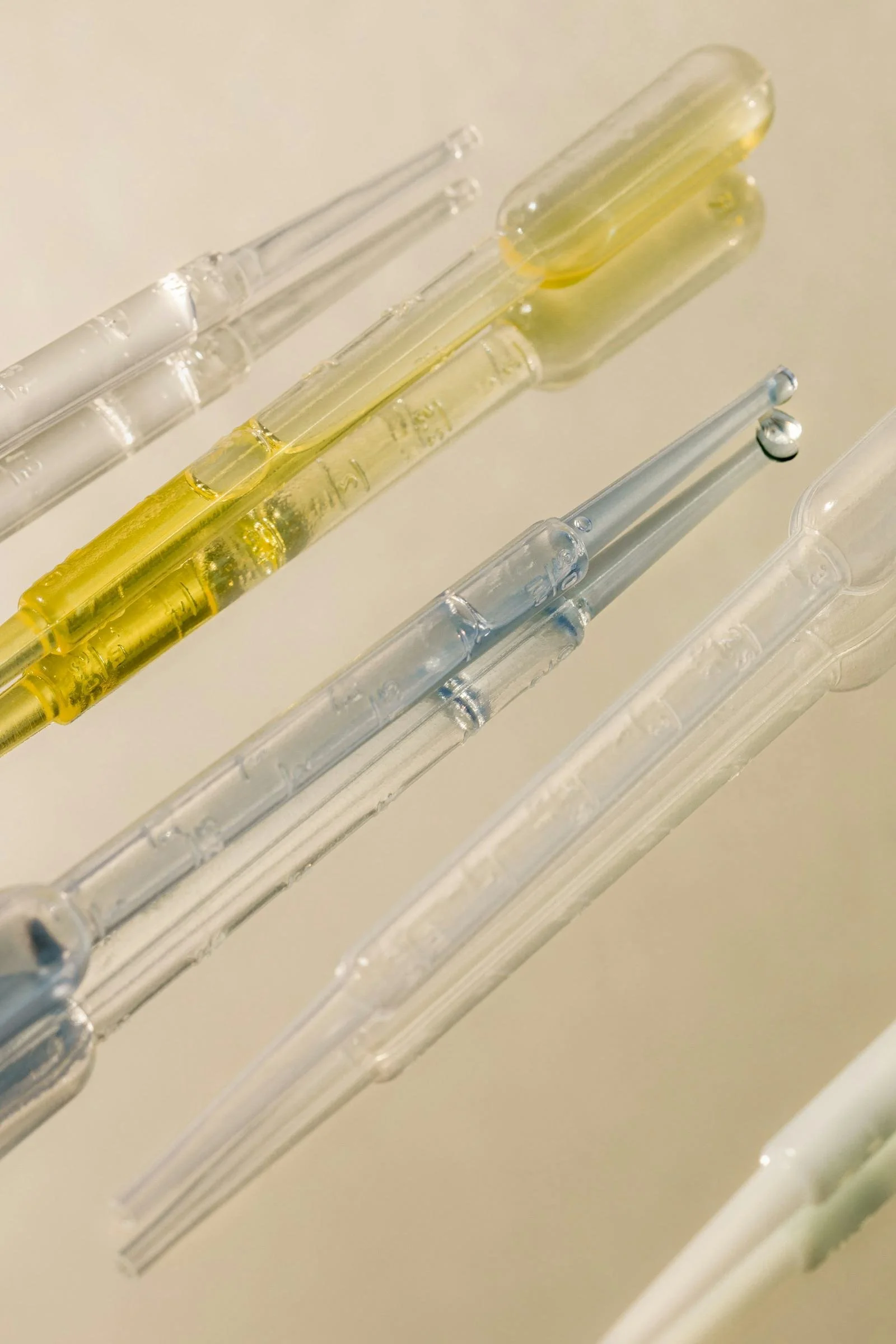
Facial filler adjustments and injections are ubiquitous these days, across every age group and aesthetic style. From subtly plumped lips to sculpted cheekbones and softened lines, these treatments have become as routine as hair appointments for many people. But beyond the visible results, what actually happens beneath the skin?
This isn’t about disparaging fillers or the people who choose them. Rather, it’s about understanding how these materials work, what they contain, and how they may interact with one of the body’s most intelligent, yet overlooked systems: the lymphatic system.
Your Body’s Built-In Drainage System
The lymphatic system exists almost everywhere in the body, woven delicately between blood capillaries and tissues like an intricate drainage map. Imagine England’s network of roads: thousands of tiny routes connecting into larger highways, with major hubs concentrated around metropolitan areas, like London. In the body, those “metropolitan” zones include the neck, armpits, groin, and even parts of the face.
If you’ve ever woken up puffy after a long-haul flight, a salty meal, or a night of drinking, you’ve experienced your lymphatic system under stress. Its role is to shuttle excess fluid, waste products, immune cells, and debris away from tissues and eventually back toward the bloodstream near the heart, where waste can be processed and eliminated. It’s highly susceptible to mechanical compression and inflammation, which can impair drainage and lead to edema (Cueni & Detmar, 2013).
Unlike blood circulation, the lymphatic system has no pump of its own. It relies on movement, muscle contractions, breathing, and healthy tissue flow to function efficiently. In other words, it relies on flow.
That’s where fillers and injectables become interesting.
Read - I Tried LA’s Most Booked-Out Lymphatic Massage And This Is What Happened
What Are Fillers and Injectables Actually Made Of?
The most common cosmetic fillers (e.g. lip fillers) today are made from hyaluronic acid (HA), a sugar molecule naturally found in skin, connective tissue, and joints. HA’s superpower is water retention - it can bind up to 1,000 times its weight in water - which is what creates that plump, hydrated effect.
But injectable HA is not identical to the HA naturally found in your body. To make fillers last longer, manufacturers chemically modify and “cross-link” the molecule using agents such as BDDE (1,4-butanediol diglycidyl ether). Cross-linking slows degradation, allowing fillers to persist for months or even years (Sundaram et al., 2009).
So what’s going on at the cellular level? Experimental research has shown that HA-based biomaterials can influence lymphatic endothelial cells (LECs), the cells that line lymphatic vessels, potentially altering how these vessels function and repair themselves. One study found that HA hydrogels could affect lymphatic vessel behavior depending on their physical properties (Wang et al., 2022).
Other injectable fillers include:
Calcium hydroxylapatite (CaHA) - a mineral-like compound used for structure and collagen stimulation
Poly-L-lactic acid (PLLA) - a collagen stimulator that works gradually over time
Polymethylmethacrylate (PMMA) - a semi-permanent filler containing microscopic beads that remain in tissue long-term
Unlike HA fillers, some of these materials are not fully reversible and may remain in tissue for years.
Botox, meanwhile, works differently. Botox is derived from botulinum toxin type A, a purified neurotoxic protein produced by the bacterium Clostridium botulinum. In medicine, extremely small controlled doses are used to temporarily block communication between nerves and muscles, softening dynamic wrinkles by reducing muscle contraction. Little reminder here - muscle contractions help with lymph movement!
Although commonly referred to casually as “just Botox,” it is still technically a toxin - which means the body must recognize, process, and eventually clear it. After injection, the protein is gradually broken down into smaller components through normal metabolic and immune processes. While the liver and kidneys play major roles in elimination, the lymphatic system is also involved in transporting cellular waste, inflammatory byproducts, immune molecules, and degraded proteins away from tissues (Alitalo, 2011).
Traditionally Botox was thought to remain highly localized, but newer research suggests it may have broader biological effects than previously understood. Studies have shown repeated Botox use can alter muscle thickness, facial movement patterns, and tissue biomechanics over time. Some researchers are also investigating whether reduced muscular movement may indirectly influence lymphatic flow, since the lymphatic system partly depends on tissue movement and muscular contractions to circulate fluid efficiently (Ferrillo et al, 2025).
Some biomaterials research has additionally identified trace manufacturing residues in fillers, including:
Residual cross-linking agents
Protein fragments or endotoxins
Trace metals from production processes
These are typically present within regulated safety thresholds, but researchers have proposed that in sensitive individuals they may contribute to low-grade inflammation or immune activation. And in a world with heavy metals in our drinking water and microplastics on our clothes, wouldn’t we want to limit our exposure to toxins as much as possible?
How Injectables May Affect Lymphatic Flow
Let’s bring this conversation back to what the lymphatic system thrives on: flow.
Now, fillers occupy spaces beneath the skin and in delicate anatomical regions - especially the under-eye area - where they may compress tiny lymphatic capillaries responsible for moving fluid away from tissue. There have been links of persistent malar edema (chronic cheek swelling) to impaired lymphatic drainage after filler placement (Funt, 2011).
A narrative clinical review discussed how filler placement within superficial facial fat compartments may alter fluid dynamics and contribute to chronic swelling in susceptible individuals (Zhou et al., 2026).
Botox may also indirectly influence lymphatic circulation. Because lymphatic movement partly relies on muscular contractions and tissue motion, reducing muscle activity could theoretically affect local fluid drainage patterns. Research in this area is still limited, but scientists are increasingly exploring the relationship between muscle mechanics and lymphatic flow.
Fillers are often marketed as staying precisely where they are injected, but real tissue is dynamic. Facial expressions, gravity, pressure, sleeping position, and injection technique can all influence how filler behaves over time. MRI studies have shown that some HA fillers may persist significantly longer than originally expected, with traces visible years after treatment (Kalmanson et al., 2022).
Though a case study, this illuminates some emerging concerns about fillers (Jaber et al., 2022):
A case report involving a 47-year-old man found that injected Synthol, a cosmetic oil used for muscle enhancement, had migrated through the body and caused widespread inflammation that initially mimicked metastatic cancer on imaging scans. Further testing revealed the masses were not malignant, but instead areas of chronic inflammation and fibrosis caused by foreign material migration. The case highlights how injected substances can travel through tissues and potentially lymphatic pathways.
While the data is limited, it is worth making the connections between injections that freeze or pressure in a system that thrives on flow.
Read - Why Your Botox Isn’t Lasting
Inflammation, Immunity, and “Foreign Body” Reactions
Even though some of these substances, like HA, may exist naturally in the body, injected filler is still recognized as a foreign material. Most people tolerate fillers well, but in some cases the immune system responds with:
Chronic low-grade inflammation
Granuloma formation
Fibrosis (scar-like tissue changes)
Delayed swelling reactions
Research suggests chronic inflammation may alter lymphatic vessel permeability (AKA “leaky vessels”) and reduce efficient fluid drainage (Schwager & Detmar, 2019). In rare published cases, HA filler has been associated with acquired lymphangioma - dilated lymphatic channels believed to result from obstruction of local lymphatic flow (Wege et al., 2021).
What Science Still Doesn’t Fully Understand
One of the largest gaps in the literature is long-term cosmetic injectable use. Most studies follow patients for anywhere from 3 months to 2 years, even though injectables have been around for decades (FYI Botox was approved for cosmetic use in 2002).
The missing piece? Many people now receive fillers continuously for decades.
Current evidence is still limited largely to case reports, practitioner observations, and small imaging studies. And, of course, every situation is different. There are variables like injection depth, technique, frequency of filler use, type of filler, individual anatomy, and baseline lymphatic function that all play a role.
The Bigger Picture
None of this means fillers or Botox are inherently unsafe. Millions of people use them every year without complications. But in bodies that are fluid, adaptive, and deeply intelligent, it’s worth acknowledging that these treatments are not biologically passive.
The face is not simply structure and skin - it’s a dynamic map of muscles, fascia, immune cells, blood vessels, connective tissue, and lymphatics, all communicating constantly with one another.
And remember how the lymphatic system flows exclusively toward the heart? There’s something quietly poetic about that.
Perhaps this conversation is bigger than aesthetics alone. In a world constantly encouraging us to alter, refine, and perfect ourselves, there is also something to be said for loving who we already are, exactly as we are. And with that, we can return to the heart - whatever that means to you.
So here’s to the body’s remarkable systems of regeneration, protection, and detoxification - our lymphatics!
Words by Kayla Butera for The Well Edit.
The content published by The Well Edit is for informational and educational purposes only. It is not intended as, and should not be relied upon as, a substitute for professional medical, health, nutritional, legal, or financial advice. While articles may reference insights from qualified practitioners or experts, the views expressed are their own and do not necessarily reflect the views of The Well Edit. Always seek the guidance of a qualified professional before making changes to your diet, lifestyle, supplementation, or healthcare routine.
Use of any information provided is at your own discretion and risk.