
Inside Triple Bond: London's Newest Members' Club That Is Doing Wellness Well
There has been an uplift of members' club offerings and we have all eaten our way through by now. Think of it as the one where "healthy" is a look rather than a decision. Cauliflower rice that doesn’t really satisfy you, a green juice that tastes of green juice and not much else. Menus that perform wellness at you rather than actually doing anything well, for you. So when triplebond opened in Marylebone this August, with a rooftop pool, a beat-led hot studio and enough red light panels to resurface a small industry, the part I, as a nutritionist that likes to eat, wanted to interrogate first wasn't the ice bath. It was the food.
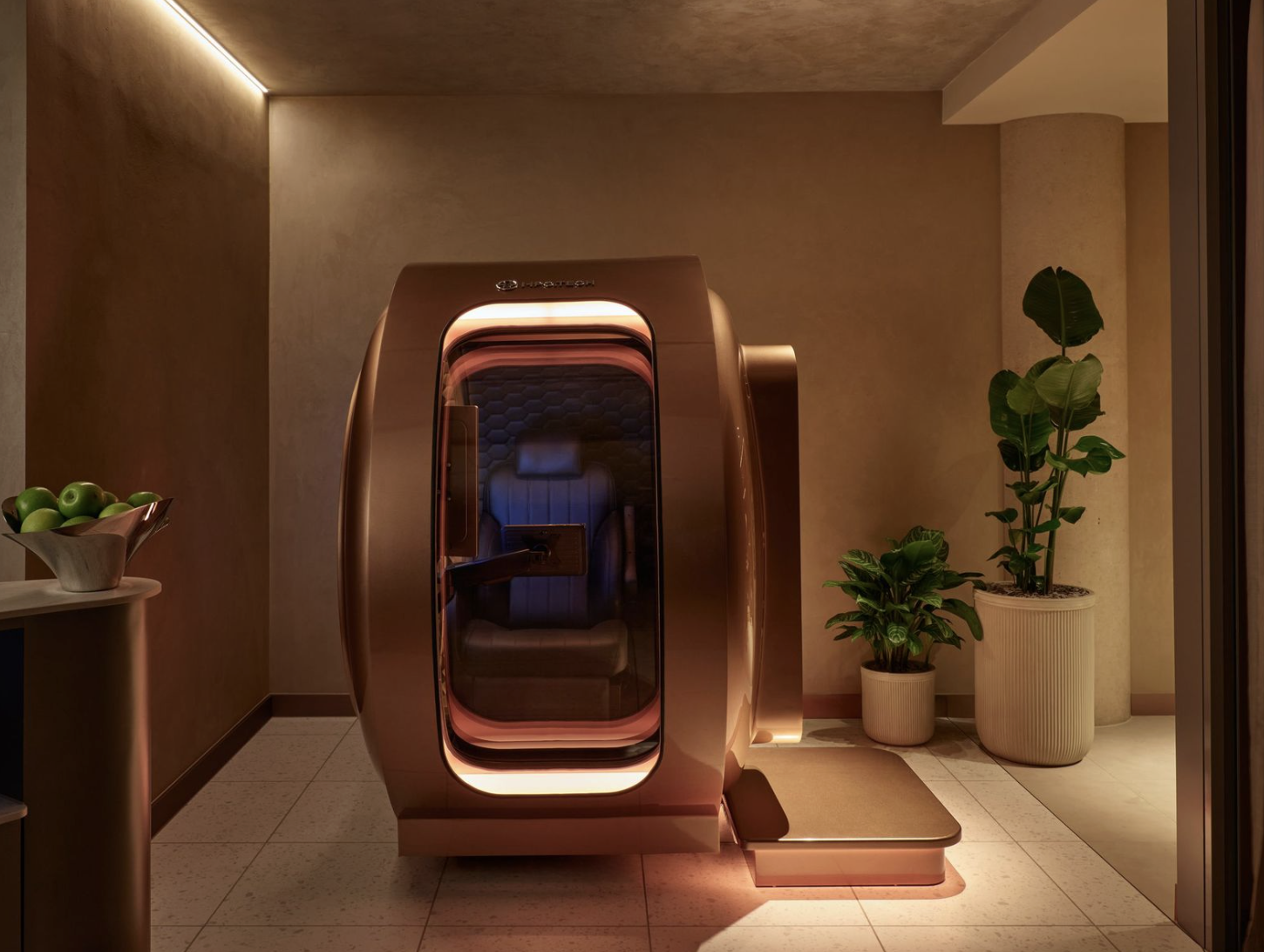
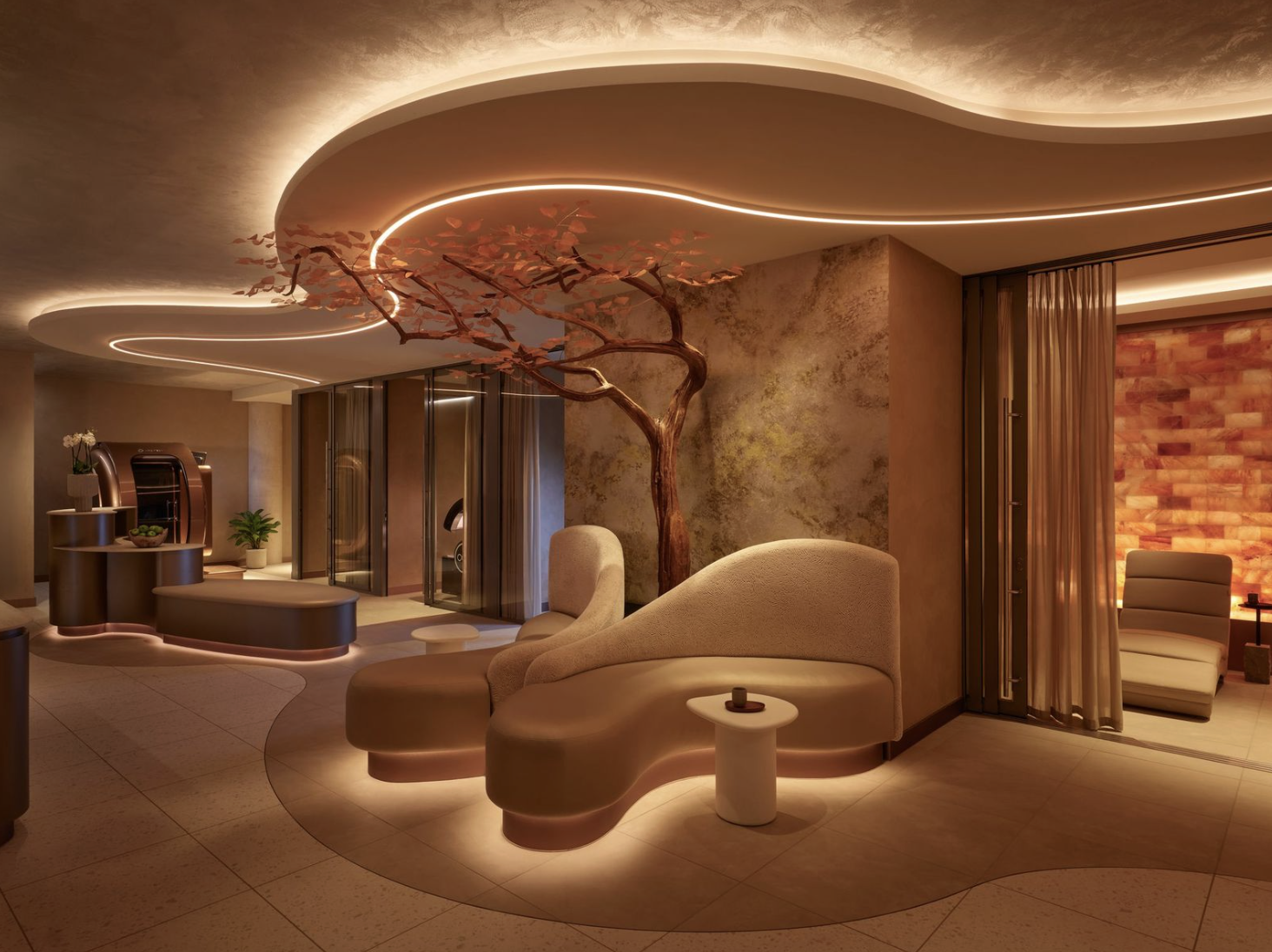
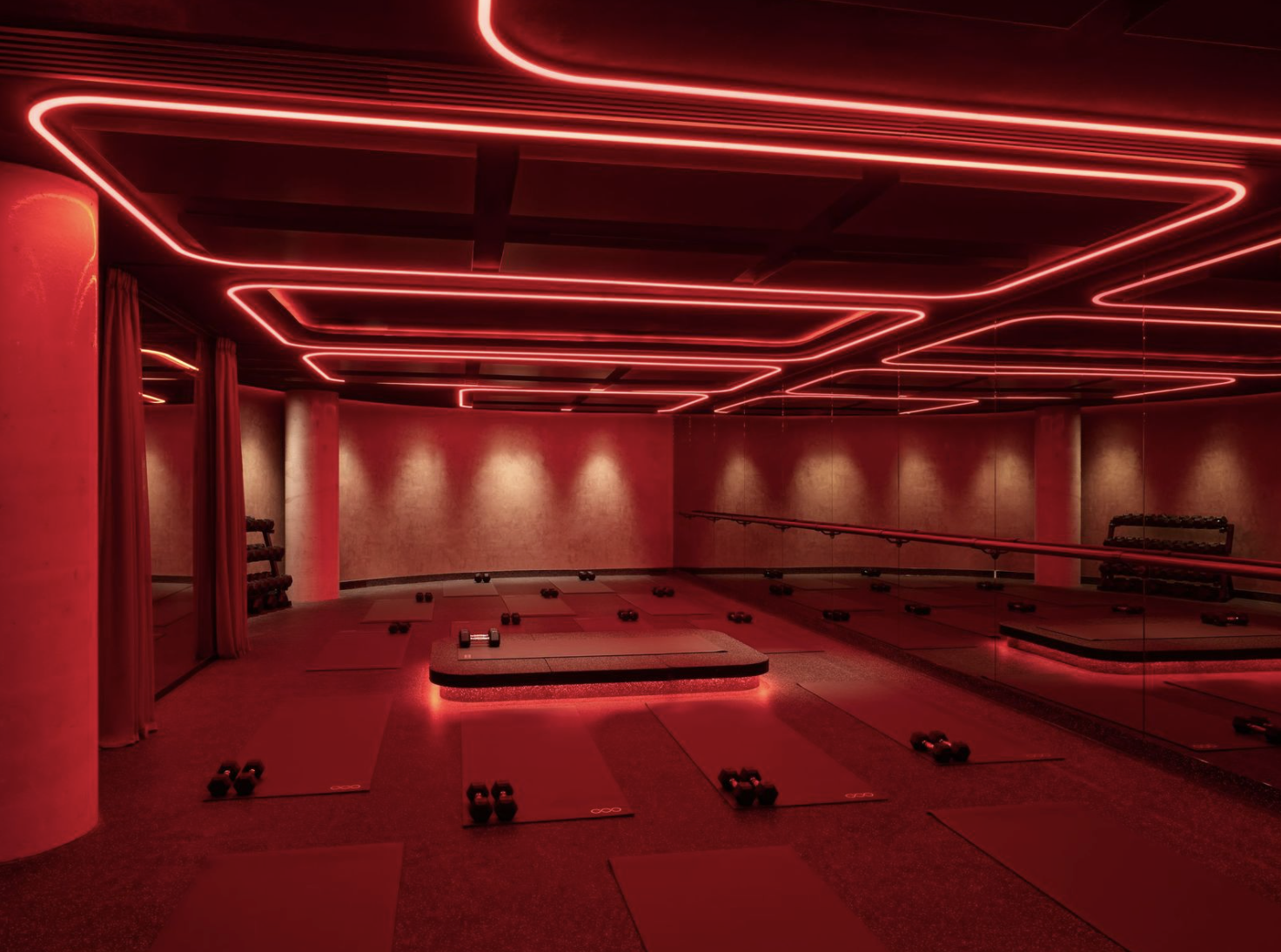
Set within The BoTree, the five-star hotel where Marylebone, Mayfair and Soho meet, triplebond is built around three ideas: activation, restoration and connection. Downstairs, The Bassment runs a timetable of beat-led hot classes built with infrared technology into the studio itself. The Fire & Ice Circuit pairs infrared sauna and photobiomodulation panels with cold plunge and Monk Ice Baths under standing red light. A rooftop gym, done with Technogym, opens with a full diagnostic assessment as part of onboarding. Upstairs, a full restoration floor: a Red Light Lounge built around circadian resynchronisation, a Jet Lag Circuit using AYO light glasses and in-ear circadian devices, a Lymphatic Lounge designed with Hyperice around a salt wall, a Decompress Lounge with zero-gravity chairs and a vagus nerve stimulation device, a private hyperbaric oxygen chamber, a full-body cryotherapy chamber, and hydration stations running hydrogen water and electrolytes alongside the reverse osmosis filtered stuff. Then, at the top, the part that gives the club its third pillar: Marylebone's first rooftop pool, two floors of terraces, bars and social space, and a ground-floor café that runs from morning coffee to evening service.
"We set out to create a fully integrated social wellness experience, where belonging, human connection and vitality are the foundation, and state of the art wellness, recovery and performance treatments, services and protocols layer on top," says Louise Rumball, the club's creator of vision and concept. It's a reasonable enough thesis, and one the wellness industry has been circling for a while. A philosophy about connection still has to be fed, and that is where Clarissa Lenherr comes in.
The Brief: A Philosophy, Not Just a Menu
Clarissa is triplebond's Integrative Health Practitioner, and the brief she was handed wasn't "write us a healthy menu." It was closer to: build the nutritional logic for an entire building.
"It was a collaborative process, and that's a big part of why I think it works," she told me. "I came in with the nutrition expertise; the triplebond team has a vision of how members can activate, restore and connect. So, between us we shaped a philosophy built on four pillars: stabilising blood sugar, supporting gut health, and fuelling recovery and performance."
The pillars are the scaffolding. The actual work, as she describes it, was turning that scaffolding into food nobody would order out of obligation. "My role was to take those pillars and make them real, and to turn a set of principles into food people genuinely want to eat. And that's the part I love! It's more than writing a list of healthy ingredients. The challenge was building a menu where every dish has a clear job and still tastes like something you'd choose on any given day, a completely different challenge."
Fuel, Restore, Nourish
Ask Clarissa how the menu actually functions and she doesn't talk about calories. She talks about timing.
"Fuel is what you eat before something," she says. The Blueberry Pancakes are her go-to example: they read as a treat, but underneath they're built on oats, banana, chia and cottage cheese, delivering real protein without a scoop of powder, and carbohydrate that releases slowly rather than spiking and crashing. Restore is what happens after effort, a proper protein dose, carbohydrate to replenish, fluid and electrolytes, and looks like the Miso Salmon Bowl, or a Caesar carrying more than 50g of protein. And then there's Nourish, the layer Clarissa is most animated about: "the everyday layer." Sauerkraut on the brunch plate. Live yoghurt worked through the dressings. Chia, pomegranate, and the triplebond sprinkle turning up across several dishes. "They are the small, delicious things, that are doing real work."
It's a useful way to think about a menu that has to serve someone who arrived at 8am and is still there at 8pm, or staying over in the hotel and eating there again the next morning. Rather than one fixed idea of "healthy," the menu shifts with what the body has just been asked to do.
Function Without the Vibe
What Clarissa was actively building against is the industry default: healthy as an aesthetic, applied evenly across a menu regardless of whether any individual dish is doing anything.
"What I really wanted was for every dish to have a mechanism behind it, and a clear reason it's there," she says. "Whether that's protein anchoring a meal, fibre supporting your blood sugar, or fermented ingredients for the gut. 'Healthy' as a look is easy, however healthy as a set of decisions you can point to is far more satisfying, and it's what members deserve!"
“If a dish isn’t delicious, it doesn’t matter how clever it is, because nobody orders it twice. So, the functional side sits underneath doing its work quietly, and what arrives at the table is simply excellent food”
That ordering, flavour first, function underneath, is also why the menu isn't 100% "health-forward." Clarissa and the team built in roughly a 70/30 split, health-forward to indulgent, deliberately. "The indulgent 30 isn't a compromise but is a part of the design, and something not to be sorry or feel guilty about! A menu people love is a menu people come back to, and consistency is where the real health benefit lives."
A Day at triplebond
The clearest evidence of the fuel/restore/nourish logic is in how the menu actually moves across a day.
Morning is protein and good fats, set early: an egg white omelette, or avocado toast, topped with halloumi or eggs, if you want, finished with the triplebond sprinkle and pomegranate. "So, we have protein and good fats early, which sets up the rest of the day."
What comes next depends entirely on what's just happened to you. Some days call for a proper lunch. Other days, Clarissa says, you've finished training at four and a full plate is too much, so you take a small plate instead - triple olives, padrón peppers, edamame. Or you want nothing more complicated than the ground protein shake: 25g of protein, packed with spinach and spirulina.
By evening, the register changes again. "It becomes somewhere you sit down and eat with someone," she says. The seabass aqua pazza, with a few sides to share and homemade sorbet or ice cream after, is the firm favourite. "I wanted the evening to feel like dinner, not just a health refuel."
The Caesar Salad, Explained
If you want one dish that makes the entire philosophy legible, Clarissa points to the Caesar. "Nobody orders a Caesar to be virtuous… they order it because they want a Caesar."
Hers arrives with everything a Caesar is supposed to have, parmesan, a properly creamy dressing, real crunch, with every element also doing a second job. Free-range British chicken and egg for protein, "so it actually keeps you full and sustained." Chickpeas standing in for croutons, for fibre and slow-releasing carbohydrate. Kale alongside the baby gem, for nutrient density that doesn't cost you the texture people actually want. And a dressing built on live yoghurt, which keeps the creaminess while adding protein and live cultures alongside it.
"Nothing has been taken away to make it healthy, but it's been built so the version that tastes right is the version that works best for you," she says. It's the least complicated and probably the most convincing.
What Recovery Nutrition Actually Requires
Given how hard the club leans into red light, cold exposure and lymphatic work for recovery, I wanted to know what Louise thinks gets missed alongside all of it.
"Recovery starts with what's on your plate," she says, and lists it in order. First, eating enough, properly fuelling around a demanding training block is what lets the body adapt, and it supports sleep, hormones and mood. Second, spreading protein across the day rather than concentrating it at dinner, which is where most people land their daily total without meaning to; distributing it more evenly supports muscle protein synthesis more effectively. Third, hydration, specifically electrolytes. "With sauna and cold exposure, sodium and fluid matter a lot, and replacing both makes a real difference to how recovered you feel. That is why we offer electrolytes and minerals to add into our guest's water."
It's a point the building itself was designed around, not just the menu. The hydration stations run hydrogen water, clean trace minerals and reverse osmosis filtered water alongside standard electrolytes, and each of the club's Circuits has been built with its own bespoke bioenergetic drink: hydration and circadian support for the Jet Lag Circuit, mineral replenishment in deep restoration, antioxidant support in the Glow Circuit, cellular recovery in Longevity. "These are drinks designed to work on a cellular level and built ingredient by ingredient around the intention," Louise says - tied, deliberately, to whether the circuit is meant to help you downshift or activate.
Underneath all of it is an argument Louise returns to more than once: that recovery isn't only about adding tools, but about giving the body the raw materials to let those tools work. "A lot of my work is about how the modern nervous system actually needs energy in order to regulate, which the industry consistently misses," she says. "So, building, recovering, down-regulating, downshifting, it all costs something, and often people really are not giving themselves enough energy for their body to do what it needs, or for their gut or microbiome to be powered back to homeostasis."
Built for the Depleted, Not the Deprived
The most interesting thing Louise says has nothing to do with a specific dish. It's about who the whole menu was actually designed for.
"We threw out 'healthy food' as one fixed category," she says. "The real question is what your body needs depending on where you are in your day and what you've just asked it to do." Most of the thinking, she says, started with the modern woman, and how depleted she's become, running on stress, adrenaline and cortisol, without necessarily feeling the depletion in the moment. "You feel it in the weekend crash. Or the burnout, but not necessarily in the day to day that would push you to stop and think, 'wow, I need to change how I'm eating here.'"
That framing led somewhere specific. "We agreed on one thing early: women have been trained to think about food through restriction first, especially when the goal is losing weight or cutting calories. But under-eat for long enough and you often make the hormonal symptoms, the energy dips and the stress physiology worse, not better." As an Integrative Health Practitioner, she says she wanted nourishment, recovery and resilience on the table from every angle - "not just calories and macros in isolation but real repletion at a cellular level," particularly for anyone stepping out of a hot class, a training session, or the Fire & Ice Circuit.
Where the menu meets its most individual expression is through Stride, the diagnostics partner running triplebond's Health Concierge. Members are tested across blood work, gut, saliva DNA and other biomarkers, and the results feed directly into a complimentary one-to-one consultation with an integrative practitioner. "Once members have done their testing… they've got a real picture of how their body's functioning," she says, pointing to DNA markers like carbohydrate sensitivity as one example of what the data can surface. "So instead of everyone being told the same thing is 'healthy,' we really wanted people to understand what actually makes sense for the individual." Longer term, the plan is to build proper nutrition-led eating pathways directly off that biomarker data, the menu as a starting point, not the final word.
And if you're wondering what the woman who built all of this actually orders: the 70% dark chocolate mousse. "I have a sweet tooth!" It's made with silken tofu rather than cream and eggs so it’s vegan, dairy-free, gluten-free, and carrying a proper amount of protein, finished with flaky sea salt, raspberries and a drizzle of extra virgin olive oil. "The 70% chocolate brings polyphenols and considerably less sugar than a conventional mousse… It is SO GOOD."
Words by Eleanor Hoath for The Well Edit.
The content published by The Well Edit is for informational and educational purposes only. It is not intended as, and should not be relied upon as, a substitute for professional medical, health, nutritional, legal, or financial advice. While articles may reference insights from qualified practitioners or experts, the views expressed are their own and do not necessarily reflect the views of The Well Edit. Always seek the guidance of a qualified professional before making changes to your diet, lifestyle, supplementation, or healthcare routine.
Use of any information provided is at your own discretion and risk.