
Five Things You Need to Know Before You Supplement With Butyrate

Butyrate, the gut's preferred fuel, has become one of wellness's most talked-about postbiotics. But, do you know what it does, who it could possibly help, and why the smartest way to take it starts with a conversation with a practitioner
What is Butyrate?
Pronounced - byuw-ta-rate, the word butyrate comes from the Greek boutyros, meaning butter. Because butyric acid is the compound behind the sharp, slightly rancid smell of butter left out too long. It's an unglamorous origin for a molecule that now features in gut health protocols, constantly being heard in longevity podcasts and practitioner plans and dispensaries. Most of the butyrate your body relies on isn't something you eat, but instead from your gut bacteria making it, and when they can't make enough, supplementing may start to look appealing.
Butyrate can be a useful tool, but only if it's the right tool for the problem. Here's what you need to know first.
Butyrate is made, but is also eaten…
Butyrate is a short-chain fatty acid (SCFA). Your gut bacteria produce it when they ferment dietary fibre and resistant starch in the colon. The main producers have names a microbiome researcher and a Well Edit practitioner love diving into - Faecalibacterium prausnitzii, Roseburia and Eubacterium rectale. Butter, ghee and hard cheeses contain small amounts, but not enough to matter for the colon.
Because it's a beneficial compound produced by bacteria rather than a bacterium itself, butyrate is often called a postbiotic. Its main job is local. It's the preferred energy source for colonocytes, the cells lining your large intestine, and supplies an estimated 60-70% of their fuel. When those cells are well fed, the gut lining is better able to do what it's meant to do.
This matters for supplementation. How much butyrate you have depends on what you eat and who lives in your gut. Most UK adults eat well below the recommended 30g of resistant fibre such as green bananas per day, so many people are underproducing butyrate simply because their bacteria have too little to ferment.
The benefits of butyrate and the gut wall
Butyrate's reputation comes down to four things:
The gut barrier. Butyrate helps maintain the tight junctions between intestinal cells and supports mucus production. Together these form the barrier that decides what passes from the gut into the bloodstream, and what doens’t. This is why butyrate comes up so often in discussions of intestinal permeability, or "leaky gut".
Inflammation. Butyrate acts as a histone deacetylase (HDAC) inhibitor which modulates genes and signals through receptors to help regulate inflammatory pathways. It also encourages regulatory T cells, the part of the immune system that tells an overreaction to stand down.
A healthier microbial environment. When colonocytes burn butyrate, they use oxygen, which keeps the colon anaerobic. In short, butyrate helps create the conditions for more endogenous butyrate production.
Metabolic signalling. Butyrate stimulates the gut hormones GLP-1 and PYY, which are involved in appetite and blood sugar regulation. This is an active area of research, although much of the evidence so far comes from animal studies.
Keep the evidence in perspective. The mechanistic science is strong, but human trials are smaller and fewer. The most promising clinical data so far involves specific groups, including people with IBS, diverticular disease and ulcerative colitis, and often uses formulations designed to reach the colon. Butyrate is promising, but it isn't a cure-all.
It may help some people, but not everyone
Supplemental butyrate makes most sense when the body's own production is compromised, or when the usual way of boosting it, eating more fibre, isn't workable. A practitioner might consider it for someone who:
Can't tolerate much fibre. This includes people on a low-FODMAP diet, people going through SIBO support, and people with IBS who get bloating and discomfort from fermentable fibres. Butyrate gives them the benefit of fermentation without the fermentation itself.
Has a stool test showing low butyrate or few butyrate-producing bacteria. Testing turns a guess into a rationale.
Is recovering from antibiotics. Antibiotics can significantly reduce SCFA-producing bacteria.
Has IBD or diverticular disease and is under medical care. In ulcerative colitis, research suggests the gut lining may be less able to use butyrate, which is part of why it has attracted clinical interest.
On the other hand, someone who eats a varied, fibre-rich diet and has no digestive symptoms is probably already producing plenty. For them, a supplement may add little. The better investment is on the plate: cooked and cooled potatoes and rice, green bananas, oats, legumes and a wide range of plants.
Getting it wrong has consequences, which is why a practitioner matters
Butyrate is generally well tolerated, but "natural" doesn't mean it's right for everyone. Here's how it can go wrong.
Side effects. Some people experience bloating, nausea, reflux or changes in bowel habit, especially when starting at a full dose. The smell is a common complaint, and some people notice a butyric odour on their breath or skin.
The mineral carrier. Butyrate is sold as a salt bound to sodium, calcium or magnesium. Sodium butyrate can add a meaningful amount of sodium, which matters for anyone with high blood pressure, heart failure or kidney disease. Calcium and magnesium forms can interact with some medications, including thyroid medication, certain antibiotics and bisphosphonates, so doses may need spacing out. Anyone with impaired kidney function needs individual advice.
Life stages and medical conditions. There isn't enough safety data to recommend butyrate supplements during pregnancy or breastfeeding. People with active IBD should only use it alongside their gastroenterology team.
Masking something important. This is the biggest risk. Persistent bloating, a change in bowel habit lasting more than three weeks, blood in the stool, unexplained weight loss or ongoing abdominal pain all need proper medical investigation. A supplement that eases symptoms a little can delay a diagnosis that matters.
This is where a practitioner earns their place. A registered nutritional therapist or clinician won't just ask whether butyrate works. They'll ask why your butyrate might be low, whether testing would help, which form suits your health history and medications, what dose to start at and how to increase it, and whether you need a GP referral first. A practitioner also treats butyrate as one part of a broader plan that should eventually include rebuilding fibre tolerance, rather than as a permanent substitute for it.
What to look for in a good-quality butyrate supplement
If you and your practitioner decide butyrate is worth trying, the details make a big difference.
Delivery to the colon. Butyrate is absorbed quickly in the upper digestive tract, so an unprotected supplement may never reach the colon, which is where it's needed. Look for enteric protection, microencapsulation or a precursor such as tributyrin, all designed to carry the butyrate further down.
A transparent dose. The label should state the amount of butyric acid per serving, not just the total weight of the salt. The two figures can differ a lot, and only the first tells you how much active compound you're getting.
A choice of mineral form. Offering both sodium and calcium-magnesium options lets a practitioner match the product to the person. That's especially useful for anyone limiting sodium.
A clean formulation. Look for minimal excipients, vegetarian capsules where relevant, and third-party testing for purity.
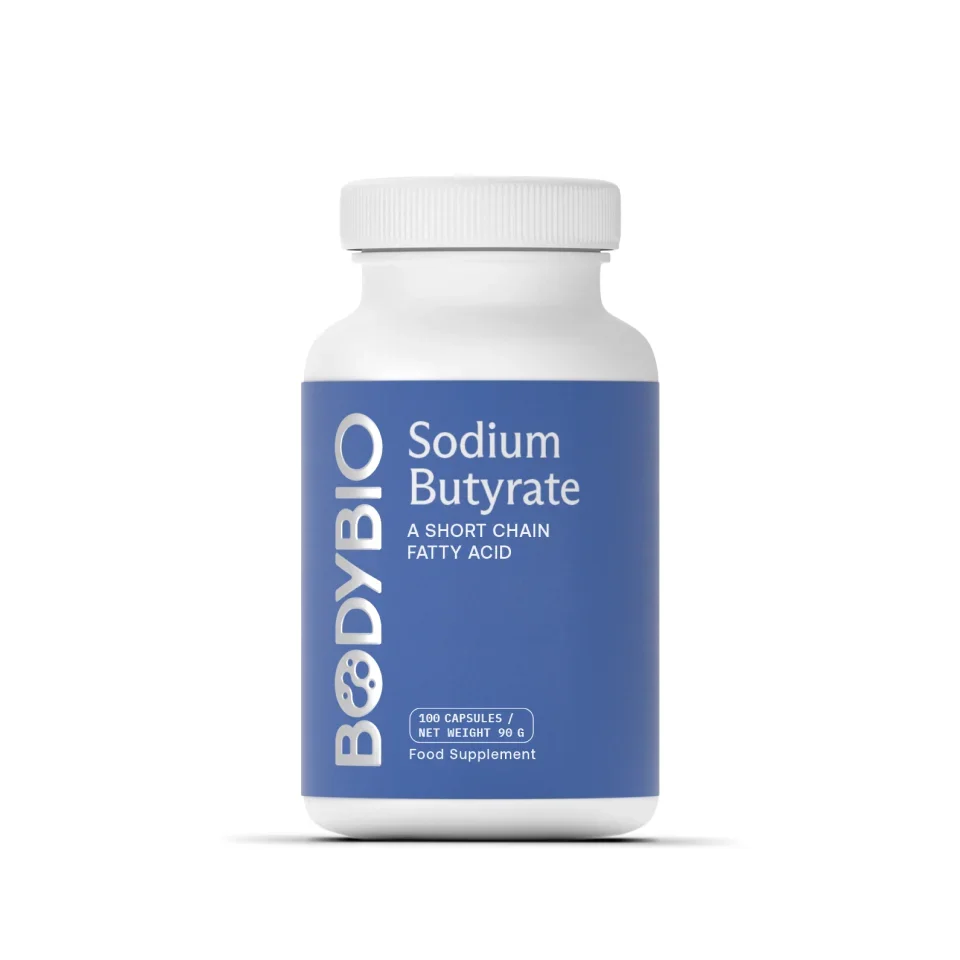
BodyBio's Butyrate is a good example of these principles. It comes in two formulas, sodium butyrate and calcium magnesium butyrate, and each provides 1,200mg of butyric acid per two-capsule serving. The label states the mineral content clearly, including the sodium in the sodium version. Both formulas use an MCT (medium-chain triglyceride) coating to protect the butyrate from stomach acid on its way to the colon. The choice between the two is exactly the kind of decision to make with a practitioner: sodium butyrate for most people, and calcium magnesium butyrate for anyone who needs to keep their sodium down.
FAQ
-
Butyrate is a short-chain fatty acid produced when gut bacteria ferment fibre. It's the main fuel source for the cells lining the colon and helps support the gut barrier.
-
Butter, ghee and hard cheese contain small amounts, but most of your butyrate comes from eating fibre and resistant starch, which your gut bacteria turn into butyrate.
-
They're two salt forms of the same compound. Sodium butyrate adds sodium to your diet, while calcium magnesium butyrate provides those minerals instead. That can suit people who need to limit their salt intake.
-
People who are pregnant or breastfeeding, those with kidney disease, heart failure or high blood pressure (particularly with sodium forms), and anyone with unexplained digestive symptoms should get professional advice before taking it.
Words by Eleanor Hoath for The Well Edit.
This article is for information only and is not a substitute for individual medical advice. Speak to a registered nutritional therapist or your GP before starting any new supplement, especially if you are pregnant, taking medication or managing a health condition.
The content published by The Well Edit is for informational and educational purposes only. It is not intended as, and should not be relied upon as, a substitute for professional medical, health, nutritional, legal, or financial advice. While articles may reference insights from qualified practitioners or experts, the views expressed are their own and do not necessarily reflect the views of The Well Edit. Always seek the guidance of a qualified professional before making changes to your diet, lifestyle, supplementation, or healthcare routine.
Use of any information provided is at your own discretion and risk.