I'm Peri-Menopausal & Tried The New Eight Sleep Pod - This Is What Happened
There's a particular kind of exhaustion that comes not from a lack of time in bed, but from the quality of what happens while you're there. If you're anywhere on the hormonal spectrum from late reproductive years through perimenopause, you'll know exactly what I mean. You go to bed tired. You wake up tired. And somewhere in between, your body had other plans.
I've spent the better part of a decade working on my sleep - with genuine commitment, not just good intentions. And still, every month, my cycle wins. So when I came across the Eight Sleep Pod, I was curious in the way you can only be when you've already tried most other things.
This is what happened.
First, what actually is the 8Sleep Pod?
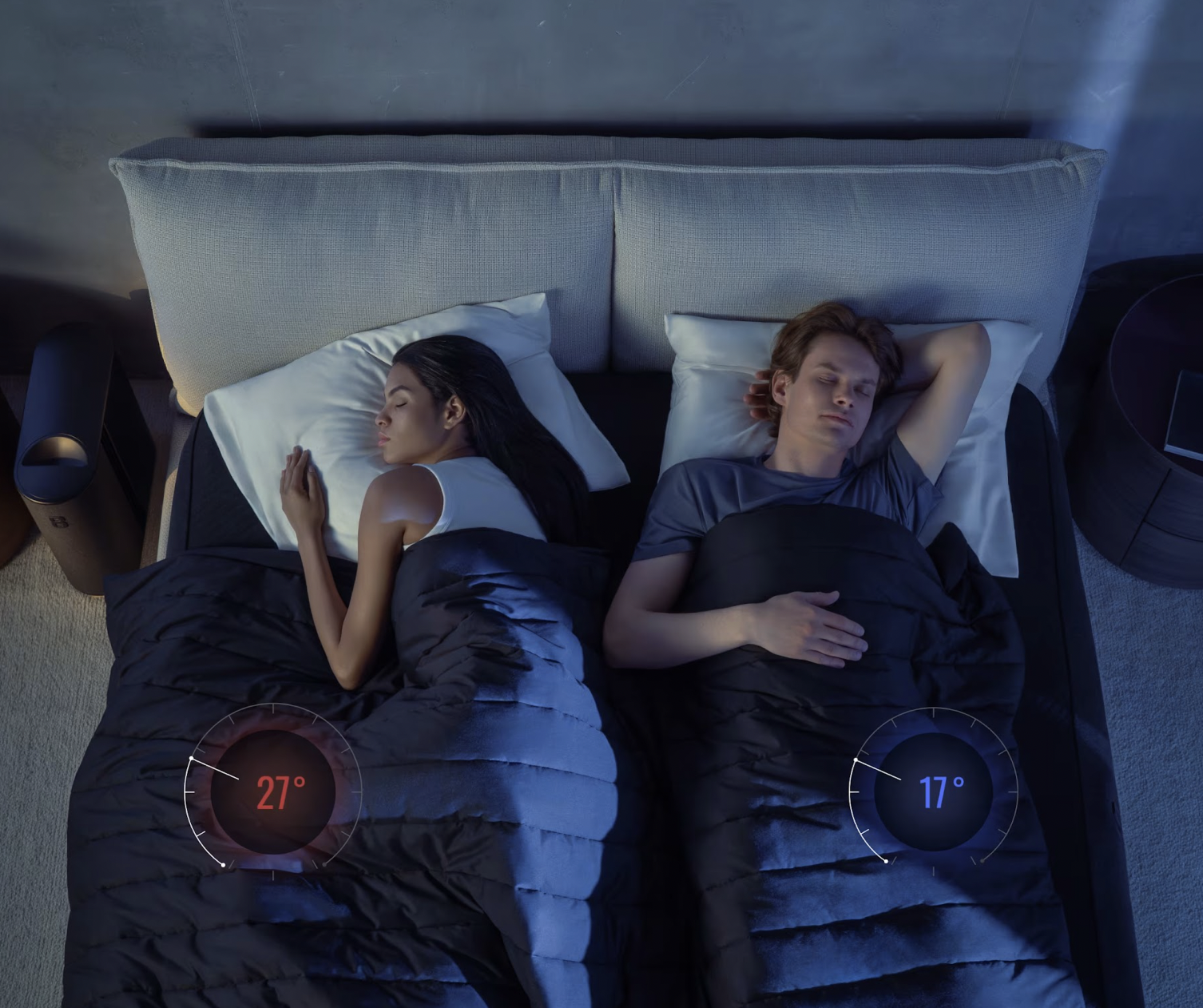
The Eight Sleep Pod is a smart mattress cover that sits over your existing mattress and delivers dynamic, full-body temperature control throughout the night. It can cool down to 13°C or warm as needed, and crucially, it adapts as you move through sleep cycles rather than holding a fixed temperature from lights-out to alarm. The system learns your patterns over time and uses AI-powered Autopilot to automatically adjust the temperature.
For couples, it's a dual zone, meaning two entirely different sleep temperatures on the same bed. (More on why this matters in our household shortly.)
Eight Sleep’s own research shows that temperature dysregulation is one of the biggest sleep disruptors in peri and menopause - something clinicians have long understood, but sleep technology has been slow to address. I'll be doing a deeper dive into the product, data, and interface in a separate post. For now, the short version: it's sleep technology that's finally paying attention to women's biology.
My hormonal history and why sleep can be complicated
I started my period in Year 6, age 11, before most of my peers - which set the tone for a hormonal life that has rarely been quiet. With no biological children (although I have one brilliant stepson) and endometriosis diagnosed in my adult years, my cycles were never just background noise - they were loud, physical, and impossible to ignore.
I have never tolerated the oral contraceptive pill well, and I asked for the coil to be removed within the first 6 weeks. The synthetic hormones that many women find stabilising sent my body in the opposite direction entirely. And that history - early menarche, endometriosis, no pregnancies, OCP intolerance - is, as the research suggests, a meaningful cluster of risk factors for earlier menopause. Early menarche combined with endometriosis has been associated with earlier onset of perimenopause, with studies suggesting endometriosis may accelerate ovarian ageing and reduce ovarian reserve.
Which brings me to HRT - something that could support women to sail through menopause. On paper, I'm a good candidate - my cardiovascular risk profile makes hormonal support genuinely sensible. In practice, my body might have other ideas if I take into account my sensitivity to exogenous hormones. So I'll be navigating perimenopause with attention on everything else, meaning sleep, nutrition, stress, and movement have to work harder.
Sleep is where I feel it most acutely.
Why perimenopause makes sleep harder - and why that matters more than most people realise
The hormonal changes of perimenopause don't just cause hot flushes. They rewire the neurological architecture of sleep in ways that rarely get explained clearly enough.
Progesterone, which declines significantly in perimenopause, has a direct relationship with GABA - the brain's primary inhibitory neurotransmitter. Progesterone metabolises into a compound called allopregnanolone, which acts on GABA-A receptors to produce calming, sleep-promoting effects. As progesterone levels fall, so does this natural sedative effect. The result: a nervous system that is less able to settle, lighter sleep, more frequent waking, and a background hum of anxiety that many women describe but struggle to attribute to anything specific.
Oestrogen tells a different story. It supports serotonin production and availability - and serotonin is not only a mood stabiliser but the direct precursor to melatonin, the hormone that regulates our sleep-wake cycle. As oestrogen declines, serotonin signalling becomes less consistent, melatonin production can be affected, and sleep architecture shifts. REM sleep - the restorative, emotionally processing stage - becomes shallower and more fragmented.
Layer onto this the thermoregulatory changes. The hypothalamus, which regulates body temperature, becomes more sensitive as oestrogen levels fall. The thermoneutral zone - the range of temperature within which the body doesn't need to actively heat or cool itself - narrows significantly. Small shifts in core body temperature, which naturally occur throughout the night as part of normal sleep cycling, can trigger a heat response disproportionate to the actual changes. That's one of the biological mechanisms behind the night sweats that wake you at 3am, even when the room hasn't changed. (Add alcohol to this picture and it's a recipe for disaster!)
The downstream consequences extend well beyond tiredness. Disrupted sleep impairs glucose regulation - research consistently shows that poor sleep can dysregulate blood sugar by as much as 30%. In a perimenopausal context, where insulin sensitivity is already shifting as oestrogen falls, this compounds. Poor glucose regulation increases appetite hormone dysregulation (ghrelin rises, leptin signalling weakens), which affects energy, mood, and food choices the following day. One poor night creates ripple effects that are metabolic, hormonal, and cognitive, which is why sleep in this life stage isn't a comfort issue. It's a health-focused one.
Why I was genuinely excited to try Eight Sleep
I've worked hard on sleep for years. The fundamentals are in place - consistent sleep and wake times, a cool room, no screens, no caffeine after midday, evening routines that actually calm rather than just signal intention. And for most of the month, this works reasonably well.
Then comes the luteal phase.
In the seven to ten days before menstruation, progesterone has been rising and then drops sharply (to enable a period), core body temperature rises (basal body temperature increases after ovulation and stays elevated through the luteal phase as a result of progesterone's thermogenic effect), and the combination of heat, hormonal flux, and nervous system dysregulation dismantles - whatever good sleep habits I've built.
I am hot in a way that feels disproportionate to the environment. I wake in the night. I cannot regulate. No amount of careful sleep hygiene fully compensates for what is happening hormonally.
With endometriosis, my cycles have always been felt in full - less energy, reduced strength in the gym, slower word retrieval (not helped by dyslexia at the best of times), but these aren't imagined. They're documented features of the luteal phase in women with endometriosis and approaching perimenopause. If sleep in this phase could be meaningfully improved, the ripple effect on my days felt worth pursuing.
The Eight Sleep automatically adjusts temperature during the luteal phase as it learns your patterns. That, specifically, was what made me want to try it.
What happened when we travelled and left it behind
We were away for one night in Scotland late in my luteal phase, a matter of days before my period was due. My husband runs hot at the best of times, and here we are in a hotel room, double bed (not our usual king, so we can spread out), pre-menstrual, both of us radiating heat. Yet with the radiators off, the windows open to the Scottish night air, we were still hot! Yep, awake at 3am, bumbling around in the dark to open the curtains further and push the sash window higher, hoping that the cooler air outside would do something useful (it didn't, particularly).
"We're spoilt," my husband said. And he was right. One night without the Pod - during arguably the worst possible hormonal window - and the difference was stark. Not just in sleep quality on the night, but in how the following day felt. The tiredness was a different quality. Heavier. Less recoverable.
That one night away told me more than weeks of using it at home. Absence, as they say, makes the heart grow fonder - and the data clearer.
The luteal phase difference - and the small adjustments that matter most
Back home and back on the Pod, the luteal phase remains the most challenging part of my cycle, but it's no longer the sleep catastrophe it once was. The system's ability to cool dynamically through the night, rather than holding a static temperature I set before bed, is what makes the difference. My core temperature fluctuates across the night in this phase. A fixed cool room doesn't track that. The Pod does.
The Eight Sleep increases its temperature intervention during this phase as Autopilot learns your patterns, and the Hot Flush Mode gives agency in those moments when heat rises suddenly. Rather than lying awake waiting to cool down and losing precious sleep time in the process, the response is immediate.
What I also hadn't anticipated was how responsive the system is to changes in external temperature. When the outside temperature shifted from 12°C to 17°C as spring arrived, the Pod automatically reduced my bed temperature by one degree, so it was cooler when I got in - compensating for the warmer ambient environment before I'd even noticed the change. It sounds minor. It isn't. Temperature is foundational to sleep onset and maintenance, and small disruptions (a warmer room, a warmer night) can delay sleep or cause earlier waking without any obvious cause. The Pod catches those shifts and adjusts before they become a problem.
That quiet responsiveness, happening without any input from me, is what separates it from simply having a cool room. A cool room is static. Sleep and hormones are most certainly not. I still notice the luteal phase, but I'm no longer fighting those things on a foundation of broken sleep. That distinction matters more than I can fully quantify.
What I noticed day-to-day
Better sleep produces a better day - this is not a controversial claim, but it's easy to underestimate how significant the margin is until you experience it consistently.
The metabolic ripple effect I mentioned earlier is real and noticeable. When I sleep well, my appetite is more settled, my food choices are less reactive, and my energy across the afternoon doesn't crater. When I sleep poorly, the opposite is true - and it compounds. Hunger is louder, cravings skew towards quick energy, and concentration shortens. The Eight Sleep didn't eliminate the hormonal reality of perimenopause. But it meaningfully reduced the nights that set off that chain reaction.
Cognitively, the difference in the luteal phase has been especially welcome. Sharper in the morning. Faster to retrieve words and names. Less of the foggy, sluggish quality that I'd largely accepted as a monthly inevitability.
Would I recommend it, and who is it really for?
Yes, without reservation - and so would my husband.
The obvious answer is perimenopausal and menopausal women - and if that's you, I'd say this is one of the most targeted and effective tools I've used for this specific challenge. But the honest answer is anyone for whom temperature disrupts sleep, which, when you look at the research, is most people at one point or another. Athletes in heavy training. Anyone with a partner whose sleep temperature differs from theirs. Anyone whose sleep quality fluctuates with stress or season.
The investment is significant. But in the context of what poor sleep costs - metabolically, hormonally, cognitively, emotionally - it reframes quickly.
A note on EMFs
When you’re in the know on wellness, I know this question is going to come up, and it deserves a straight answer. The Pod Hub is FCC certified and meets all regulatory limits for electromagnetic emissions. It's been independently third-party tested, with EMF levels found to be comparable to a WiFi router or phone charger. The Hub connects to WiFi and can be placed up to two metres from the bed. The mattress cover itself contains only a thin water tube layer (no electronics, no wiring), so actual exposure during sleep is minimal.
I'll also say this: the health impact of chronically poor sleep is well established and considerable. The risk profile of EMF exposure at the levels produced by the Pod is, by comparison, extremely small. I'd rather sleep well and take sensible precautions than sleep poorly in a low-EMF room.
he deluxe EMF-blocking blanket (or the original blanket) - a practical middle ground that could be a winner.For those who want the best of both, I love the latest release from Bon Charge, the deluxe EMF-blocking blanket (or the original blanket) - a practical middle ground that could be a winner.
Words by Natalie Burrows for The Well Edit
The content published by The Well Edit is for informational and educational purposes only. It is not intended as, and should not be relied upon as, a substitute for professional medical, health, nutritional, legal, or financial advice. While articles may reference insights from qualified practitioners or experts, the views expressed are their own and do not necessarily reflect the views of The Well Edit. Always seek the guidance of a qualified professional before making changes to your diet, lifestyle, supplementation, or healthcare routine.
Use of any information provided is at your own discretion and risk.