
SONARA Chelsea: Inside London’s First Bathing & Dining Club
Somewhere over the last few years, sweating became a social plan. The Saturday catch-up that used to be brunch is now a sauna session followed by brunch. Friends who once suggested a drink now suggest a cold plunge, and mean it. Railway arches and canal-side car parks across London have filled with wood-fired cabins and steel tubs of icy water. You can no longer book a Sunday slot at most of them without planning a week ahead.
It’s easy to be cynical about it, and in fairness, some of it deserves cynicism. Wellness has a habit of taking something ancient, stripping it of its context and selling it back to us as a protocol: three minutes in, two minutes out, track the HRV, post the thermometer. But underneath the content, something more interesting is happening. People are rediscovering that heat, cold and company belong together. That is why the press release for SONARA landed differently to most of what arrives in my inbox.
What SONARA actually is
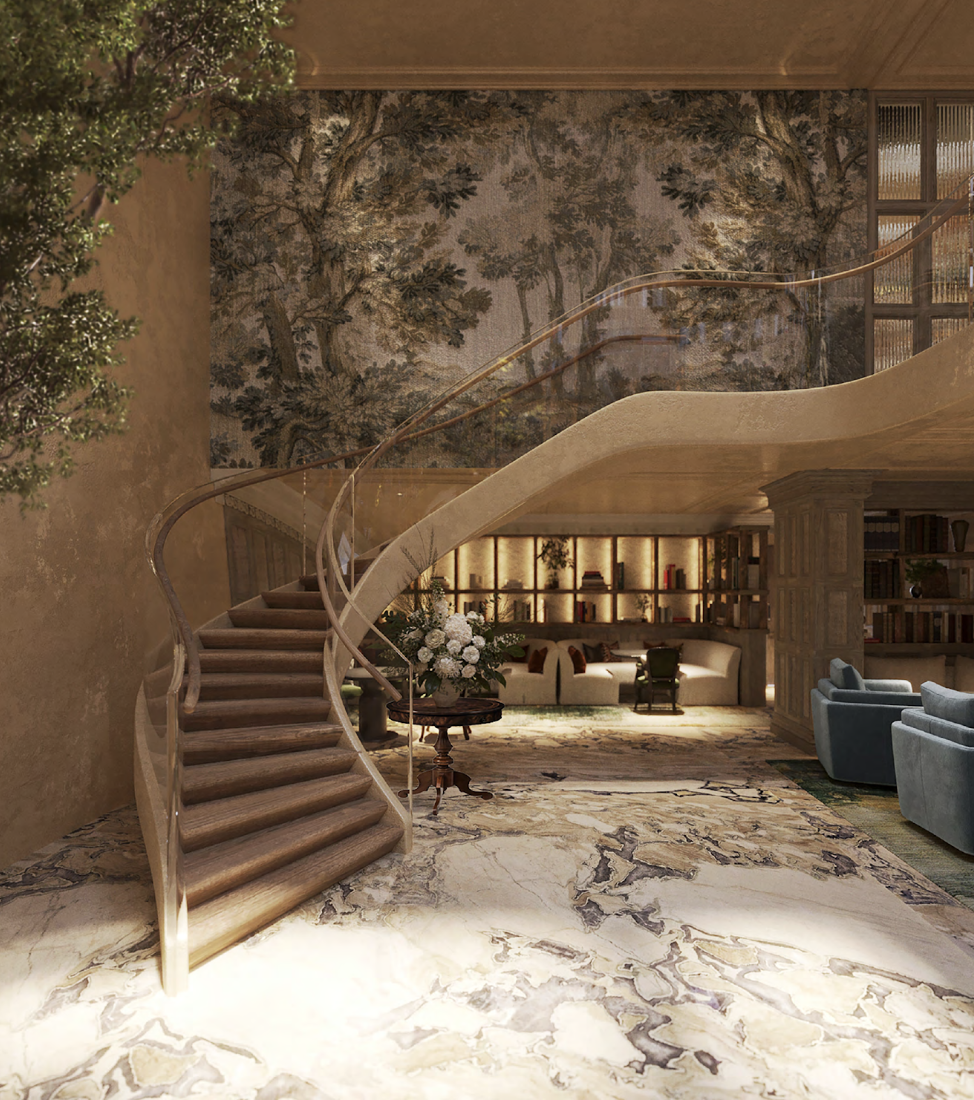
SONARA opens in early 2027 within the One Twenty development on King’s Road. It spans more than 1,500 square metres across two floors, and describes itself as a new category of hospitality altogether: a Fine Bathing & Dining Club. The premise is that bathing, treatments and dining shouldn’t be three separate bookings, but one continuous ritual.
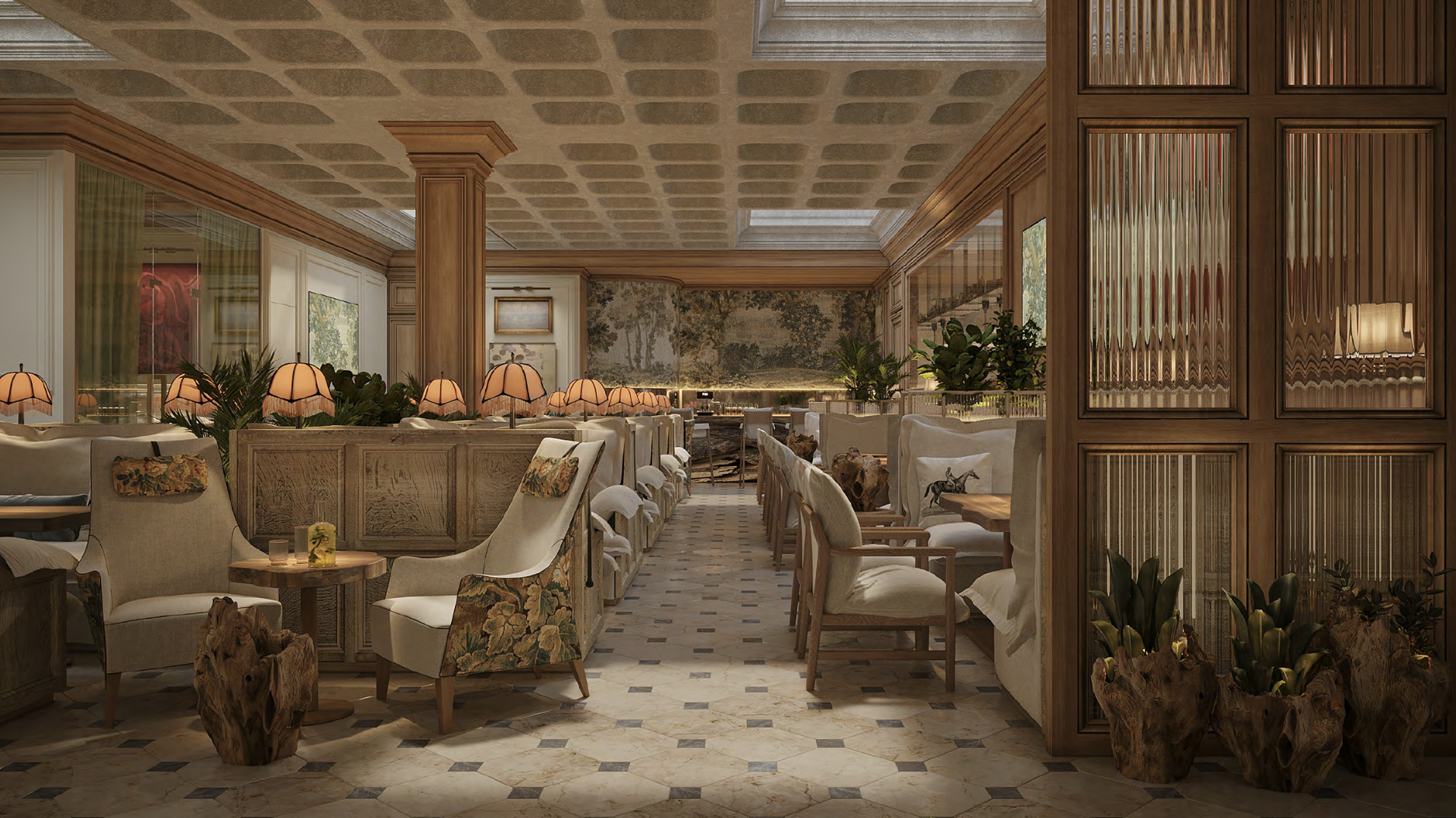
The way it works is simple, and quite clever. You arrive, change into swimwear and a robe, and are shown to your table in the restaurant. That table is yours for the whole visit, a home base you return to between rounds of heat, steam, cold and rest. You might eat something light between cycles, or settle into a longer meal as the afternoon unfolds. Nobody hurries you out of the steam room to make a dinner reservation, because dinner is already waiting, and you can wear the robe to it.
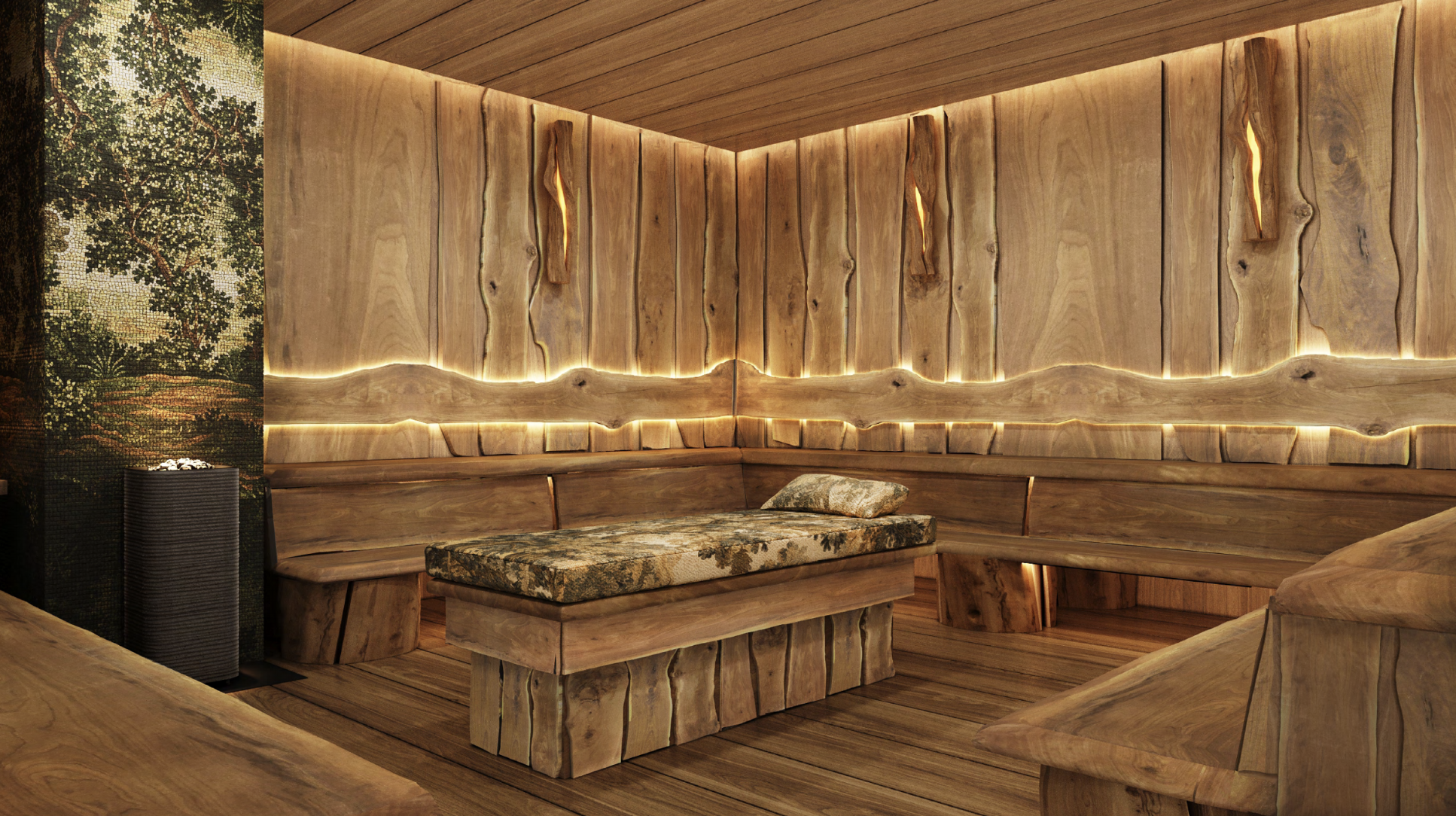
At the heart of it sits London’s largest traditional oak-lined Banya Chamber, which holds up to 30 people. Here, trained Steam Masters lead Parenie, the traditional whisk-steaming ritual, using handmade veniki of birch, oak or fir. If you’ve never experienced it, the description doesn’t quite do it justice. The bundles of leaves are swept and pressed rhythmically over the body, gathering the steam and driving it onto the skin, so the heat arrives in waves rather than all at once. It’s done to encourage circulation and ease muscular tension. As all good heat should be, it’s followed by cold immersion and rest. Then you do it again.
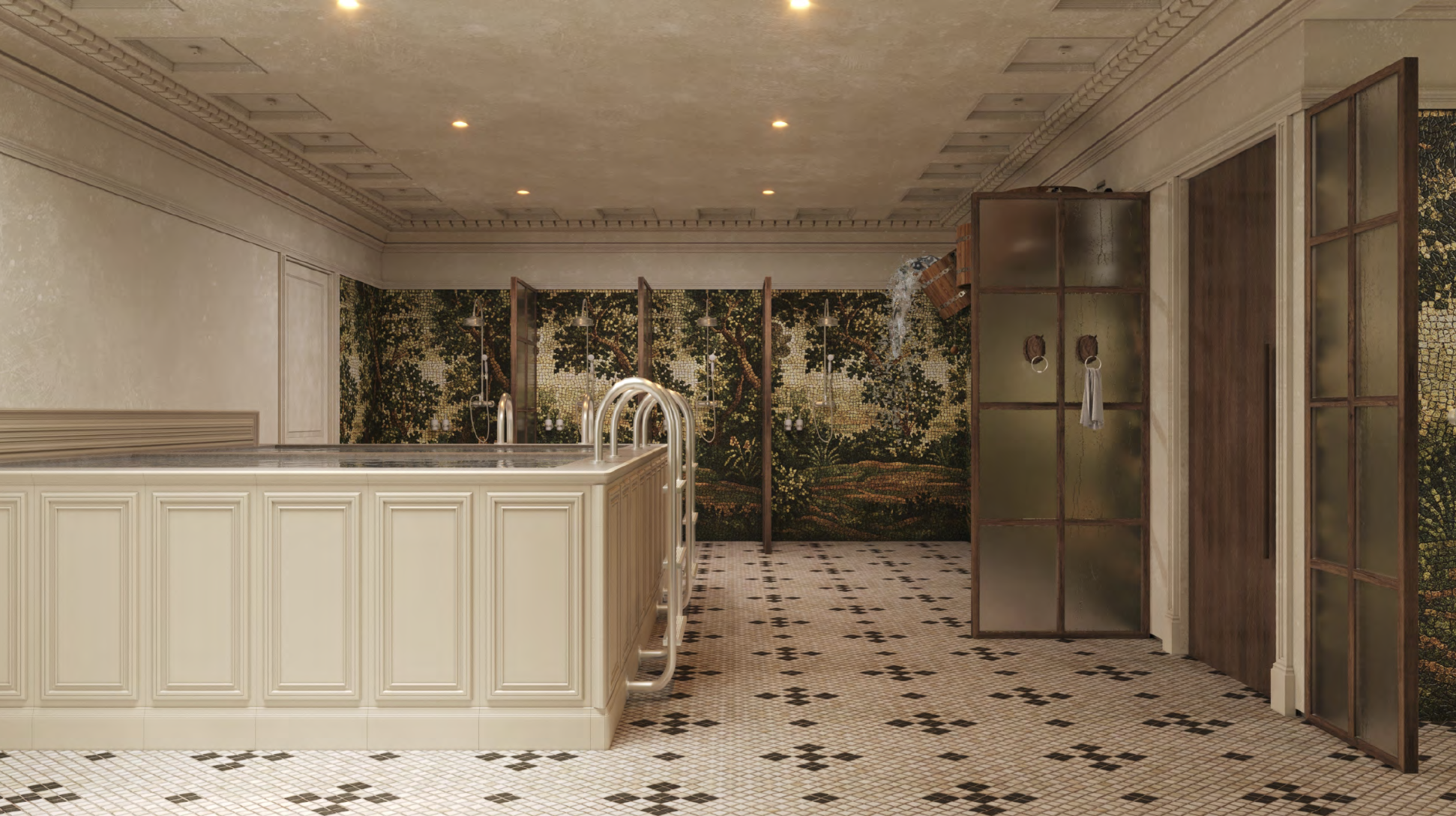
Around the banya, the first features revealed include:
a Snow Room
a Red Salt Grotto
a Cold Plunge
Shower Buckets
a Floating Room
a Hyperbaric Oxygen Chamber
More bathing and recovery spaces are still to be announced.
For groups, there are four Private Suites of around 90 square metres each, taking up to 10 guests. Each has its own banya, cold plunge, dining and relaxation space and a dedicated Steam Master. Each is designed around a different architectural tradition: an English country house, a Moroccan riad, a Chinese courtyard and an Alpine chalet. The restaurant itself seats 80, with a European-inspired menu written for every point of the visit.
It is open to members and day guests. Founding Memberships and more detail on the interiors, treatments and food are still to come.
What Finland taught me about the sauna
A few years ago, I spent time in Finland, and it changed how I think about all of this.
The first thing you learn is that the Finns don’t think of sauna as wellness at all. It’s just life. There are roughly three million saunas in a country of five and a half million people. You find them in apartment blocks, in offices, in summer cottages, even in the Parliament building. Finnish sauna culture was added to UNESCO’s list of Intangible Cultural Heritage in 2020, which tells you how central it is. Nobody I met talked about it the way we talk about a recovery modality. They talked about it the way we might talk about a kitchen table.
The second thing you learn is that it was never meant to be a test. In London, I’d seen sauna treated as something to endure: who can stay in longest, who goes coldest, who can sit nearest the stove. In Finland, that attitude is met with something close to embarrassment. You leave when you’ve had enough. You cool down properly, outside, in the lake, in the snow, or just on a bench with a drink. And you rest, because the rest isn’t the gap between the good bits. It is one of the good bits. Heat, cool, rest, repeat, for as long as it feels right, with no stopwatch in sight.
Then there is löyly, the word for the steam that rises when water is thrown on the hot stones. Its roots are often traced to an old sense of spirit or breath, and you start to understand why. A good löyly is spoken about almost reverently, as the soul of a sauna, and the person ladling the water takes the job seriously. The Finnish birch whisk, the vihta or vasta, is a close cousin of the veniki SONARA will use. The smell of warm birch leaves is one of those sensory memories that never really leaves you.
But the thing that stayed with me most was how social it all was. The sauna is traditionally a place where everyone is equal: no titles, no clothes, no phones, no performance. People talk, or they don’t, and both are fine. Business was historically done there, and families spent their Saturday evenings there. Afterwards there was almost always food: sausages warmed on the stove or the grill, something cold to drink, a long, easy evening that started in the heat and ended around a table.
Finland holds both versions side by side. There are wood-fired public saunas that have been running for the best part of a century: plain, unfussy and loved by their regulars. There are also architect-designed newer ones on the waterfront, with restaurants, terraces and a reservation system. What struck me was that the best of the new ones hadn’t abandoned the old spirit. They’d simply built a more beautiful room for it.
Read - The Frigid Truth: Why Your Cold Plunge Needs to Sync With Your Cycle
Read - Inside TripleBond: London's Newest Members' Club That Is Doing Wellness Well
Traditional but with the lights
What’s interesting about SONARA, at least on paper, is that it seems to be trying to hold both of those Finnish versions at once: the authenticity of the old bathhouse and the polish of the new one.
The tradition is in the details that matter:
A real oak-lined banya rather than a token infrared cabin.
Steam Masters trained in Parenie, rather than an attendant with a timer.
Veniki made by hand.
A rhythm of heat, cold and rest that you’re free to repeat as often as you like, rather than a timed slot.
Food and conversation built into the ritual rather than tacked on at the end. That is exactly how I saw it done in Finland, only with rather better linen.
The luxury is in everything around it: a Snow Room and a Red Salt Grotto, an 80-cover restaurant, four private suites dressed as riads and chalets, and a King’s Road address. Some of the additions sit further from the bathhouse tradition than others. A hyperbaric chamber, for instance, is a very different proposition to a birch whisk, and I’d want to understand how it will be run before getting excited about it. But the core of the idea is a sound one: a beautiful place to bathe, eat and stay a while with other people.
The real test will be whether SONARA can keep the egalitarian spirit of the sauna inside a fine-dining frame. The best bathhouses I’ve been to, in Finland, Austria and elsewhere, work because everyone becomes the same once the robe goes on. If SONARA can make that feel true in Chelsea, it will have done something genuinely new by doing something very old.
Read - Did I Ever Know How To Fully Relax?
Read - Why Your Botox Isn’t Lasting
Words by The Well Edit.
The content published by The Well Edit is for informational and educational purposes only. It is not intended as, and should not be relied upon as, a substitute for professional medical, health, nutritional, legal, or financial advice. While articles may reference insights from qualified practitioners or experts, the views expressed are their own and do not necessarily reflect the views of The Well Edit. Always seek the guidance of a qualified professional before making changes to your diet, lifestyle, supplementation, or healthcare routine.
Use of any information provided is at your own discretion and risk.