Poopmaxxing: What It Is, Why It’s Trending, And you actually Do It?

Gen Z has a habit of adding “maxxing” to anything it wants to improve. First it was sleep, then protein, then fibre. Now it’s the toilet. Scroll for long enough and you’ll find “what’s in my bag, poopmaxxer edition” videos, with fibre sweets, sachets of oats and portable footstools. There are pasta sauce recipes “for girls who love to poop” and step-by-step morning routines built around a single, satisfying trip to the bathroom.
It would be easy to roll your eyes. But as a nutritional therapist, I’m secretly delighted. For years, bowel habits have been one of the most useful things a client can tell me about and one of the things they’re least willing to discuss. Now people are posting about them for an audience of thousands.
The question is whether poopmaxxing is a useful conversation or simply another way to turn a normal bodily function into a performance metric. To find out, I asked Marilia, a gut specialist who works mostly with women, to go through it with me.
What is poopmaxxing?
“Poopmaxxing is a social media trend that treats bowel movements as something to optimise,” Marilia explains. “People share routines built around fibre intake, water, movement, toilet posture and daily timing, and some track their stool and how often they go. The goal is a bowel movement that is easy to pass and leaves you feeling complete.”
Some of that advice is well grounded, she says: a varied, plant-rich diet, good hydration, a regular routine. “Some of it has been taken too far, and that is where it starts to cause problems.”
It isn’t just fibremaxxing with a new name
Much of the poopmaxxing content online is fibre advice under another label. That makes sense: according to the latest National Diet & Nutrition Survey, 96% of UK adults fall short of the NHS-recommended 30g of fibre a day. Most of us could do with more and it isn’t an excuse for the fact that people aren’t eating enough fibre.
But Marilia is clear that the two trends aren’t the same thing, and that the difference matters. “Fibremaxxing is about increasing dietary fibre intake, which could automatically make someone think that would also help them maximise their bowel movements. However, too much fibre can actually backfire and make someone constipated if they aren’t drinking enough water, among other things.”
“Too much fibre can actually backfire and make someone constipated if they aren’t drinking enough water.”
Fibre is one input. A good bowel movement depends on several others too.
Why we’re finally talking about it
So why now? Marilia puts it down to the wider gut health conversation of the last few years. “People have started to understand that the gut plays a vital role in our overall health. I believe this conversation has opened the door to something as ordinary as pooping, which was previously considered taboo.”
And that, she says, is what the trend gets right. “Pooping is such an important part of our health, and it has been neglected until now. Your stool can say so much about how you digest and absorb nutrients, and it can provide early signs of medical conditions such as IBD and colorectal cancer.” It’s also one of the main ways the body clears what it no longer needs.
What a healthy poo actually looks like
The target, Marilia says, is simple. “A healthy bowel movement is one that is easy and effortless to pass, requires little wiping, and sits at type 3 or 4 on the Bristol Stool Chart.” The Bristol Stool Chart grades stool from type 1 (separate hard lumps) to type 7 (entirely liquid). Types 3 and 4 are the smooth, formed sausage shapes you’re aiming for.
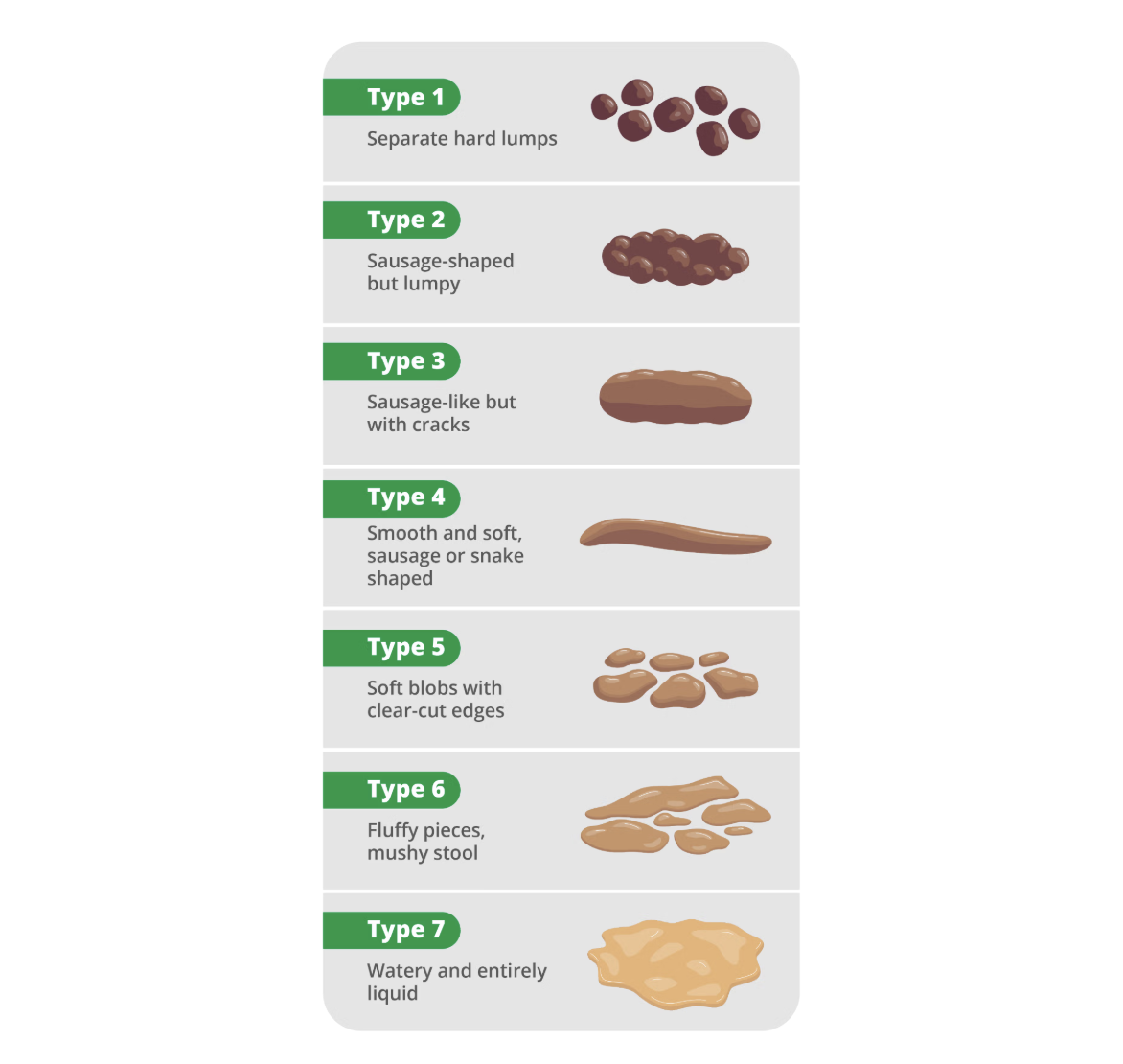
Then there’s the feeling afterwards. “That feeling of ‘completeness’ is what you want to achieve, which means you feel like nothing else has been left behind.”
On frequency, the NHS guidelines suggest that anything between three times per week to three times per day is healthy. But through looking at an optimal or functional lens, we should be aiming for a minimum of daily elimination. Consistency matters as much as frequency: ease of passing and how complete you feel afterwards.”
What matters more than hitting a number is knowing your own baseline. “A noticeable change from your own usual pattern is worth paying attention to, even if the number still sits within that range.”
What your stool tells a practitioner
This is where poopmaxxing meets the clinic. When a practitioner asks about your bowel habits, they aren’t being nosy. They’re gathering pretty important information.
“The stool can show whether someone is having little dietary fibre, not absorbing fats well, or not drinking enough water,” Marilia says. “If blood is present, it can indicate something more serious is going on. How it smells can also tell us something about digestive capacity, fermentation, or an imbalance of gut bacteria.”
The pattern she sees most often is constipation. “I work mostly with women, and women have a higher prevalence due to hormonal and anatomical factors. Most of the time the underlying reason is stress, or conditions such as intestinal methanogen overgrowth (IMO).” IMO is an overgrowth of methane-producing microbes in the gut, and methane is known to slow the movement of the intestines down.
That’s an important point for anyone poopmaxxing their way through chronic constipation. If the cause is stress or a microbial imbalance, more fibre alone may not fix it, and in some cases it can make you feel worse.
When poopmaxxing tips into harm
“Every trend taken to an extreme can be harmful,” Marilia says. “Balance isn’t glamorous, but it is what the body strives for on a daily basis.”
The first risk is going from very little fibre to a lot overnight. “That will likely promote bloating and excessive flatulence. Increase fibre gradually, over several weeks, so the gut has time to adapt.”
The type of fibre matters too. “Fermentable fibres can worsen bloating and other symptoms in people with IBS or SIBO, whereas minimally fermented fibres such as psyllium husk are often better tolerated. Which fibres suit you depends on your gut, so this is worth working through individually.”
Then there’s the obsession itself. Tracking every bowel movement and chasing the perfect one can undermine the very thing you’re trying to improve. “Obsessing about the perfect bowel movement will create more harm than good, as the body doesn’t prioritise digestion and elimination when it’s under stress.”
“Obsessing about the perfect bowel movement will create more harm than good, as the body doesn’t prioritise digestion and elimination when it’s under stress.”
Two habits she’d rule out completely. The first is laxative teas: “an absolute no.” The second is your phone. “Scrolling on the toilet is another red flag. The longer you sit, the more pressure you put on the anal area, which raises the risk of developing haemorrhoids. Avoid taking your phone to the bathroom and cap your sitting time to a maximum of 10 minutes.”
How to poopmax well
“While pooping is a natural part of physiology, achieving a healthy bowel movement requires a multi-factorial approach,” Marilia says. Her version of poopmaxxing comes down to a handful of habits.
Eat a variety of plants. “First and foremost, eat a whole-food diet with a variety of plants that provide different types of fibre. Fibre variety matters when it comes to bulking and passing stool.” Different fibres do different jobs, so a wide range of vegetables, fruit, legumes, wholegrains, nuts and seeds will serve you better than piling on one source.
Drink enough water. Fibre needs fluid to work. Without it, extra fibre can firm stool up rather than soften it.
Move every day. Daily movement helps stimulate peristalsis, the wave-like muscle contractions that push food and waste along the gut.
Keep a routine. “The gut is a creature of habit, so a consistent toilet routine is helpful, for example every day after breakfast.” Eating triggers a natural reflex in the colon, so the window after a meal is often the easiest time to go.
Get your posture right. “A supported squat position is ideal, as it straightens the colon and reduces the effort. This can be easily achieved by placing your feet on a low platform such as a footstool, step stool or Squatty Potty, so your knees are higher than your hips.”
Relax. Perhaps the least shareable tip, and one of the most important. “Being relaxed is just as important, as the gut won’t prioritise elimination if stress is perceived.”
The supplements worth knowing about
Food comes first, but Marilia does see a place for targeted support.
Artah Fibre Essential+ is her pick for anyone who struggles to get enough variety from food alone. “This fibre blend combines different fibre types, and each helps the bowel in a slightly different way. Psyllium is a viscous fibre that absorbs water and forms a gel, adding bulk and softening the stool. PHGG works in a similar way and is also partly fermented by gut bacteria, which produces short-chain fatty acids that support the colon. Green banana flour is resistant starch, which is fermented in the large intestine and feeds beneficial bacteria.”
Viridian Magnesium Citrate is a stronger option. “Magnesium citrate works mainly through osmosis. Magnesium is poorly absorbed in the small intestine, so it draws water into the bowel, which softens the stool and increases its volume. It may also stimulate the muscle contractions that move stool along.” Because it’s more potent than fibre, she recommends using it under guidance. Anyone with kidney problems or on regular medication should check with their GP or pharmacist first.
JUVIA contains ERME™ (Enzyme-Rich Malt Extract). “It’s a natural ingredient that has been shown to help improve bowel habits by breaking down carbohydrates before they can cause symptoms such as bloating, stomach cramps, constipation and diarrhoea.” Use code MC10 for 10% off.
When to stop optimising and see your GP
Poopmaxxing is about fine-tuning a system that’s working. It is not a substitute for medical care when something has changed. Marilia says any of the following warrants a GP appointment and proper investigation:
rectal bleeding or blood in your stool
unintentional weight loss
symptoms that wake you at night
bowel symptoms that are getting worse or won’t settle, rather than the usual ups and downs
a family history of colorectal or ovarian cancer, IBD or coeliac disease
So, now what?
There’s something refreshing about a trend that gets people talking openly about their bowels. Stool is one of the most honest pieces of feedback the body gives us, and for too long embarrassment has kept people from mentioning changes that deserved attention.
But the best version of poopmaxxing looks almost nothing like the content. It isn’t a handbag full of fibre sweets or a tracking app. It’s a varied plate, enough water, a daily walk, a footstool by the loo, and the phone left outside the bathroom door. Above all, it’s a gut that isn’t under pressure, from your schedule or from you. The body knows what to do. Mostly, it needs us to stop getting in the way.
Words by Marilia Chamon for The Well Edit.
FAQs
-
Poopmaxxing is a social media trend that treats bowel movements as something to optimise, using fibre, hydration, movement, toilet posture and routine. The goal is a bowel movement that’s easy to pass and leaves you feeling complete.
-
For most adults, anywhere from three times a week to three times a day is considered ‘normal’. However, functional medicine says that we should be opening our bowels daily for healthy elimination. How easily it passes and how complete you feel afterwards matter as much as frequency, and a change from your usual pattern is worth noting.
-
Types 3 and 4 on the Bristol Stool Chart: smooth, formed and easy to pass, needing little wiping.
-
Yes. Increasing fibre suddenly, or without drinking enough water, can cause bloating, wind and even constipation. Increase it gradually over several weeks. People with IBS or SIBO may tolerate less fermentable fibres such as psyllium better.
-
Sitting for long periods puts extra pressure on the anal area and raises the risk of haemorrhoids. Leave your phone outside and keep toilet time to 10 minutes or less.
-
No. Laxative teas shouldn’t be used to support healthy digestive health.
The content published by The Well Edit is for informational and educational purposes only. It is not intended as, and should not be relied upon as, a substitute for professional medical, health, nutritional, legal, or financial advice. While articles may reference insights from qualified practitioners or experts, the views expressed are their own and do not necessarily reflect the views of The Well Edit. Always seek the guidance of a qualified professional before making changes to your diet, lifestyle, supplementation, or healthcare routine.
Use of any information provided is at your own discretion and risk.