Membrane First: Rethinking the Peptide Conversation

There’s no doubt that peptides are having a moment, especially the four letter one.
While GLP-1 receptor agonists have gained attention for their weight-dropping effects, this peptide reaches into other domains from bone to heart health. And while the research and subsequent attention on this signalling molecule might be exciting, there is another question worth asking first:
What condition is the cell in when that message arrives?
Yup, I’m talking about the cell: the basic unit of life.Think of a peptide as an old-fashioned letter: for its message to reach you, it has to move through an entire communication system - the post office, sorting facility, delivery truck, and finally your mailbox. And then you must be able to read and interpret that letter! In biological terms, that delivery infrastructure includes receptors, transport systems, enzymes, and intracellular signaling networks that receive, route, and translate the peptide’s message.
This communication infrastructure converges at one place: the cellular membrane. The membrane, or the “brain” of the cell as Biologist Bruce Lipton calls it, is essentially the cell’s mailbox, sorting center, and communications hub rolled into one.
So while peptides may be all the rage, do not forget the membrane! It helps determine how those peptides are received, interpreted, and ultimately acted upon.
What are Membranes?
Membranes are the double-layered fluid fence embracing each and every one of our 37 trillion cells. Among many other things, they are responsible for keeping the good in and getting rid of the bad.
To do this job, membranes require fats. After all, lipids account for approximately half the mass of most cell membranes, although the proportion varies by cell and membrane type (Cooper, 2000). These fats include your omega-6s (no, they’re not all bad), cholesterol, and a favourite molecule type: phospholipids (Casares et al., 2023). You can think of phospholipids as the building blocks of this fence; their composition and asymmetry alters membrane fluidity, receptor organization, and signaling domains.
Where Membranes Meet Peptides
And that brings us to peptides themselves - because where do peptides bind to? Receptors.
And where do many of the receptors responsible for receiving peptide signals actually live? Right in the membrane. Let’s take GLP-1 as an example. The GLP-1 receptor initiates intracellular signaling cascades - but the receptor itself is embedded in a lipid membrane.
You can think of this communication in three steps: Signal → receptor → membrane environment.
Peptide pharmacology, and to be honest, media buzz, tend to focus heavily on the signal and receptor parts. But nothing in biology is isolated. So this is why it is essential to consider the membrane.
Peptides are Downstream, Membranes are Upstream
This is not an anti-peptide argument, but a repositioning and reckoning of our body’s complex and interconnected intelligence.
A century of peptide therapeutics, beginning with insulin, and the more recent clinical evidence around GLP-1 receptor agonists demonstrate just how powerful targeted peptide signalling can be (Muttenthaler et al., 2021). A 2024 meta-analysis of 11 randomized trials involving more than 85,000 participants found that GLP-1 receptor agonists were associated with an 18% lower risk of composite kidney outcomes, 13% lower risk of major cardiovascular events, and 12% lower risk of all-cause mortality among participants with type 2 diabetes (Sattar et al., 2024). But, of course, with such powerful signalling, implementation is equally important.
A systematic review and meta-analysis encompassing 76 randomized clinical trials and 103,371 participants found GLP-1 receptor agonist use was associated with a higher relative risk of gallbladder or biliary conditions, with stronger associations in weight-loss trials, at higher doses, and with longer duration of use (He et al., 2022). When appetite and food intake change substantially, clinicians still have to think about protein and micronutrient sufficiency, resistance exercise, gastrointestinal function, hydration and electrolytes, lean tissue preservation, dietary quality, and what happens if pharmacologic signalling is eventually withdrawn.
This is where the peptide conversation can become a little too downstream. Delivering a stronger signal does not necessarily address the root cause of dysregulation.
Upstream of that signal is … the cell membrane.
We see an interesting example of this membrane-first concept in Nicolson and Breeding’s work on chemically exposed Gulf War veterans. In a preliminary six-month, open-label study, 20 veterans with histories of environmental chemical exposure were given 6 g/day of oral glycerophospholipids as Membrane Lipid Replacement (MLR); among the 16 participants who completed the study, the researchers reported gradual improvements across multiple self-reported symptom categories and proposed that membrane glycerophospholipids may help support the gradual movement and handling of hydrophobic compounds while supporting mitochondrial and membrane function (Nicolson & Breeding, 2022).
Let’s think about this from an energetic perspective. The cell membrane is like a tiny battery that holds an electrical charge. In cells, that charge is about −70 millivolts, and the cell works hard to maintain it by carefully moving certain minerals in and out. This stored electrical energy helps nerve cells send messages and helps move important things - like peptides - across the cell membrane (Chrysafides et al., 2023; Clausen et al., 2017).
So whether someone is dealing with headaches, fatigue, blood glucose challenges, or a more complex underlying issue - such as an infection or harsh environmental exposure - there may be multiple layers of dysregulation that a peptide alone is not designed to address. Ultimately, the body’s energy system is compromised. At the cellular level, that can involve disrupted energy production, membrane signaling, and the electrical potential cells depend on to communicate and function normally. So while peptides can deliver a powerful message, they don't necessarily rebuild the cellular infrastructure responsible for receiving and responding to that message.That said, rather than framing the two approaches as competitors, it may be more useful to think upstream, then downstream: support your membrane first, while recognizing that targeted peptides can be valuable tools when clinically appropriate.
Build the Architecture Before Amplifying the Signal
So what does this all mean, practically? It starts by supporting basic cellular structure and function.
That means providing the body with the raw materials, tangible and intangible, necessary for membrane construction and endogenous signaling.From a nutritional perspective, consider the following:
Prioritisation of phospholipids. Food sources include egg yolks, dairy, organ meats, meat and poultry, soy, and seafood, with eggs being a particularly concentrated dietary source of phosphatidylcholine (PC) (Blesso, 2015; Küllenberg et al., 2012).
Think about fatty-acid balance, not simply “more omega-3.” The fatty acids incorporated into phospholipids help determine membrane properties, which means the balance between dietary omega-6 and omega-3 fats matters. In cellular nutritional therapy, a 4:1 omega-6 (linoleic acid) to omega-3 (alpha-linolenic acid) ratio is used as a target, as this ratio has produced favorable effects on learning, pain thresholds, and thermoregulation (Yehuda & Carasso, 1993). Omega-6 fats often get a bad rap, but not every omega-6 is made the same: the type, quality, processing, and handling of the fat matter. Focus on high quality sources of linoleic acid such as sunflower and sesame seeds, walnuts, and eggs. Alpha-linolenic acid is especially abundant in flaxseeds, chia seeds, hemp seeds, and walnuts. EPA and DHA, another type of omega-3, are found primarily in cold-water fatty fish such as sardines, anchovies, herring, mackerel, and salmon.
Don't forget the minerals that help create cellular electricity. Membrane function isn't only about fat because the membrane also maintains mineral concentrations between the inside and outside of the cell. For example, the balance between sodium and potassium help maintain the electrochemical gradients required for membrane potential, nutrient transport, cellular communication, and normal signaling (Clausen et al., 2017; Fedosova et al., 2022). This is why adequate mineral intake and overall electrolyte balance matter alongside phospholipid status.
So now that you’re supporting the membrane, it’s worth noting you can also support peptide production endogenously:
Feed the short-chain-fatty-acid pathway. Not every fatty acid becomes part of the membrane. Butyrate, for example, is a short-chain fatty acid produced largely when gut microbes munch and ferment certain dietary fibers and resistant starches (hello, cooked and cooled rice!). This becomes particularly relevant to the peptide conversation because SCFAs can activate certain receptors and have demonstrated stimulation of endogenous GLP-1 secretion through this pathway (Tolhurst et al., 2012).
Respect the light-dark cycle because peptide signaling keeps time, too. Cells don't operate the same way at 8 a.m. as they do at midnight. Circadian clocks exist not only in the brain but also in the gastrointestinal tract, pancreas, liver, adipose tissue, and skeletal muscle. Research has found that prolonged artificial light exposure and sleep disruption can alter normal GLP-1 secretion patterns, while intestinal cell peptide release is connected to clock machinery (Liu et al., 2022).
EDITORS CHOICE
The foundation of cellular health will always start with the basics: a nutrient-dense, whole-food diet, adequate protein and healthy fats, regular movement, restorative sleep, hydration, time outdoors, and meaningful ways to regulate stress. These are the inputs our cells are designed to work with, and no supplement can replace them.
At the same time, we’re asking our biology to navigate a very different environment than it did historically. Chronic psychological stress, disrupted sleep, highly processed foods, nutrient depletion, environmental exposures, and other sources of allostatic load can collectively increase the demands placed on cellular membranes, antioxidant systems, mitochondrial function, and normal detoxification and repair pathways. In that context, even an excellent diet may not always provide the concentrated nutritional support needed to keep pace with individual demands. This is where thoughtfully selected, high-quality supplementation can complement, not replace, the foundations.
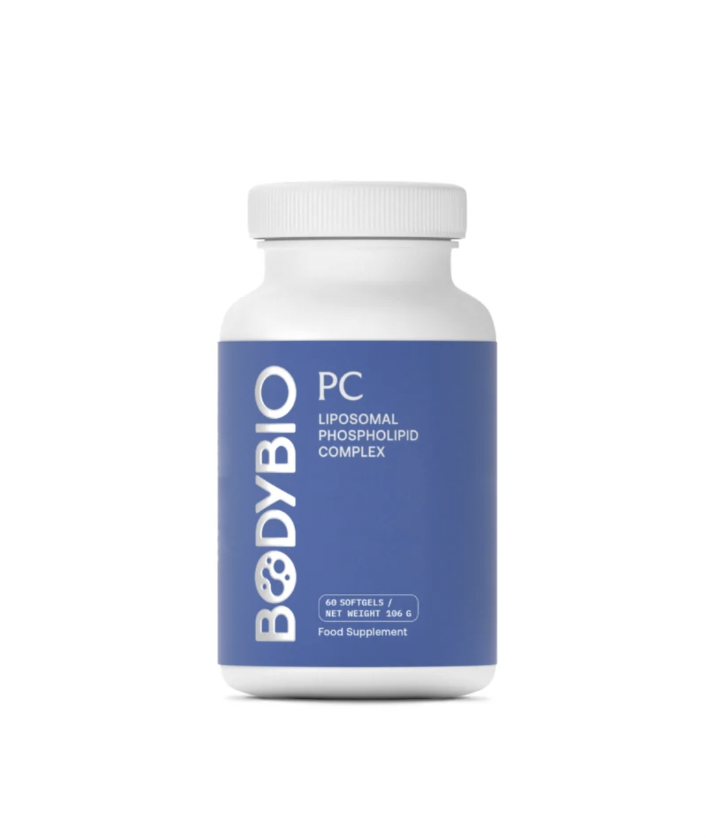
BodyBio’s formulations can be thought of as complementary tools for supporting this cellular terrain. BodyBio PC provides a concentrated complex of phosphatidylcholine (PC), phosphatidylethanolamine (PE), and phosphatidylinositol (PI), structural phospholipids that help maintain cellular and organelle membrane architecture, fluidity, and signaling. Independent biophysical research at the University of Connecticut has also demonstrated that BodyBio PC forms stable, fluid phospholipid bilayers, providing mechanistic support for its role in healthy membrane architecture and cellular resilience.
Balance Oil provides the essential fatty acids linoleic acid (LA) and alpha-linolenic acid (ALA) in a 4:1 ratio, supplying dietary building blocks that can be incorporated into membrane phospholipids and participate in normal lipid signaling. Resolvin adds phospholipid-bound DHA and EPA from herring roe alongside naturally occurring specialized pro-resolving mediators and their precursors, supporting the body’s normal pathways for immune balance, cellular recovery, and tissue resilience. Finally, BodyBio Butyrate provides the short-chain fatty acid butyrate, supporting colonocyte energy metabolism, intestinal barrier integrity, and gut-derived metabolic signaling - including pathways involved in the body’s endogenous secretion of peptides such as GLP-1.
The goal isn’t to supplement our way out of an unhealthy lifestyle. From a membrane-first perspective, these products approach the same cellular terrain from different directions: phospholipid architecture, essential fatty-acid balance, long-chain omega-3 signaling, and microbiome-derived short-chain fatty-acid physiology. Together, they can help provide the nutritional raw materials that support the body’s own capacity for cellular communication, adaptation, and resilience.
Conclusion
Peptides are an exciting chapter in medicine, but they are still only one part of a much bigger biological story. Both the message and machinery matter. This isn’t about pitting membrane versus peptide; it’s membrane before peptide.
Words by Kayla Butera for The Well Edit.
REFERENCES
Blesso, C. N. (2015). Egg phospholipids and cardiovascular health. Nutrients, 7(4), 2731–2747. https://doi.org/10.3390/nu7042731
Chrysafides, S. M., Bordes, S. J., & Sharma, S. (2023). Physiology, resting potential. In StatPearls. StatPearls Publishing.
Clausen, M. V., Hilbers, F., & Poulsen, H. (2017). The structure and function of the Na,K-ATPase isoforms in health and disease. Frontiers in Physiology, 8, 371. https://doi.org/10.3389/fphys.2017.00371
Cooper, G. M. (2000). Structure of the plasma membrane. In The cell: A molecular approach (2nd ed.). Sinauer Associates.
He, L., Wang, J., Ping, F., Yang, N., Huang, J., Li, Y., & Xu, L. (2022). Association of glucagon-like peptide-1 receptor agonist use with risk of gallbladder and biliary diseases: A systematic review and meta-analysis of randomized clinical trials. JAMA Internal Medicine, 182(5), 513–519. https://doi.org/10.1001/jamainternmed.2022.0338
Küllenberg, D., Taylor, L. A., Schneider, M., & Massing, U. (2012). Health effects of dietary phospholipids. Lipids in Health and Disease, 11, 3. https://doi.org/10.1186/1476-511X-11-3
Liu, J., Huang, Y., Li, Y., Xu, R., & Li, J. (2022). Circadian rhythm of GLP-1 secretion and its modulation by the circadian clock. Frontiers in Endocrinology, 13, 1003247.
Muttenthaler, M., King, G. F., Adams, D. J., & Alewood, P. F. (2021). Trends in peptide drug discovery. Nature Reviews Drug Discovery, 20(4), 309–325. https://doi.org/10.1038/s41573-020-00135-8
Nicolson, G. L., & Breeding, P. C. (2022). Membrane lipid replacement with glycerolphospholipids slowly reduces self-reported symptom severities in chemically exposed Gulf War veterans. International Journal of Translational Medicine, 2(2), 164–173. https://doi.org/10.3390/ijtm2020014
Sattar, N., Lee, M. M. Y., Kristensen, S. L., Branch, K. R. H., Del Prato, S., Khurmi, N. S., Lam, C. S. P., Lopes, R. D., McMurray, J. J. V., Pratley, R. E., Rosenstock, J., Tuttle, K. R., & Gerstein, H. C. (2024). Cardiovascular, mortality, and kidney outcomes with GLP-1 receptor agonists in people with type 2 diabetes: A systematic review and meta-analysis of randomised trials. The Lancet Diabetes & Endocrinology.
Tolhurst, G., Heffron, H., Lam, Y. S., Parker, H. E., Habib, A. M., Diakogiannaki, E., Cameron, J., Grosse, J., Reimann, F., & Gribble, F. M. (2012). Short-chain fatty acids stimulate glucagon-like peptide-1 secretion via the G-protein-coupled receptor FFAR2. Diabetes, 61(2), 364–371. https://doi.org/10.2337/db11-1019
Yehuda, S., & Carasso, R. L. (1993). Modulation of learning, pain thresholds, and thermoregulation in the rat by preparations of free purified α-linolenic and linoleic acids: Determination of the optimal ω3-to-ω6 ratio. Proceedings of the National Academy of Sciences of the United States of America, 90(21), 10345–10349.
The content published by The Well Edit is for informational and educational purposes only. It is not intended as, and should not be relied upon as, a substitute for professional medical, health, nutritional, legal, or financial advice. While articles may reference insights from qualified practitioners or experts, the views expressed are their own and do not necessarily reflect the views of The Well Edit. Always seek the guidance of a qualified professional before making changes to your diet, lifestyle, supplementation, or healthcare routine.
Use of any information provided is at your own discretion and risk.