Wimbledon's Over - But Tennis Elbow Might Not Always Be About Tennis
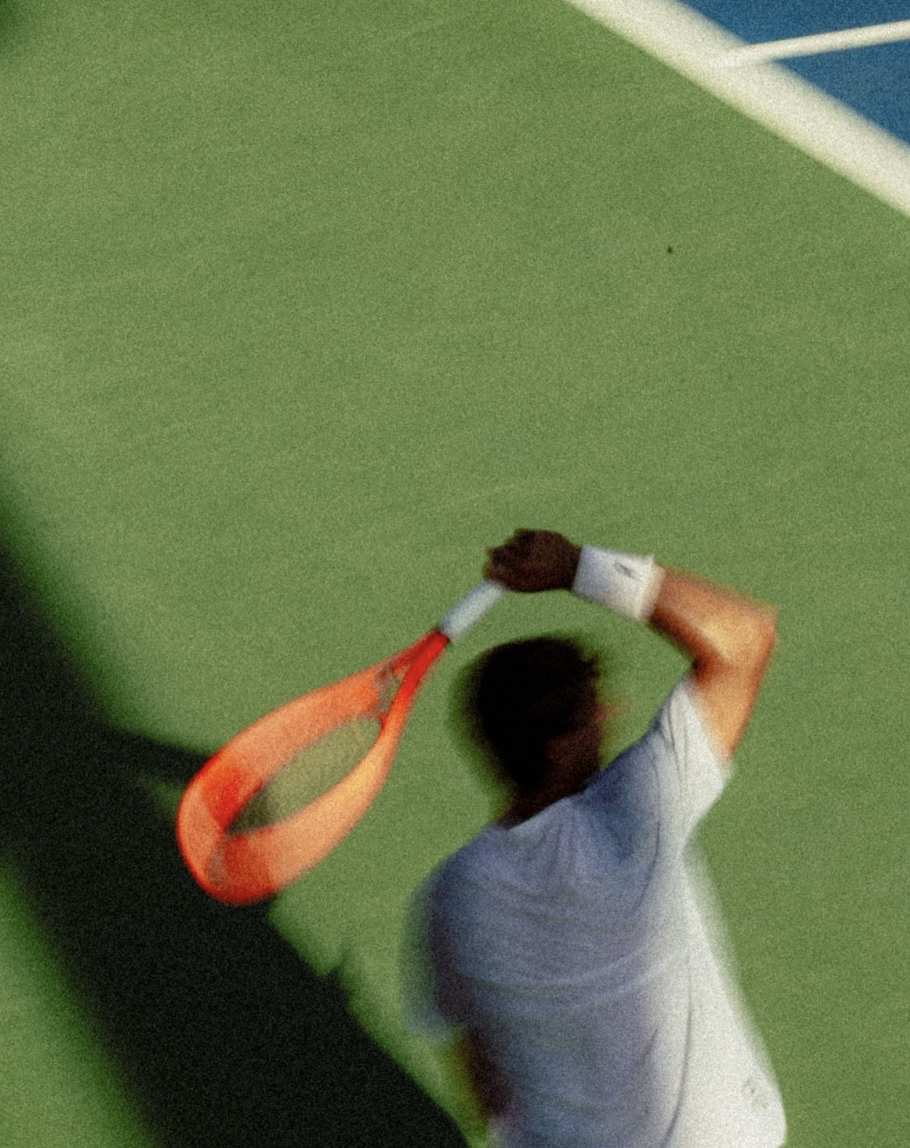
Wimbledon has come and gone, the courts are being packed away, and for most people that's the end of the tennis conversation until next year. In the clinic, it's a different story. This is actually when I start seeing more of it, not less, the elbow pain that everyone still calls "tennis elbow," whether or not a racquet was ever involved.
WHY IT PEAKS NOW
A lot of it comes down to accumulation. Across the summer, people are playing more racquet sports than usual, tennis, cricket, padel, and that cumulative load builds up over weeks. Repeated loading like this can overwhelm the tendon, and soreness that would normally settle in a day or two starts to overstay its welcome. But sport is only part of the picture. I see just as much of this in desk workers with poor ergonomic setups, spending all week on a keyboard and mouse. Or in people who've spent the weekend on DIY or in the garden, doing repetitive tasks their forearm muscles simply aren't conditioned for. The name is misleading, this is a load problem, not necessarily a tennis problem.
WHAT TO LOOK OUT FOR
The pain sits on the outside of the elbow, at what's called the common extensor tendon origin, the point where the forearm muscles attach to the elbow via a tendon. Some muscle soreness after exercise is completely normal. What isn't normal is soreness that sits close to the elbow itself, or that lingers for more than a few days after the activity that caused it.
If the soreness is close to the elbow, or it's still there a few days later, that's not normal recovery. That's the start of something.
Left unaddressed, the pain and stiffness tend to build, and it can drag on for some time, particularly if you keep playing through it or carry on with whatever activity aggravated it in the first place.
GETTING A DIAGNOSIS
Provided there's no other mechanism of injury, a fall, for example, this is usually something I can diagnose in clinic using specific tests, without needing a scan. Imaging comes in when symptoms are persisting longer than expected despite treatment, or when there's been more force involved than a typical overuse case. It's also worth knowing what else can masquerade as tennis elbow. Neck pain with nerve irritation can refer pain to the same area and mimic it closely. And in people training at high volume, tennis players putting in serious hours, for instance, bone stress injuries can present in a very similar way. Getting the diagnosis right matters, because the treatment for each is different.
HOW TO DEAL WITH TENNIS ELBOW
A typical treatment plan focuses on progressive rehabilitation of the forearm muscles, gradually loading the tendon so it can rebuild its tolerance, alongside rehab of the shoulder, which plays a bigger role in this than people expect. In some cases, shockwave therapy can support the process. It’s important to note that timeframes vary a lot depending on how long the problem has been going on and how severe it is, recovery can run anywhere up to three to six months, sometimes longer. It's a tendon injury, and tendons take time.
WHAT YOU CAN DO ABOUT TENNIS ELBOW IMMEDIATELY
If you're mid-activity and it's starting to feel sore, the simplest useful thing you can do is take a break and offload the tendon, then get it looked at by a physiotherapist rather than waiting it out.
When it comes to exercise, strengthening the forearm muscles is generally the first port of call, and the right exercises will look different from person to person depending on what the tendon can currently tolerate. One thing I'd actively avoid is stretching the area, it can provoke the pain further and doesn't do anything to build the tendon's capacity to handle load, which is really the whole point of rehab.
Outside of the gym, it's worth looking at desk ergonomics and how much time you're spending on a mouse and keyboard, since that's one of the most common aggravating factors I see. An ergonomic mouse and mousepad can genuinely help.
THE OVERLOOKED FACTOR: NUTRITION
Diet doesn't get talked about enough in tendon recovery, but it matters. Protein intake and overall energy availability are the two biggest levers for supporting a proper healing response, under-fuelling will slow tendon repair regardless of how well the rehab is going.
There's emerging evidence around collagen supplementation supporting tendon health. Some of the more interesting research looks at timing, taking a collagen peptide dose alongside vitamin C around 30-60 minutes before loading exercise, on the theory that it gives the tendon the raw materials to hand right when it's being asked to adapt. It's still early-stage science and not something I'd rely on in isolation, but it's a low-risk addition alongside the rehab itself, not instead of it.
Alcohol is worth calling out specifically, rather than lumping it in as a general "eat clean" instruction. It interferes with protein synthesis, which is the process your body relies on to actually rebuild tendon tissue, and it disrupts the deep sleep where a lot of that repair work happens. Cutting back during a flare-up isn't about willpower or virtue, it's a fairly direct lever on the healing timeline. Alongside that, keeping highly processed, high-sugar foods to a minimum helps keep overall inflammation lower, and staying properly hydrated supports the collagen cross-linking process that gives tendons their strength.
None of this replaces the rehab work, loading the tendon is still what drives recovery. But diet sets the environment that rehab has to work within, and it's an easy thing to get right.
Words by James Lee for The Well Edit.
The content published by The Well Edit is for informational and educational purposes only. It is not intended as, and should not be relied upon as, a substitute for professional medical, health, nutritional, legal, or financial advice. While articles may reference insights from qualified practitioners or experts, the views expressed are their own and do not necessarily reflect the views of The Well Edit. Always seek the guidance of a qualified professional before making changes to your diet, lifestyle, supplementation, or healthcare routine.
Use of any information provided is at your own discretion and risk.