How High Achievers Accidentally Train Themselves to Stay Stressed

Ok, let’s jump to a moment, a Sunday morning and your calendar is looking, genuinely empty, nothing on the to-do list, and instead of relief you feel restless. Guilty, almost - like you should be doing something. The stillness doesn't feel as restful as you imagine it should but instead, it showcases a problem to be solved.
If that's you, then this is for you. Not the version of you that has it together on paper, the promotions, the packed calendar, the reputation for being the one everyone can rely on. The other version. The one who can't remember the last time they did nothing and felt ‘fine’ about it. The one who has spent so many years being strong, capable and "on" that they've didn’t realise they may have forgotten what ‘off’ even feels like.
Because here's the thing nobody tells people who work this hard: it isn't laziness that makes rest feel impossible. It isn't a flaw in your character, or proof that you simply love your work more than everyone else does. According to Pei Chan, clinical hypnotherapist and breathwork coach, it's something far kinder and sadder than that. It's a nervous system doing exactly what it was taught to do, by years of you showing up, holding it together, and getting the job done no matter what it cost you. So rather than blaming yourself and training an algorithm of ‘eldest daughter’ ‘overachiever’ and ‘workaholic’ we’re explaining the science behind it and what you can actually do about it.
"When someone has been 'trained' to stay stressed, their nervous system has learnt that being in a state of activation is familiar and safe," she says. "For some high achievers, fight-or-flight has actually become their normal state. They're hypervigilant: constantly anticipating what's next, scanning for problems, thinking ahead and staying prepared. They have spent so long operating this way that they associate it with being productive, responsible or just being in control."
Every all-nighter. Every time you said yes when you know you meant no. Every time you pushed through instead of stopping. Your body was taking notes. And what it learned, was that the alertness, the striving, the not-quite-ever-resting, is what keeps you safe. That's not a weakness at all, it’s devotion, misapplied.
The nervous system learns the way any system learns: through repetition. If your body has repeatedly experienced being alert, busy and productive as the way to stay safe and succeed, that state eventually becomes your baseline. Calm stops feeling calming. It starts feeling unfamiliar, even unsafe. Which is how you end up with a free Sunday and a body quietly asking, "Why am I not doing something?"
It’s also why those who have trained their nervous system to be in a state of fight or flight often find themselves complaining of ‘only feeling they started to feel rested as the holiday came to an end’.
The Cruel Part: You Probably Already Know
Here's what makes this so painful for people who work bloody hard. It isn't that you're unaware. You are, in all likelihood, one of the most self-aware people in any room you walk into. Whether that’s because you’ve had to do the work, to work through something or because you’ve been told.
"High achievers are particularly good at intellectualising these patterns," Pei says. "They can tell you exactly why they are stressed and anxious. They can explain where it comes from, understand their triggers and know they need to slow down, and still find themselves going through the same loop. Because intellectual understanding doesn't necessarily change the subconscious patterns driving our behaviour."
Sit with how that feels, for a moment. You can narrate your own exhaustion in perfect detail, to your therapist, your best friend, yourself at 2am, and still wake up tomorrow and do the exact same thing again. It’s not because you're not trying, but maybe knowing it was never going to be enough. "You can't always think your way out of a pattern that wasn't created through thinking," Pei says. It's why her work goes underneath the thinking altogether, into the subconscious, through breathwork and hypnosis, rather than handing someone yet another insight to carry around and fail to act on. "We are not trying to switch off the brain. We are giving the nervous system an opportunity to experience a different state, where being calm doesn't mean losing control, productivity or safety."
You are not broken. You are not lazy for wanting to stop and not knowing how. You are a person whose body learned a lesson too well - classic overachiever.
A Breath That Mirrors A Life
One client came to Pei exhausted, wanting, genuinely, to learn how to relax. The work didn't start with a relaxation technique, it started with her breath.
"When someone is unconsciously chasing stress, their breathing is often shallow and short, sitting higher in the chest," Pei says. "There's very little spaciousness in the breath. They are essentially living life on the surface."
The insight Pei was after wasn't a clinical observation for her to deliver. It was one the client needed to arrive at herself: this is how I'm breathing, and this is how I am living. "How you breathe is how you live," Pei says. Once a client can see their breath mirroring the way they move through their life, they have something they can actually work with, in the room and afterwards. Using acupressure and conscious connected breathing, Pei guides the breath down and out of the chest, towards the lower abdomen, building a felt sense of groundedness and presence rather than a mental instruction to "relax."
The real work, she says, happens after the session ends. Once someone understands their own pattern, they start to catch it in real time, mid-meeting, mid-scroll, mid-argument, whilst replying to their emails and can consciously shift it. "That's when the real unwinding begins: not just learning how to relax in a session, but learning how to bring that awareness into the way you live."
Read - What's Your Resillence Score Saying About Your Summer Plans?
What You're Actually Proving
Push past the busyness and the packed calendars, and Pei says what's usually sitting underneath high achievement is a question of self-worth. Not ambition or discipline.
"People pleasing can be one expression of that, where being useful, needed or successful becomes a way of proving your value and securing acceptance." The irony, she points out, is that high achievers are often the most outwardly capable, confident people in the room, while carrying a very different, much quieter belief about their own worth underneath it.
There's something almost heartbreaking in that image: the person everyone leans on, is wondering if they'd still be loved if they ever stopped being useful. If you've ever felt that, you're not imagining it, and turst that you're not alone in it.
Pei is careful not to flatten everyone into the same story. "I don't believe in putting people into a bucket just because they're a 'high achiever.' The behaviour might look similar on the surface, but the subconscious belief driving it can be completely different."
For one person it's approval. For another, it's control, or the fear of being seen to fail, or simply avoiding a feeling they'd rather not sit with.
The actual work, she says, starts with three questions, and they're worth asking yourself honestly, even just once: What are you trying to prove? Who are you trying to prove it to? And what do you believe will happen if you stop?
Wired But Tired, And The Line That Actually Matters
If you've ever been bone-tired and simultaneously unable to switch off, lying awake with a mind that will not quit even though your body is begging to, you'll recognise Pei's description of "wired but tired" immediately. "It's when your mind and body are exhausted, and yet you don't know how to stop. You keep yourself busy as a way of numbing yourself. Staying wired feels easier than letting go of control, because the idea of truly stopping can feel unfathomable."
It's tempting to measure this by workload, how much is on the plate, but Pei says that's the wrong metric entirely. "The question isn't how much you have on your plate. It's whether your nervous system knows how to put the plate down."
Which gives her a cleaner way to separate healthy drive from dysregulation than most of us use. It isn't about ambition, or hours, or how much you're carrying, plenty of people carry a lot and still sleep fine. It's about choice. "When you're regulated, you are empowered to choose when to switch on and when to switch off. When you are dysregulated, the pattern is choosing for you."
That distinction matters, because it means this was never really about your work ethic. Your work ethic is not the problem. The problem is that somewhere along the way, you stopped being the one holding the reins.
Inside A Session
For anyone curious what this work actually looks like in practice, Pei walks through it in three stages. First, an intake session, unpacking what someone wants to change and identifying the beliefs sitting underneath it. Second, the hypnosis session itself: a guided, deeply relaxed, focused state, sometimes returning to specific experiences connected to the pattern, working directly with the subconscious associations underneath the behaviour. Third, a bespoke recording, built from that work, which clients listen to for at least 21 days to reinforce the new pattern. "The brain learns through repetition," Pei says, "which helps reinforce these new patterns and make them familiar."
It's normal, she says, to come out of a session tired or emotional. What clients tend to notice isn't a dramatic transformation but something quieter, and in its own way more moving: a belief or a situation that used to trigger them no longer carries the same charge.
As for breathwork, Pei resists prescribing a fixed protocol. She starts by watching how someone actually breathes: shallow or deep, high in the chest or low in the belly, where the tension sits, what happens to the breath when they speak. From there, she works to bring the breath back down into the abdomen. "Physiologically, conscious breathing can influence the autonomic nervous system and help shift the body out of a constant state of high alert. But for me, the work goes beyond the physiology. It's about helping clients become aware of how their breath changes when they're stressed, and giving them a practical tool they can use in everyday life."
Tellingly, the goal was never to eliminate stress, or to eliminate your driven, dedicated personality. "Stress isn't something we can or should eliminate. It's part of being human," she says. "I often say that I help my clients 'struggle well' in life."
The Sign Nobody Thinks To Flag
Ask Pei what the earliest sign of a stressed baseline looks like, and it isn't a symptom in the usual sense. It's an absence of concern. "The first sign is often that they don't think there's anything wrong. They start justifying and discounting the amount of stress they're actually experiencing: 'I'm fine. I'm just busy.' Or, 'It's just a really intense period.' They normalise it because they have accepted it as their normal state of functioning."
If you just read that and thought of yourself, every time you've said "I'm fine, just busy" to someone who asked if you were okay, let that be the moment you take it seriously. Underneath the justification, the body is usually saying something different: shoulders sitting higher than they should, breath staying shallow, a low hum of tension that never fully clears, disrupted sleep, digestive issues that get filed under "stress, probably" and never looked at again.
"I'll Rest Once..."
If there's one belief Pei hears more than any other, it's this: I don't deserve to rest until. Until the project's finished. Until everyone's happy. Until I've proven something, to someone, or to myself.
"The problem is that the goalpost keeps moving. You finish the project, then there's the next one. You hit the target, then you set another." The achievement gets absorbed almost instantly, rarely sat with, which means there's never really a moment of having done enough.
This is one of the saddest things about being a hard worker: you can spend a whole career collecting proof of what you can do, and still never feel like you've earned the right to stop. Nobody hands you that permission. Pei explains to use that the way you breathe, she believes, shapes the way you live, and the way you sleep, and sleep shapes almost everything about how you show up the next day.
The Small First Move
Pei's answer to what to actually do about all this isn't a routine or a regimen. It's smaller than that, and it starts wherever you're reading this.
"Start by noticing your breath. Your breath never lies." Not changing it straight away, just pausing to ask: where am I breathing from right now? Shallow? High in the chest? Are the shoulders lifted? Then, consciously, slowing it down and letting it drop lower, into the abdomen.
"The important thing is that you are catching the pattern in real time," she says. "The goal isn't to eliminate stress but to recognise when you're in it, so you can choose how you respond rather than letting the pattern choose for you."
That, she says, is the beginning of learning to ‘struggle well’.
When it comes to nutrients, we’re looking at things that sustain energy but also balance our nervous system. As a Nutritionist, I start with ensuring that blood sugar is stable through the day to ensure that you can remain productive without extreme energy crashes and surges. Incorporating protein and healthy fats with every meal and caffienating after meals rather than on an empty stomach. As soon as our bodies are in any state of stress, we burn through magnesium which is often why we want to use our laptop at the same time as a bowl of chocolate in the evenings. Incorporating foods such as pumpkins seeds, dark chocolate, lean meats is a great start to cover your bases here as well as being wonderful sources of Amino Acids (the building blocks of protein) essential for hormone stability and stopping cortisol take control.
Then, I’d compliment the staple diet with herbs and adaptogens that keep the ‘wired but tired’ mind steady. Lemon balm and chamomile, is fantastic for this and can be your herbal tea of choice when winding down in the evening.
EDITORS CHOICE - BODY BIO CALM
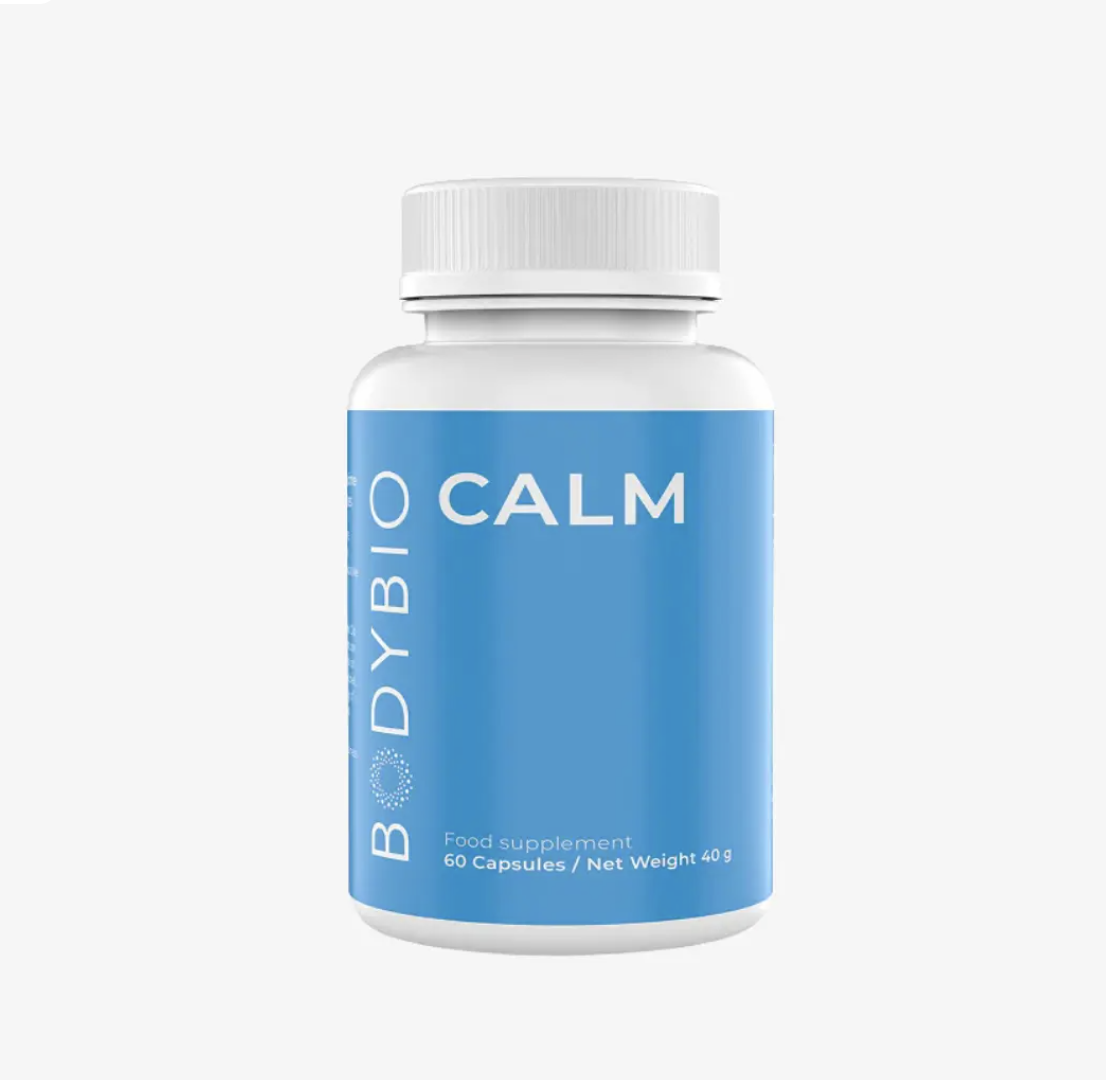
“This is in my cupboard at all times, think of it as the ‘relief’ when you get home from a day of ‘gahhh’ and still have ‘lot’s to do tonight’ but you also just need to ground, stabilise and tell the body, it’s allowed calm down, even with a lengthy todo list.
My evening can look like taking 1x capsule when I get in from the day so that by the time I have showered, washed away the day and made dinner I feel cool, calm and collected to reopen the laptop for the night shift, rather than eating in fight or flight which is only going to send my digestive system into a frenzy and cause havoc for my sleep too”
And maybe that's the real permission this piece is here to give: you don't have to earn your rest. You don't have to finish everything, prove everything, or hold everyone else up before you're allowed to put the plate down. You have already done enough, more than enough, to deserve one honest breath, right now, that goes all the way down.
Words by Pei Chan for The Well Edit.
The content published by The Well Edit is for informational and educational purposes only. It is not intended as, and should not be relied upon as, a substitute for professional medical, health, nutritional, legal, or financial advice. While articles may reference insights from qualified practitioners or experts, the views expressed are their own and do not necessarily reflect the views of The Well Edit. Always seek the guidance of a qualified professional before making changes to your diet, lifestyle, supplementation, or healthcare routine.
Use of any information provided is at your own discretion and risk.