
Six Experts On The Vitamin C Serums Worth Your Money
October is when the summer starts showing up on your face. The freckles that felt charming in August settle into something patchier, the light is lower and less forgiving, and the bathroom cabinet starts to feel due a rethink. For most of the experts we speak to, that rethink begins with vitamin C.
What’s striking about this roundup isn’t how much the experts agree, but how differently they arrive at the same conclusion. Millicent chose for oily skin, Rosie chose the formula, Melinda chose a progression, and Justine chose repair. Ingrid stepped back and pointed at the plate, and Eleanor chose to work from both directions at once.
It earns its place. Few skincare ingredients have been studied as long or as thoroughly. But the category has become crowded and confusing. There are different forms, wildly different percentages, and serums that turn orange in a fortnight. There are also products that cost more than a weekend away and promise roughly what a lemon does. So rather than ranking bottles, we asked people who work with skin every day which vitamin C they come back to, and why.
What vitamin C actually does
Vitamin C does three useful things on the skin. The first is antioxidant protection. UV exposure and pollution generate free radicals that damage collagen and cell membranes, and vitamin C neutralises them before they can do as much harm. That’s why it belongs in the morning, under SPF. It doesn’t replace sunscreen, but it mops up the damage sunscreen lets through.
The second is collagen. Vitamin C is an essential cofactor for the enzymes that stabilise and cross-link collagen fibres. Without enough of it, the body simply can’t build collagen properly. Scurvy is the extreme illustration of that.
The third is pigmentation. Vitamin C interferes with tyrosinase, the enzyme that drives melanin production, which is why it’s the ingredient most experts reach for to fade post-summer patchiness.
Not all vitamin C is the same
The form matters as much as the percentage. L-ascorbic acid is the pure, most studied form, with the strongest evidence for collagen and brightening. It’s also unstable, oxidising on contact with light, air and heat. It needs a low pH to penetrate, which can sting sensitive skin. Research suggests benefits plateau at around 20%, so a higher number on the label isn’t automatically better. Pairing it with vitamin E and ferulic acid has been shown to make it more stable and more protective.
Derivatives such as tetrahexyldecyl ascorbate (THD) are gentler and far more stable. Because THD is oil-soluble, it can move more easily through the skin’s lipid barrier, and it’s usually better tolerated by reactive skin. The trade-off is a smaller, younger evidence base than L-ascorbic acid.
Neither form is better across the board. The right one depends on your skin, your tolerance and what you want it to do. You’ll see that play out in the picks below.
Recommended by Dr Rosie Sutton
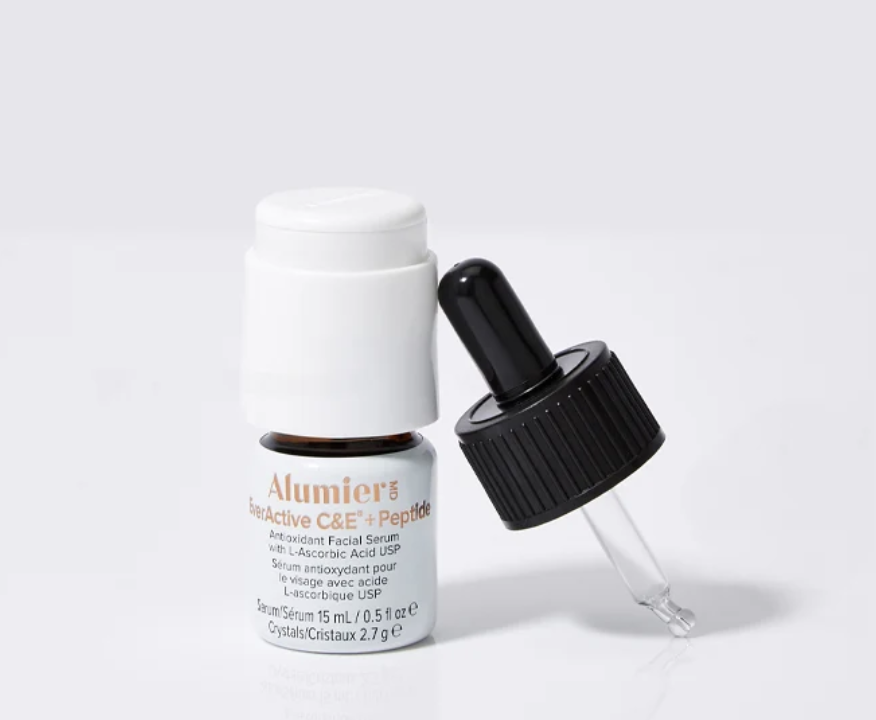
Dr Rosie Sutton didn’t need long to answer. “100%. Alumier EverActive C&E. Literally my hero product.”
It pairs vitamin C with vitamin E, the antioxidant partnership with some of the strongest research behind it. The two work together, with vitamin E helping to stabilise vitamin C and extend its protective effect. The format also takes on vitamin C’s biggest weakness, its instability.
For a clinician to call something her hero product, without hesitation that tells you a good deal.
Recommended by Melinda McKee
Melinda’s recommendation comes with a strategy, and it’s one more people should borrow.
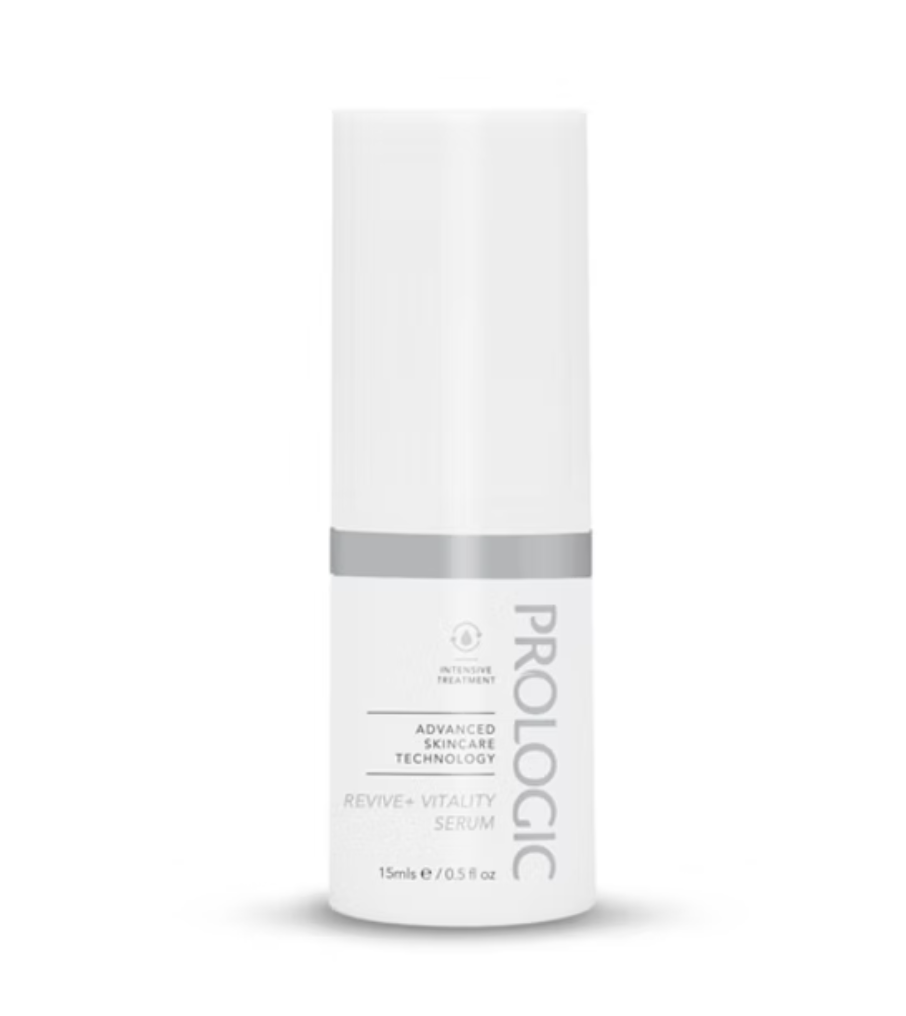
She calls the Prologic Revive + Vitality Serum, which combines vitamin C with peptides, her “gateway”. It’s the step that prepares her skin before moving on to the stronger stuff. This week she’s starting the brand’s L-ascorbic acid serum, the Prologic Vitamin C Power Serum. She’ll use it through winter to fade whatever pigmentation the summer left behind.
It’s a sensible way in.
L-ascorbic acid at higher strengths can sting or irritate if your skin isn’t used to it. Starting with a gentler formula, with peptides supporting the skin alongside, builds tolerance before you step up. Winter is the right season for the step up, too. The UV load is lower, so you’re not undoing the work of a brightening routine every time you step outside.
Read - Is January The Time To Start The “Sandwiching” Method in Your Retinol Routine?
Read - What Is PDRN And Why Is Everyone Suddenly Talking About It?
Recommended by Millicent Rose
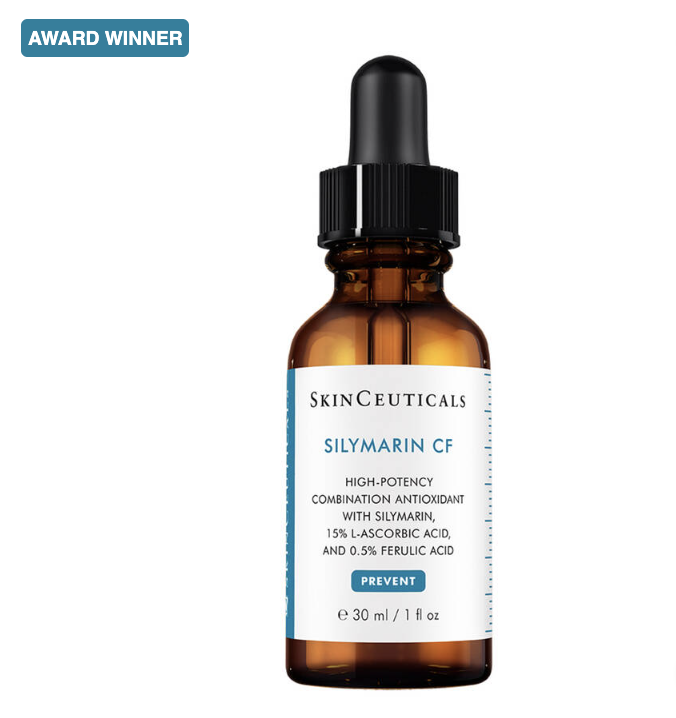
Millicent’s pick is the one she uses on her own skin, and the one she always comes back to. It’s built specifically for oilier, breakout-prone skin, a group often left out of the vitamin C conversation because so many formulas feel too rich.
“It’s light, never greasy,” she says. “The vitamin C brightens and supports collagen, while salicylic acid keeps pores clear.” The pairing is the clever part. It gives you the antioxidant and brightening benefits of L-ascorbic acid, with salicylic acid working inside the pore, where congestion actually starts.
Her routine is simple: a few drops under SPF each morning. “My skin looks brighter, calmer and bouncier.”
Recommended by Justine Masters
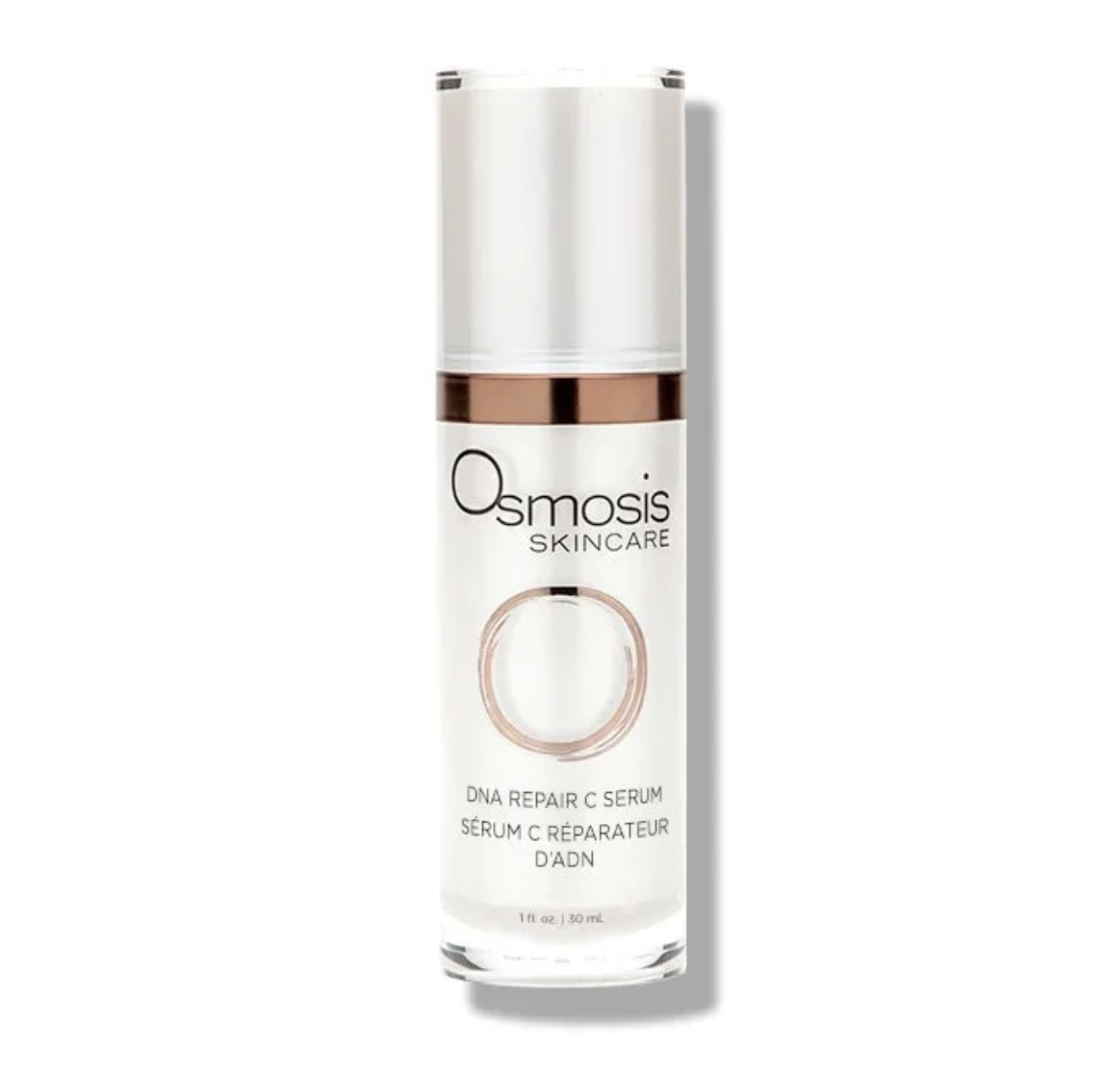
Justine’s choice goes beyond brightening. She rates the Osmosis Catalyst DNA Repair C Serum for its focus on repair, describing it as helping to reverse DNA damage, and has noticed it tightening her eyelids too. She mentions to ALL clients that they should be increasing their intake through foods and supplements also.
“DNA repair” is a phrase worth reading carefully in skincare. In practice it usually means ingredients designed to support the skin’s own repair processes after UV exposure.
That’s an area of real research interest, though much of the evidence still comes from the lab rather than long-term human trials. What Justine describes is what she sees on her own skin, and practitioner experience counts for something. The firmer look around the eyes fits with vitamin C’s established role in collagen support.
The internal approach
Recommended by Ingrid Raphael
Every good roundup needs someone to question the premise, and Ingrid always does it. “I must admit, I don’t hold a torch for single-ingredient, standalone topical vitamin C,” she says. “The skin thrives far better on a thoughtful blend of synergistic antioxidants than on an isolated hero ingredient.”
There’s sense in that. Antioxidants work as a network, regenerating one another as they neutralise free radicals. It’s the same logic behind pairing vitamin C with E and ferulic acid. But Ingrid’s bigger point is about what happens before anything reaches the bathroom cabinet.
“We must never lose sight of what we feed the body from within,” she says. “It’s all well and good painting vitamin C onto the surface, but consuming it orally remains essential. Its systemic ability to stimulate collagen synthesis and build tissue resilience from the inside out is truly remarkable.”
“It’s all well and good painting vitamin C onto the surface, but consuming it orally remains essential.”
It’s worth knowing how the two routes differ. Your body can’t make or store vitamin C, so a steady dietary intake is non-negotiable for collagen production everywhere, skin included. Topical application, meanwhile, delivers much higher concentrations to the outer layers of the skin than diet alone can reach. The evidence suggests they do different jobs rather than competing for the same one.
Recommended by Eleanor Hoath (Registered Nutritional Therapist and Founder of The Well Edit)
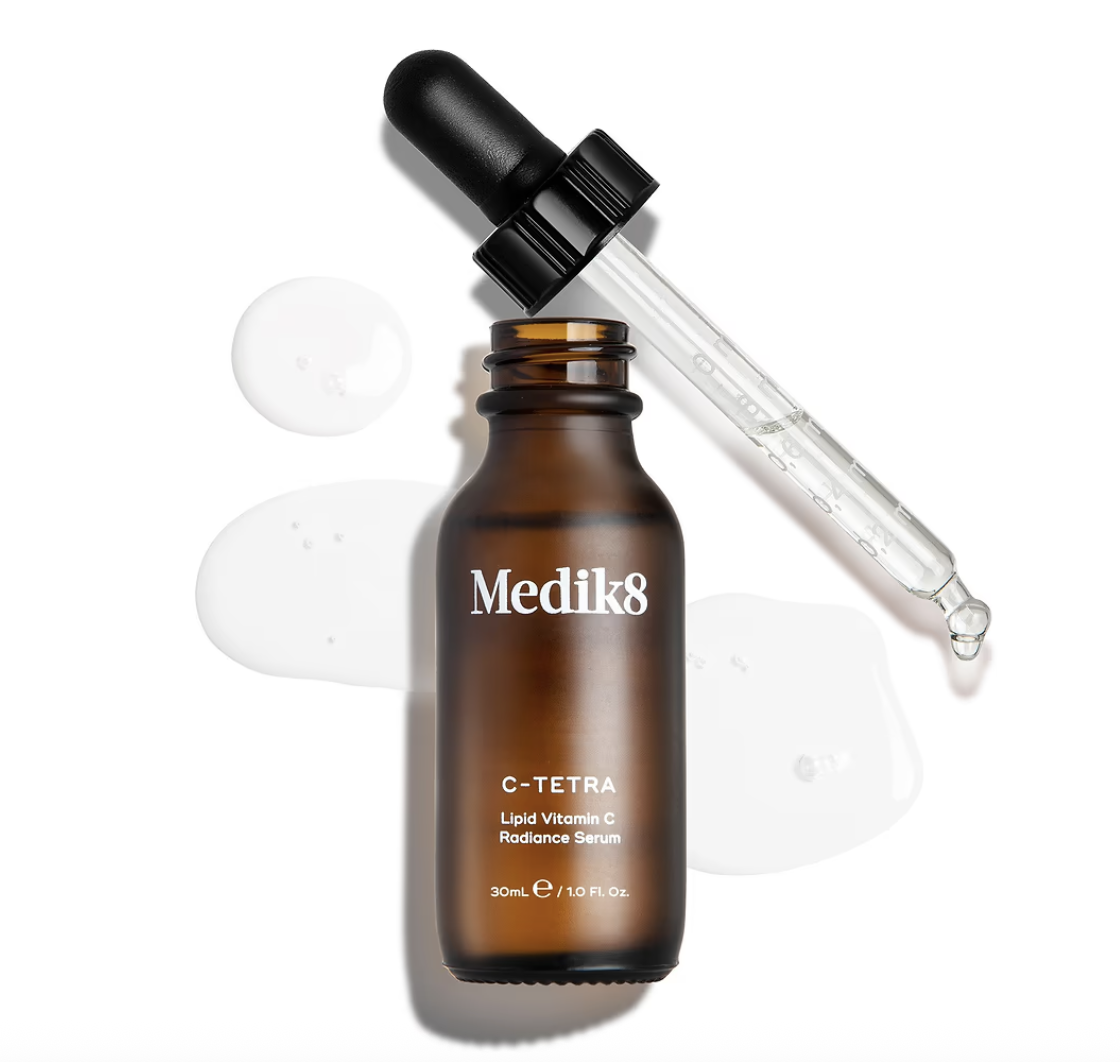
Eleanor’s pick is Medik8’s C-Tetra® Advanced serum. It contains 20% tetrahexyldecyl ascorbate, a significant step up from the 7% in the original C-Tetra and the 14% in C-Tetra Luxe. Because it’s built on THD rather than L-ascorbic acid, it’s stable, gentle and far less likely to sting. It also won’t turn orange halfway through the bottle.
What sets it apart for her is that it does more than brighten. As a nutritional therapist, she sides with Ingrid on the inside-out part.
Through winter, she increases her vitamin C intake orally alongside her serum using BodyBio Liposomal Vitamin C and Artah’s Skin Clinic for when the skin needs a little more love too. It’s a reminder that the skin is only ever as well-resourced as the body underneath it.
Words by The Well Edit.
FAQS
-
L-ascorbic acid has the strongest evidence for collagen and brightening but is less stable and can irritate sensitive skin. Derivatives such as tetrahexyldecyl ascorbate are gentler and more stable, with a smaller but growing body of research. The right choice depends on your skin’s tolerance and goals.
-
For L-ascorbic acid, research suggests benefits plateau at around 20%, with 10–20% the commonly effective range. Higher isn’t automatically better, and stronger formulas are more likely to irritate.
-
Morning is generally best, under SPF, where its antioxidant action helps protect against UV and pollution damage through the day.
-
They do different jobs. Dietary vitamin C is essential for collagen production throughout the body, and your body can’t store it. Topical vitamin C delivers far higher concentrations directly to the skin. Our experts see value in both.
-
Yes. Vitamin C interferes with tyrosinase, the enzyme involved in melanin production, which is why it’s commonly used to fade sun-related pigmentation. Results build gradually, and daily SPF is essential alongside it.
The content published by The Well Edit is for informational and educational purposes only. It is not intended as, and should not be relied upon as, a substitute for professional medical, health, nutritional, legal, or financial advice. While articles may reference insights from qualified practitioners or experts, the views expressed are their own and do not necessarily reflect the views of The Well Edit. Always seek the guidance of a qualified professional before making changes to your diet, lifestyle, supplementation, or healthcare routine.
Use of any information provided is at your own discretion and risk.