
Sitting Down With Catherine Hurley, Founder of NEWROAD 30
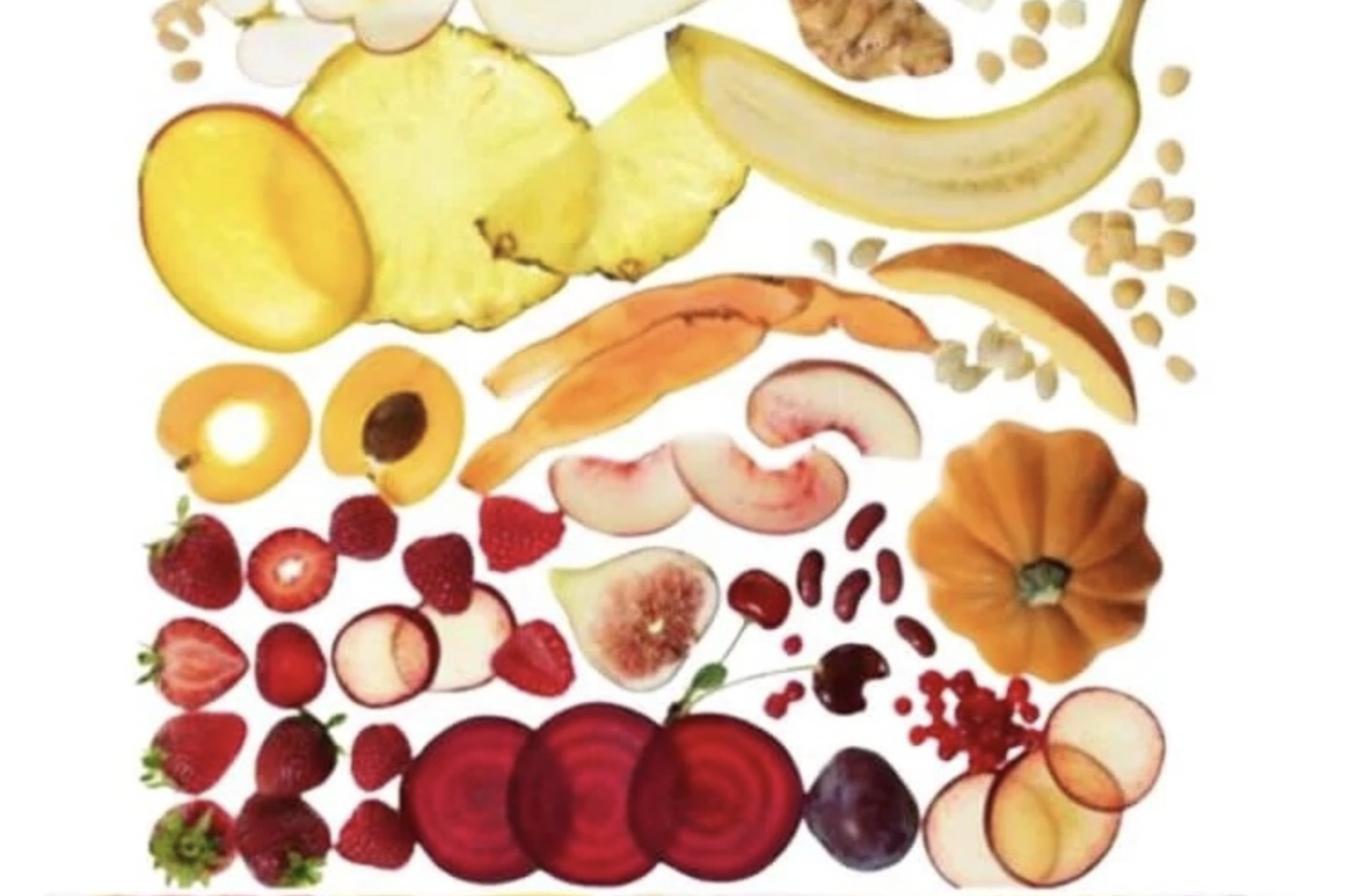
Most of us think we eat well. There are vegetables in the fridge and the fruit bowl is rarely empty. But look closely at a typical week and a pattern appears: the same spinach, the same broccoli, the same punnet of blueberries, on repeat. Catherine Hurley Arbibe noticed exactly this in her own family, and it led her to NEWROAD 30. She studied medicine at Oxford before an international modelling career, and she became fascinated by gut microbiome research. That research suggests it’s the variety of plants we eat, not just the volume, that shapes the diversity of the bacteria in our gut. What started as a blend made for her own family is now a freeze-dried, fully organic powder of 30 fruits, vegetables and pulses. It’s named after the road where her family’s house stood in Portmagee, a village in County Kerry where she spent her childhood holidays. As one of Octobers Well Loved products, we wanted to know more.
Take us back to before NEWROAD 30. What were you doing, and was there a personal turning point, a health experience of your own or of someone close to you, that made you realise this needed to exist?
My working background has been quite varied. I started modelling when I was quite young, but throughout that time I was also very dedicated to my studies. I went on to study medicine at Oxford University and initially tried to run the two alongside each other, which became impossible. I continued modelling full time for a while, and then I had my children. As they grew older, I found I had a little more space to revisit some of the interests I’d always had, particularly around health, the human body and nutrition.
About five years ago, I became really interested in the gut microbiome and, subsequently, the importance of fibre and plant diversity in our diets. I had always thought we ate very healthily as a family, with plenty of fruit and vegetables, but when I looked more closely, I realised we were eating a lot of the same things each week, with little diversity. At the time, the research around the importance of eating a greater diversity of plants was relatively new, and I found it fascinating.
I started reading and learning as much as I could, and initially began developing a blend simply for myself and my family. I wanted to find a way of incorporating a much wider variety of plants into our diets, including foods we might not ordinarily eat every week, in a way that was both convenient and genuinely delicious. Berries became incredibly useful in that respect. Their natural sweetness and flavour meant I could combine them with ingredients that are perhaps less immediately appealing in a drink, such as beans, lentils, broccoli, cauliflower and Jerusalem artichoke.
As I began talking to friends about what I was doing, I realised how useful something like this could be for other people too. The idea gradually evolved from something I was making for my own family into a product I felt could genuinely help people improve the diversity of their diets, and fibre intake, without adding another complicated task to their day.
And that was really the beginning of NEWROAD 30.
Where does the name NEWROAD 30 come from, and what does it mean to you?
The name has a very personal meaning for me. As the product started to take shape, I began thinking about what I wanted the brand to represent. I kept coming back to my childhood holidays in Portmagee, a beautiful village in County Kerry, Ireland, where my grandmother lived and where my aunt still lives.
I have such strong, happy memories of being there. In the evenings, when it was time to prepare dinner, we’d collect our buckets and shovel, go down through the fields, and dig up potatoes, carrots and whatever other vegetables we needed to bring home to eat. There was something so simple and wonderful about that connection between the food we ate and where it came from. It was completely natural, uncomplicated and wholesome.
The family house was on the New Road in Portmagee, and when I thought about what I wanted this product to stand for, the name just felt right. For me, NEWROAD represents that connection to real food, nature, and a way of eating that feels authentic and nourishing. And, of course, the 30 represents the 30 different plant ingredients in the blend, inspired by the research around aiming for 30 different plant foods a week.
What did your own relationship with food and nutrition look like growing up, and how has it changed?
Growing up, food was always a really important part of family life. We ate together, and both my mum and dad cooked. The food was very wholesome, made from simple, whole ingredients. I remember being envious of my friends’ school lunchboxes. They seemed to have these wonderfully exciting lunches with crisps, fizzy drinks and chocolate bars, whereas ours were much more straightforward, perhaps a sandwich, fruit and a piece of homemade cake or something from the local bakery. But now I’m so grateful that mt parents set us off on a path of wholesome food, free from additives. That established a relationship with food that has stayed with me throughout my life.
I think the biggest change has been in my understanding of why those food is so good for us. Growing up, eating well was simply what we did. Now I’m fascinated by the science behind it, particularly how the diversity of the plants we eat and the fibre they contain interact with our gut microbiome and influence our wider health. So the foundations haven’t really changed, but my understanding and appreciation of them have grown enormously.
In simple terms, what is NEWROAD 30, and what problem is it solving that you felt wasn’t being solved well elsewhere?
NEWROAD 30 is a blend of 30 different organic fruits, vegetables and pulses, made entirely from whole-food ingredients. It contains six types of berries, which give it a lovely natural berry flavour, plus five types of beans and lentils, chickpeas, broccoli, cauliflower, Jerusalem artichoke, fennel, and many other plant foods we might not eat regularly.
The two things I really wanted to address were plant diversity and fibre. Research from the American Gut Project highlighted an association between eating a greater variety of plant foods, particularly around 30 different types a week, and having a more diverse gut microbiome. I found that fascinating because we tend to think about eating enough fruit and vegetables in terms of quantity, but we don’t always think about variety. We might eat our five a day, but often we’re eating the same five or six things repeatedly. I wanted to create something that made it incredibly easy to introduce a much broader range of plants into our diets, without having to buy, prepare and eat 30 different ingredients every week.
Fibre was equally important to me. It’s something we simply don’t eat enough of, despite its enormous importance to our health. Different fibres play different roles. Some help food move through the digestive system, while fermentable fibres are used by beneficial gut bacteria, which produce compounds called short-chain fatty acids. These are being studied for their roles in gut health, immune function and inflammation. Fibre also plays an important role in cardiovascular and metabolic health, including helping to manage cholesterol and blood glucose levels.
So I wanted to bring together a broad range of fibre rich plant foods in a form that's convenient, enjoyable, and easy to incorporate into everyday life. It’s not about replacing the vegetables on your plate. It’s about making it easier to add more variety to what you’re already eating.
What’s the nutritional philosophy underneath it? If someone only took away one principle, what would you want it to be?
For me, it’s really very simple: eat a wide variety of plants, eat plenty of fibre, and get your nutrition from real, whole food wherever possible. That’s the philosophy behind NEWROAD 30.
I believe in food that is as close to its natural form as possible, which is why it was so important to me that the blend was made from 100% organic, whole food ingredients, without artificial flavours, preservatives or additives.
I also think eating well should feel enjoyable and achievable, rather than complicated or restrictive. If there’s one thing I’d love people to take away, it’s that variety matters. It’s not just about how many vegetables you eat, but how many different plants you eat.
How did you decide what went into it and what stayed out, and who did you work with on the nutrition science?
There were certain things I was absolutely clear about from the beginning. I knew I wanted lots of berries. They’re rich in naturally occurring polyphenols, and they also taste delicious, which was important because I wanted this to be something people genuinely looked forward to having. I also knew I wanted to include plenty of beans and pulses. I think in the UK particularly, we don’t eat nearly enough of them, despite being brilliant sources of fibre and other nutrients. And there were vegetables such as broccoli and cauliflower, which I wanted to incorporate more regularly into my diet, but without necessarily having to plan meals around them every day. I also wanted to include ingredients such as Jerusalem artichoke, fennel, sweet potato and pumpkin. They’re wonderful foods, but not necessarily things we all eat every week. The whole idea was to bring together this broad diversity of plants in a way that would be difficult to achieve quite so conveniently through everyday meals alone.
I knew from the outset that I wanted everything to be organic, and that I didn’t want to use added flavourings, preservatives or unnecessary additives. I wanted the flavour to come entirely from the ingredients themselves. As development progressed, I learned more about freeze-drying and how it could help retain much of the natural flavour and nutritional qualities of the ingredients.
One thing that remained constant was my determination to be involved in, and take responsibility for, the entire journey of the product, from sourcing the ingredients through to production and the finished product arriving in people’s homes.
We’ve also been fortunate to have the support of an exceptional group of scientific advisors, whose expertise has been invaluable in shaping the nutritional thinking behind NEWROAD 30. Our lead scientific advisor is Dr Patrick Veiga, Gut Microbiome and Nutrition Research Director at INRAE, the French National Research Institute for Agriculture, Food and Environment. We also work with Professor Phil Burnet, Professor of Neuroscience in the Department of Psychiatry at the University of Oxford, whose research interests include the gut microbiome, prebiotics, probiotics and brain function. And Dr Thanassis Tektonnidis, Senior Research Fellow in Nutritional Epidemiology at Queen’s University Belfast.
Having access to expertise across microbiome science, neuroscience and nutritional epidemiology has been incredibly important to me. I wanted NEWROAD 30 to be grounded in good science, while remaining true to the original idea of making a diverse, whole-food diet easier to achieve.
What’s the biggest nutrition myth you see your customers arriving with, and what do you want them to understand about what NEWROAD 30 is not?
I think one of the biggest myths is the idea that there’s a single superfood or magic ingredient that can somehow solve a whole range of health problems, or that we can transform our health with a quick fix. Of course, there are situations where a particular nutrient or intervention can make an enormous difference, especially if someone has a clinical deficiency. But for most of us, good health is much more about the overall pattern of how we eat and live. There isn’t really one magic ingredient. It’s the whole diet, and ultimately the whole lifestyle, that matters. Food is one of the things we can reasonably control, and I believe moving toward a diet based predominantly on wholesome, whole foods, with fewer unnecessary additives and highly processed ingredients, is a really positive place to start.
But it doesn’t mean every single thing we eat has to be perfect. It’s about the direction we’re moving in over time, rather than individual meals or occasional indulgences. And food is only one part of the picture. Getting enough exercise, spending time outdoors in daylight, prioritising sleep and finding ways to manage stress are all incredibly important too. What I find encouraging is that these don’t have to be enormous changes. Small choices and commitments, repeated day after day, can gradually become habits. Over months and years, their effects can compound and make very meaningful difference to our health and quality of life.
What has been the hardest part of building NEWROAD 30 from scratch, and what kept you going on the days it felt impossible?
In some ways, certain parts of building NEWROAD 30 have been surprisingly straightforward, because I had such absolute conviction about what I wanted to create.
There were things I knew from the beginning that I simply wasn’t prepared to compromise on, particularly around the ingredients, their quality and the integrity of the product. Having that clarity actually made many decisions easier, because I always knew the direction I wanted to go in. But other aspects have been much harder. One of the biggest challenges has been getting used to the feeling that the work is never really finished. There are never quite enough hours in the day, and however much you manage to achieve, there’s always something else you could be doing to move the business forward. I think when you’re building something from scratch, particularly something you care so deeply about, it’s very difficult to switch off from that feeling. I’ve gradually learned to accept that it’s simply part of running a growing business. There isn’t necessarily a moment when everything is done.
What keeps me going is a combination of believing very strongly in what we’re creating and hearing from the people who use it. We receive such lovely messages from customers who tell us how much it means to them to have found something that fits with their own approach to food and health, or that makes something they previously found difficult a little easier. Those moments are incredibly motivating.
I’ve also learned the importance of just taking the next step. Sometimes progress feels very slow, but you keep doing what you can, one thing at a time, and then suddenly something shifts, another opportunity opens up, and you find a new sense of momentum. I think building a business requires a lot of patience and persistence, and learning to trust that those small steps are moving you forward, even when it doesn’t always feel that way.
What’s one decision you got wrong early on, and what did it teach you?
I think one of the things I’ve learned is the importance of having really acute focus. Particularly in the early stages of building a business, there are so many things you want to do, so many ideas to explore and so many different directions you could take. It’s very tempting to try to move everything forward simultaneously. And I think, at times, I made the mistake of doing exactly that.
The problem is that having too many things running at once can become quite distracting. You can be incredibly busy, but not necessarily making the kind of tangible progress you want to make.
Where do you want NEWROAD 30 to be in five years, and what would make you feel it had genuinely done its job?
In five years, I’d love NEWROAD 30 to be reaching many more people, and to have become a trusted, familiar part of people’s everyday approach to eating well.
My ambition has always been to make good nutrition a little easier and more accessible. We know increasingly how important our dietary and lifestyle choices are to our long-term health, but knowing what we should be doing and managing to do it consistently in our everyday lives can be two very different things. I’d love NEWROAD 30 to help bridge that gap.
I’m also very conscious of the growing conversation around chronic disease, gut health and the importance of prevention. I think we’re beginning to understand much more about how the choices we make throughout our lives can influence our health in later years. For me, that’s a really important conversation to be part of. I don’t believe any single product is the answer, and I certainly wouldn’t want people to think that it is. But I do believe that making small, positive changes easier to sustain can play a part in a much bigger picture.
If someone reading this is at the start of their own new road, with their health or with an idea of their own, what’s the one thing you’d want them to know?
I would say that action is almost always the best place to start. Whatever it is you’re hoping to change or achieve, I think the most important thing is to begin. Take one small step, make a little progress, and allow that to guide you towards the next step. We can spend an enormous amount of time thinking, planning, analysing and trying to work out exactly how something is going to unfold. And of course, some of that is necessary. But I think there comes a point when you simply have to start doing something.
It’s such a simple example, but I think the principle applies to almost everything, whether you’re trying to improve your health, build a business or make a change in your life. Start with one thing. Make it manageable. Get yourself into motion. And then keep going!
Words by Eleanor Hoath and Catherine Hurley for The Well Edit.
The content published by The Well Edit is for informational and educational purposes only. It is not intended as, and should not be relied upon as, a substitute for professional medical, health, nutritional, legal, or financial advice. While articles may reference insights from qualified practitioners or experts, the views expressed are their own and do not necessarily reflect the views of The Well Edit. Always seek the guidance of a qualified professional before making changes to your diet, lifestyle, supplementation, or healthcare routine.
Use of any information provided is at your own discretion and risk.