The Manosphere Is a Reaction, But What Is It Reacting To?
It feels like we’re living through a Great Partition of the sexes. On one side, a brand of extreme feminism has emerged, one that goes far beyond the noble pursuit of equal respect and instead pushes a narrative that men are redundant, inherently oppressive, or simply "useless." This perspective often paints an "evil patriarchy" as solely responsible for all of women's struggles. On the other side is the "Manosphere," a digital fortress of hyper-masculinity that often views women through a lens of strategy and suspicion, often reducing their value to mere physical attributes.
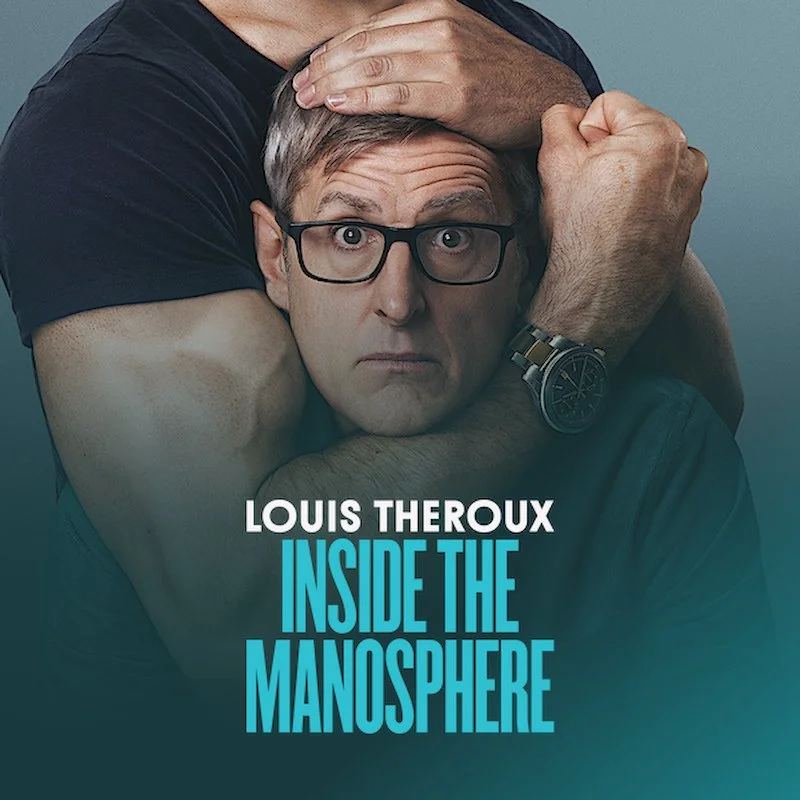
As the recent Netflix documentary Louis Theroux: Inside the Manosphere shows [1], these movements have become incredibly polarised. They’ve created a world where we are encouraged to see the opposite sex not as partners, but as adversaries. We have traded the nuance of human connection for the safety of caricatures. But what if this whole division is flawed? What if, instead of being two warring factions, we are actually two halves of a whole: a biological and psychological Yin and Yang, designed to be profoundly complementary?
The Root of Resentment: A Universal Quest for Value
Why are we so angry at each other? This pervasive anger likely stems from a fundamental human need to be valued, heard, and seen. For centuries, women often felt unheard and undervalued, a historical context that rightfully fueled the rise of feminism, a movement born from the demand for equal respect and regard. Today, a similar sentiment seems to be emerging among men, who also seek validation and a sense of purpose in a rapidly changing world. Both genders, at their core, desire to be loved, respected, and to feel that they are not relegated to the sidelines of life. The current division, therefore, might be less about inherent conflict and more about a shared, unmet need for recognition, amplified by societal shifts and the media's spotlight on extremes.
The Enduring Myth of Mars and Venus
For decades, our understanding of gender was dominated by the "Mars and Venus" narrative, the idea that men and women are so fundamentally different that we might as well be from different planets. This framework, while immensely popular in its time, has been largely dismantled by modern psychology.
The Gender Similarities Hypothesis, pioneered by psychologist Janet Hyde, suggests that men and women are actually similar on the vast majority of psychological variables [2]. After analysing decades of research, Hyde found that 78% of gender differences are small or close to zero. From cognitive ability to communication styles, the overlap between the sexes is far greater than the gaps. When we lean too heavily into the "Mars and Venus" trope, we inadvertently create a self-fulfilling prophecy of misunderstanding. We stop seeing the individual and start seeing the stereotype. This is not constructive for either party and damaging when it couldn’t be further from the truth.
Complementary Biology: Rhythms of Life
While we are psychologically more similar than different, our biological "operating systems" do possess distinct rhythms that are not just different, but profoundly complementary. These inherent biological distinctions offer a powerful lens through which to understand our interconnectedness.
Men operate primarily on a 24-hour hormonal cycle [3]. Their testosterone peaks in the morning and gradually declines throughout the day, aligning with a diurnal rhythm of action and recovery. It is a steady, predictable pulse, influencing energy, focus, and drive on a daily basis.
Women, on the other hand, navigate a 28-to-35-day infradian rhythm [4]. This cycle consists of four distinct phases (menstrual, follicular, ovulatory, and luteal), each bringing predictable shifts in energy, mood, cognitive focus, and even physical capabilities. This longer cycle means women experience a dynamic, seasonal "flow" to their biology.
Rather than viewing these differences as a source of friction, we can see them as a beautiful design for partnership. The steady 24-hour rhythm of the male provides a consistent "anchor," while the dynamic 28-day rhythm of the female brings a rich, adaptive quality to the relationship. Like Yin and Yang, one provides a foundational structure, the other provides a responsive movement. When we understand and appreciate these biological blueprints, we move beyond blaming each other for not being "the same" and begin to appreciate how our differences allow us to cover more ground, and experience life more fully, together.
The Unique Strengths of the Feminine: Empathy, Connection, and Resilience
Acknowledging our similarities doesn't mean ignoring our unique strengths. Women often possess a profound capacity for empathy and community-building that is vital to a healthy, thriving society. These strengths are not merely anecdotal but are increasingly supported by scientific inquiry.
Research into brain anatomy, for instance, suggests that women, on average, exhibit a higher density of neurons in certain parts of the prefrontal cortex, the brain region responsible for emotional regulation, social cognition, and complex decision-making [5]. This neurobiological difference may contribute to why women are often the natural "gatherers" and community builders, excelling in roles that require managing complex social dynamics, whether in the boardroom, the classroom, or the home. Far from being a lesser role, being a homemaker, for example, demands exceptional organisational, emotional, and leadership skills.
Further illuminating this, a fascinating study on the drug MDMA (ecstasy) provides a compelling window into the empathy gap. The research found that while MDMA significantly increased emotional empathy in men, it had a much smaller effect on women, largely because women’s baseline levels of empathy were already remarkably high [6]. In essence, it took a powerful psychoactive substance to bring men up to the natural, "sober" empathy levels often observed in women. This suggests an inherent, powerful capacity for emotional connection within the feminine.
Furthermore, women face unique biological challenges, including the profound experience of childbirth, the monthly rhythms of menstrual cycles, and a disproportionately higher vulnerability to sexual assault and domestic violence. These experiences, while undeniably difficult, often cultivate immense resilience, deep empathy, and a nuanced understanding of human connection and suffering.
The Invisible Struggles of Men: Overlooked Hardships
A common pitfall of extreme feminism is the assumption that men do not suffer, or that their "privilege" somehow shields them from hardship. The data, however, tells a profoundly different story, revealing a landscape of often-overlooked struggles.
Men are significantly more likely to experience homelessness, comprising roughly 70% of the homeless population [7]. They are also disproportionately more likely to die by suicide and are far more frequently victims of work-related injuries and fatalities, particularly in dangerous occupations. Additionally, men struggle with higher rates of substance abuse. These statistics paint a stark picture of male suffering that is often minimised or ignored in public discourse.
When we label all men as "oppressors," we inadvertently ignore the millions of men who are struggling, lonely, and physically broken by the rigid roles society expects them to play. We suffer in different ways, and one person's pain does not, and should not, discount another's.Acknowledging male suffering is not about diminishing female struggles, but about recognising the full spectrum of human experience and fostering universal compassion.
The Architecture of Division: Who Benefits?
If we are so inherently complementary and share so many fundamental similarities, why does it feel like we’ve never been further apart? The answer, in part, lies in the architecture of division itself.
The rise of the Manosphere is often framed as a reactionary movement: a direct response to the perceived excesses of modern feminism. It’s a classic pendulum swing. When one side becomes extreme, the other side doesn't just balance it; it often swings to the opposite extreme. This creates a destructive feedback loop of resentment where narratives like "women hate men" and "men exploit women" become dominant, obscuring any potential for common ground.
There is also a more provocative layer to this division, one that invites critical thought. It is a curious "coincidence" that many of the figures at the heart of these polarising movements have alleged ties to institutions that historically benefit from a divided populace. Gloria Steinem, a foundational figure of second-wave feminism, famously worked for a CIA-backed organisation in her early career [8]. On the other side, Emory Tate (father of Andrew Tate) was a high-level military linguist with alleged intelligence ties [9], and Myron Gaines of the Fresh & Fit podcast is a former federal agent [10].
Whether these connections are intentional or merely incidental, they raise a vital question: Who truly benefits when men and women are at war? A society divided at its most fundamental unit, the relationship between men and women, is a society that is easier to influence, control, and ultimately, harder to unite.
Beyond Caricatures: Embracing Inherent Value and Potential
It is profoundly degrading to reduce men's value solely to their money-making capabilities, just as it is to reduce women's value to child-rearing or homemaking. The Manosphere's assertion that men are born without value while women are born with value due to physical attributes is not only demeaning but fundamentally untrue. Both men and women are born with inherent value and immense potential, extending far beyond superficial or traditional roles. We are blessed to live in an era where either gender can pursue almost any path they choose.
However, this freedom also necessitates discernment; not every path, despite its apparent allure, is moral, healthy, or noble. For instance, while platforms like OnlyFans offer financial avenues, they can sadly reduce women to sexual objects, obscuring their deeper worth and potential. This is not to judge individual choices, but to highlight the societal implications of such reductions.
Furthermore, while some Manosphere figures may have risen from difficult backgrounds, their personal trauma does not inherently validate their philosophies. Monetary success and fame do not equate to moral rectitude or effective solutions for societal issues. Reducing individuals to narrow stereotypes (whether it's the "boss b*tch independent" woman or the "supremacist" man) is counterproductive. We both have so much more to offer than these restrictive labels allow.
The Peril of Victim Mentality and the Power of Conditioning
No movement built on hate or victim mentality can truly empower. A victim mentality, while seemingly offering solace, ultimately cedes all power to the perceived perpetrator, rendering oneself helpless. This stands in stark contrast to the true aim of empowerment, which is to reclaim agency and foster resilience. Similarly, hate isolates and divides, fostering contempt and making mutual understanding impossible. It ensures that no common ground can be found, perpetuating cycles of conflict.
This dynamic is strikingly reminiscent of principles in developmental and clinical psychology, particularly behavioural conditioning. As B.F. Skinner and other pioneers of behavioural psychology demonstrated, we reap what we sow. If society, or influential movements, constantly tells men they are the root cause of all women's problems, or vice versa, it creates a self-fulfilling prophecy. These narratives act as powerful conditioning agents, shaping beliefs and behaviours. Fortunately, the average person often holds more balanced views, but the media's amplification of extremes can have a significant trickle-down effect, making these polarized perspectives seem more widespread and influential than they truly are.
Coming Back to the Same Team: A Call for Unity
At the end of the day, the "Battle of the Sexes" is a game where everyone loses. We have become so focused on the 22% of things that make us different that we’ve forgotten the 78% that makes us the same. This narrow focus blinds us to the immense potential of collaboration and mutual appreciation.
True empowerment doesn't come from "winning" against the opposite sex; it comes from meritocracy and the freedom to choose the path that fits our individual talents, passions, and desires. Being a homemaker, for example, is as beautiful and admirable as being an engineer; they are simply different, yet equally vital, ways of contributing to the whole. The key is individual alignment with one's authentic self, rather than adherence to prescribed societal roles.
Men and women are not competitors; we are companions. We are the Yin and the Yang - distinct, different, but ultimately inseparable. It’s time to put down the caricatures and pick up the nuance. We aren't from different planets. We are from the same earth, built for the same purpose: to build something beautiful, together.
Words by Eva Fleischman for The Well Edit
The content published by The Well Edit is for informational and educational purposes only. It is not intended as, and should not be relied upon as, a substitute for professional medical, health, nutritional, legal, or financial advice. While articles may reference insights from qualified practitioners or experts, the views expressed are their own and do not necessarily reflect the views of The Well Edit. Always seek the guidance of a qualified professional before making changes to your diet, lifestyle, supplementation, or healthcare routine.
Use of any information provided is at your own discretion and risk.
References
Louis Theroux: Inside the Manosphere (2026). Netflix Documentary.
Hyde, J. S. (2005). The Gender Similarities Hypothesis. American Psychologist.
Grotzinger, H., et al. (2023). Diurnal fluctuations in steroid hormones. PMC.
Baker, F. C., et al. (2001). Sleep and 24 hour body temperatures. The Journal of Physiology.
Luders, E., et al. (2009). Why Sex Matters: Brain Size Independent Differences. Journal of Neuroscience.
Hysek, C. M., et al. (2014). MDMA enhances emotional empathy and prosocial behavior. Social Cognitive and Affective Neuroscience.
National Alliance to End Homelessness. Demographic Data Project.
"Ms. Steinem's CIA Connection." CIA Reading Room.
"Emory Tate." Public Records / Military History.
"Myron Gaines." Department of Homeland Security / Public Records.