Female vs. Male Energy, Explained from the Mitochondria
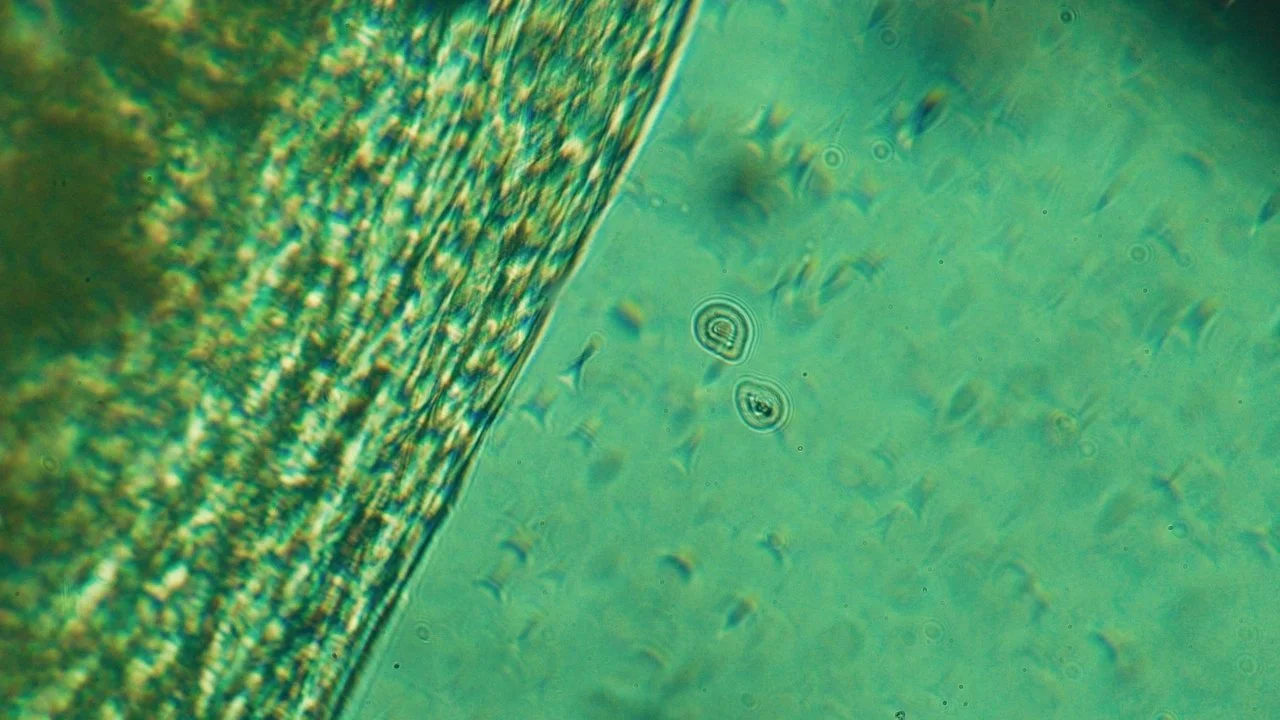
Mitochondria are the powerhouse of the cell. While we may all remember this from our biology class days, what does this really mean?
Let’s dive into mitochondria not just as cellular engines, but symbolic and bioenergetic centers of feminine life and, hink of mitochondria in way you probably haven’t before, as spiritual beings. As women, within our monthly and over lives, we are cycling through periods of creation, release, and renewal. At the center of this, lie these beautiful powerhouses that hold responsibility for almost everything.
Mitochondria as Scientific “Life Force”
Mitochondria are important for ATP production (aka the body’s energy), but they’re also responsible for the creation of our female master hormone, pregnenlone, that births other important hormones like estrogen. We have 37 trillion cells, and each cell has hundreds to thousands of mitochondria, depending on the tissue. Each of these mitochondria respond to rhythm (hello, morning sunrise!), nourishment, stress, and rest.
It sounds simple: energy flows when a system is aligned and safe. This is supported not only by modern science, but also well-rooted in sacred traditions. In Traditional Chinese Medicine, qi flows when yin (feminine quality) and yang (masculine quality) are balanced; in yogic practices, shakti (the creative feminine force) only rises when the body and nervous system is stable; in Ayurveda, ojas (essence) can become depleted by fear, overwork, and depletion. Just like these synonyms of energy in traditional frameworks, mitochondria are responsive, intelligent, and adaptive.
The Feminine Inheritance: Women as Lineage Holders
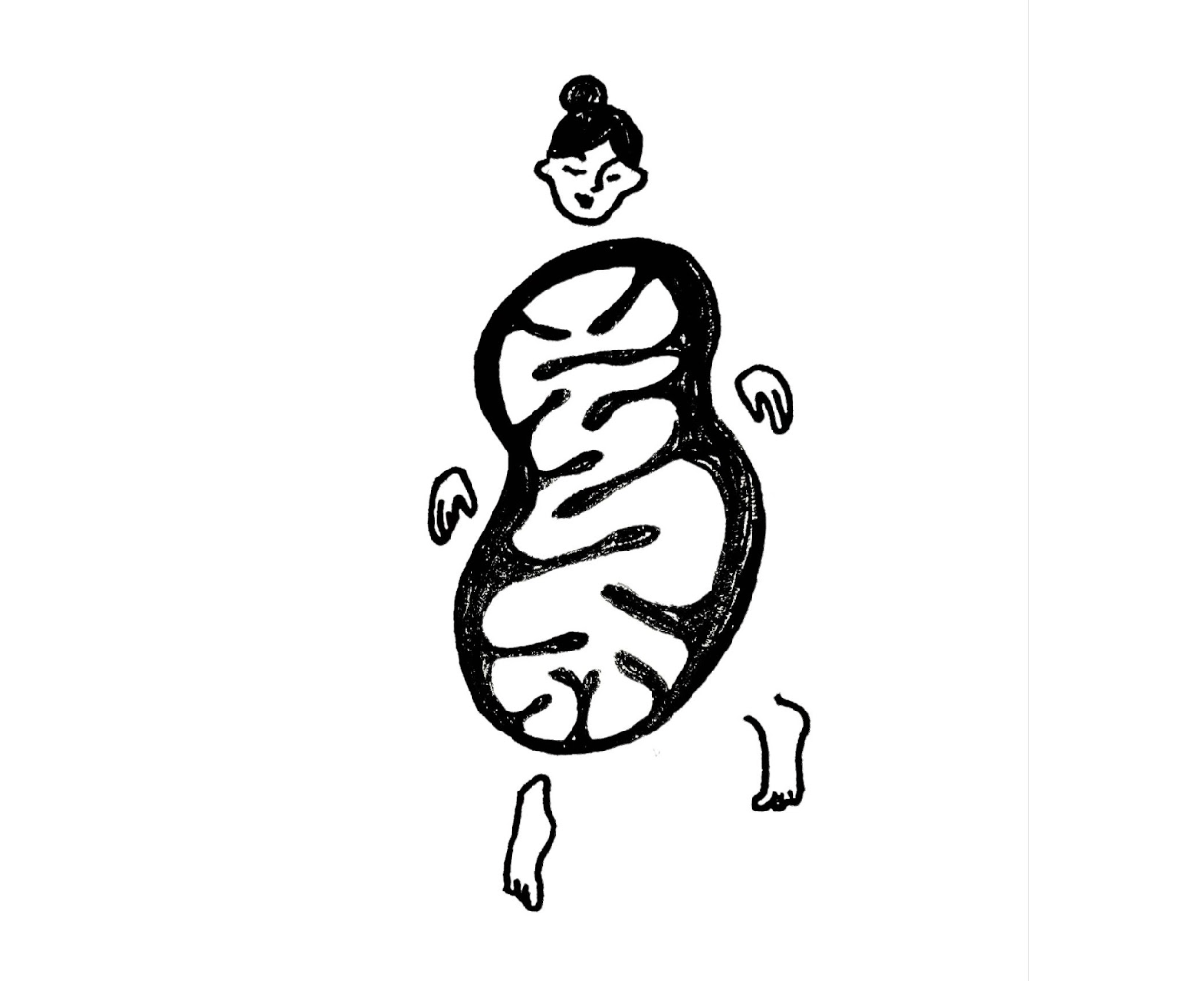
Did you know that our mitochondria are inherited exclusively from our mother? The mitochondria that power every cell in your body come from the egg, not the sperm.
Think of the egg as a mitochondrial reservoir, with each egg having 100,000 to over 600,000 mitochondria itself. Even though sperm contain mitochondria (in the tail to power swimming), after fertilisation, the embryo’s cells break them down so as to prevent the mixing of mitochondrial lineages. In this sense, men and women’s biological lineages are closely linked to their energetic state, particularly on their mother’s side.
As women, we are carriers of ancestral vitality, traumas, and resilience. For those of us who have children, we are also transmitters of these qualities. Our mitochondria are vessels linking our family’s history to our now (and even our future)!
This is why the ways in which we take care of ourselves - from nutrition, stress, and boundaries - matter so deeply. We’re not just thinking about ourselves but the future generations that follow.
Cycles Within Cycles: Mitochondria Across a Woman’s Life
Now this is probably how we most differ from men. Women are living cycles within cycles, and our mitochondrial regulation is inseparable from our hormones. Women don’t just experience a period as their cycle in life;
Menstrual Cycle: During the follicular and ovulatory phases (usually spanning day 1-14 in a 28 day cycle), energy often rises outward, supporting clarity, socialbility, and expression. Estrogen in this case directly enhances mitochondrial energy production. When progesterone begins to increase and menstruation comes, energy turns inward.
Pregnancy and Postpartum: Our eggs are the most mitochondrial-rich tissues in our bodies, so it’s no surprise that our mitochondrial demands skyrocket. The energy needed to create a new life is exceptional.
Perimenopause and Menopause: As estrogen declines, mitochondrial signaling changes. Energy that once was geared towards reproduction, pivots; this can signal a time higher discernment, wisdom, and authority. Cultures that honour elder women (as we honestly all should), describe this phase as one of heightened spiritual power.
A note from the writer - “One of the things I want to highlight is that in all of these stages, we go through ebbs in which we are vulnerable to heightened sensitivity. In these moments, we also have the opportunity to be more in tune with the depths of who we truly are and what is causing energy in versus energy out. From a biological perspective, in moments of depressed energy, our mitochondria may not be dysfunctioning, but calibrating to the inputs around and within us.”
Male vs Female: Linear vs Cyclical Energy Design
Let’s be clear. Both men and women have mitochondria, but our systems are regulated differently. Yep, believe it or not men and women’s bodies are incrediibly different, but has been ignored for decades.
Male biology is geared towards a more linear output of energy; testosterone supports steady mitochondrial expenditure and endurance which aligns with the yang energy associated with light, heat, movement, and action.
Female biology, as we covered earlier, is cyclical; estrogen and progesterone are constantly influencing mitochondrial behavior. Just with their rise and falls, our energy expands and contracts.
This biological design is reflected in spiritual ideas of destruction and creation. In Hindu mythology, Kali is the goddess of time, death, destruction and liberation; interestingly, she is also known as Divine Mother, and it is not until she receives the egg, representing the cosmic womb or seed of creation, that she is at peace and renewed. Her story reflects the idea that feminine energy is all encompassing, and must flow through cycles of both destruction and creation. In today’s modern world, women are expected or expect themselves to operate with a masculine energy system of constant productivity and output. But what does this lead to? We’ve all felt it.
When Energy Is Blocked
Fatigue, brain fog, and emotional suppression - been there, done that, got the t-shirt. From a mitochondrial and spiritual perspective, they are messages.
When we perceive stress or lack of nutrients (adequate light included), our mitochondria shift from energy production to survival mode.
Common mitochondrial danger signals:
Constant blue light
Persistent sympathetic nervous system activation (aka being in flight or fight)
Skipping meals
Nutrient deficiency (Iron, magnesium, B vitamins, CoQ10)
Sleep deprivation
Excessive or poorly recovered high-intensity exercise
This isn’t about avoidance, because let’s be real: we live in a modern world. Our days regularly include 8+ hours on our laptops, whisping through the busy streets of London on a lime bike, and inhaling gas from double decker buses. We can only be mindful about these signals and do our best to live in alignment with our life force.
In particular, when we’re thinking about nervous system activation, think of this beyond jitters for a presentation at work. Think about:
Times you said “yes” when you really wanted to say “no”
Overpacking your schedule
Guilting yourself for resting
Pushing through and doing the 5 am spin class because you need ‘discipline’
On that Note, Let’s Honour our Feminine (and Mitochondria)
Supporting our feminine, mitochondrial energy begins with a deep acceptance and appreciation of our ebbs and flows. From there, we can take actionable steps to make the most of our lives!
Mitochondrial Safety Signals:
Sufficient caloric and nutrient availability
Circadian alignment
Appropriate hormetic stress (e.g. moderate exercise)
Adequate sleep duration and quality
Parasympathetic nervous system activation
Other Ideas to Honour our Feminine:
Yin yoga
Dancing - connect to ancient traditions and moving lymph
Consider journaling about our female inheritance:
What do I know about the women in my maternal line, what remains unspoken?
Where do I sense strength, resilience, or survival energy that didn’t originate with me?
When do I feel most at home in my body, when do I feel guarded or depleted?
If I trusted my energy as intelligent, what would I stop forcing?
Remember, these inputs are not luxuries - they are foundations. As incredible as our mitochondria are, long before they were discovered, they existed, and women understood them through energy informed by sensation, rhythm, and intuition.
Let’s continue this legacy with lots of love. Part 2 incoming?
By Kayla Butera for The Well Edit
references
Behera, M. A., Dai, Q., Garde, R., Saner, C., Jungheim, E., & Price, T. M. (2009). Progesterone stimulates mitochondrial activity with subsequent inhibition of apoptosis in MCF-10A benign breast epithelial cells. American journal of physiology. Endocrinology and metabolism, 297(5), E1089–E1096.
Bigler, A. (2020, May 6). The maternal magic of mitochondria. National Institute of General Medical Sciences.
Drăgoi, C. M., Nicolae, A. C., Ungurianu, A., Margină, D. M., Grădinaru, D., & Dumitrescu, I.-B. (2024). Circadian rhythms, chrononutrition, physical training, and redox homeostasis—Molecular mechanisms in human health. Cells, 13(2), 138.
Jamison, S. W., & Brereton, J. P. (Trans.). (2014). The Rigveda: The earliest religious poetry of India (Vol. 1). Oxford University Press. (Original work composed ca. 1500–1200 BCE)
Kempton, S. (n.d.). Shakti: The power within you. Kripalu.
Lejri, I., Grimm, A., & Eckert, A. (2018). Mitochondria, Estrogen and Female Brain Aging. Frontiers in aging neuroscience, 10, 124.
Lin, Y. C., Cheung, G., Porter, E., & Papadopoulos, V. (2022). The neurosteroid pregnenolone is synthesized by a mitochondrial P450 enzyme other than CYP11A1 in human glial cells. The Journal of biological chemistry, 298(7), 102110.
Voss, B. (2024, December 10). The key to immunity and longevity: What is Ojas and how to cultivate it. Ayurveda
Yan, W., Zhang, T., Kang, Y., Zhang, G., Ji, X., Feng, X., & Shi, G. (2021). Testosterone ameliorates age-related brain mitochondrial dysfunction. Aging, 13(12), 16229–16247.
Yang, G., Pu, T., Tao, F., Quan, X., & Cheng, K. (2025). Yin-yang in modern traditional Chinese medicine: From mechanisms to digital innovation. Journal of Traditional Chinese Medical Sciences, 12(4), 492–498.
The content published by The Well Edit is for informational and educational purposes only. It is not intended as, and should not be relied upon as, a substitute for professional medical, health, nutritional, legal, or financial advice. While articles may reference insights from qualified practitioners or experts, the views expressed are their own and do not necessarily reflect the views of The Well Edit. Always seek the guidance of a qualified professional before making changes to your diet, lifestyle, supplementation, or healthcare routine.
Use of any information provided is at your own discretion and risk.