Is the Dyson Toothbrush Worth £420? A Biological Dentist Weighs In
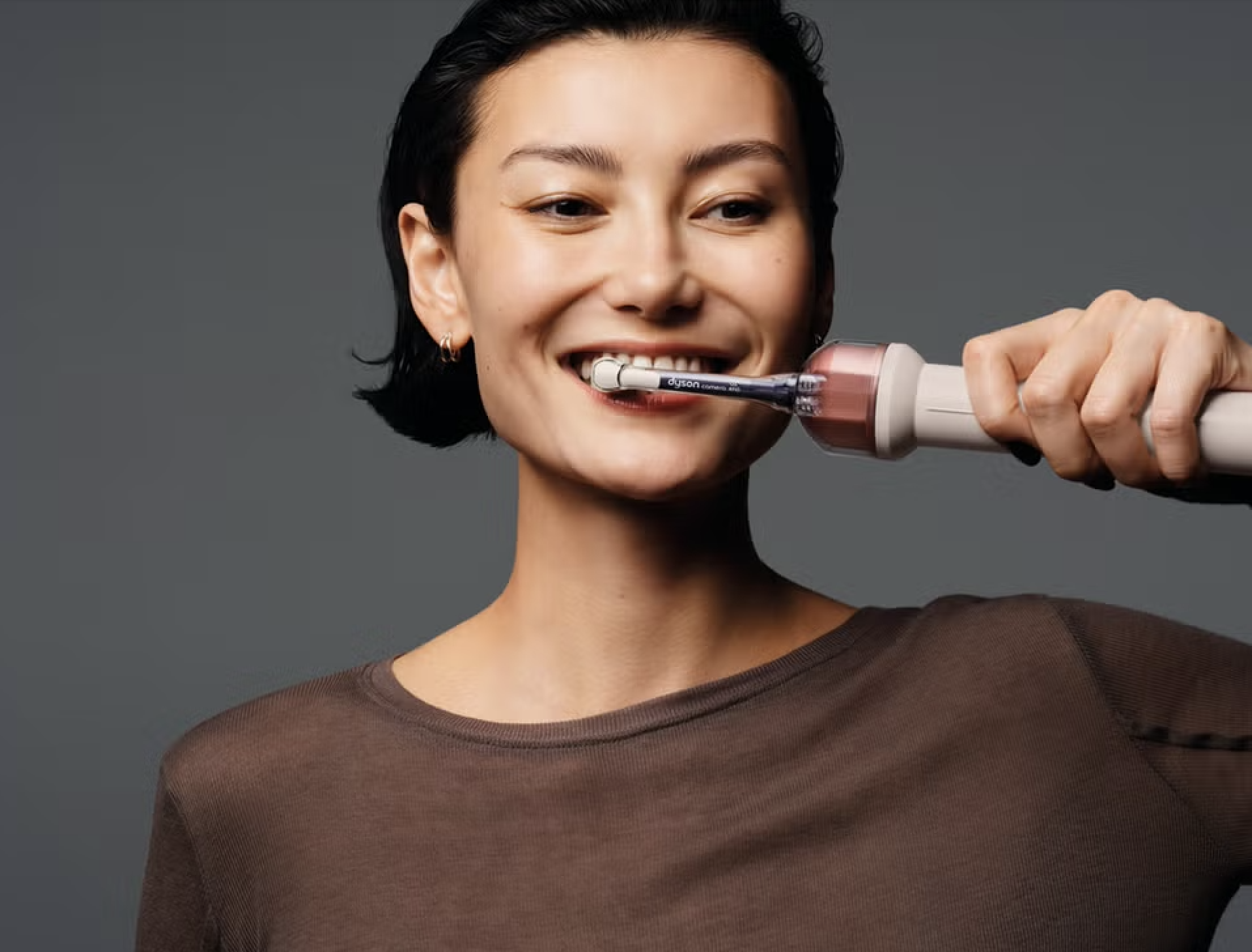
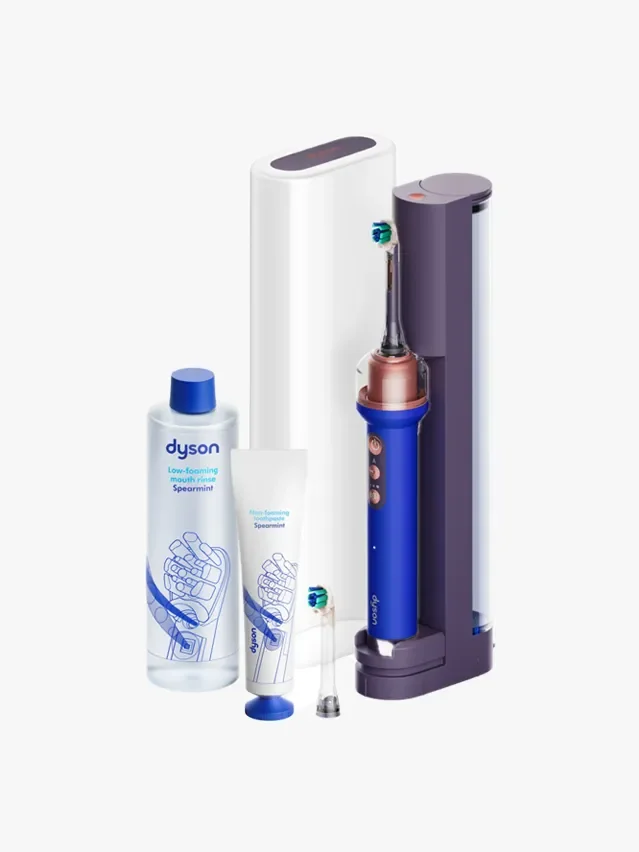
Every so often, a category you'd stopped thinking about gets the Dyson treatment. Hairdryers. Air purifiers. Now, teeth. The CameraJet, Dyson's first electric toothbrush, has a camera in the handle, a built-in water jet, an app, and a price tag of £419.99, and it has been impossible to avoid for the last few weeks, especially if you get on the London Underground at Oxford Circus. It's the kind of product that arrives with such total marketing saturation that the actual question, does it work, and is it worth the money, tends to get lost somewhere underneath the launch project.
So we asked someone whose job is to be unmoved by launch films. Dr Seb Lomas holds a first-class degree in chemistry and dentistry, is Clinical Director at Wonder of Wellness, and leads one of the UK's most complete biological dental practices. We sent him the Dyson research and asked him to separate what's genuinely clever from what's well marketed.
What Does the Dyson CameraJet Actually Do?
Strip away the branding and the CameraJet is doing three things at once. A macro lens in the brush head, reading 100,000 pixels and capturing 28 images a second, maps your mouth in real time and flags the spots you're missing. A conical jet, sitting alongside the bristles, fires mouthrinse into the gaps between your teeth while you brush, a job normally reserved for floss or an interdental brush. And underneath both of those, a fairly conventional sonic motor runs across three intensities, paired with three modes that let you brush and jet together, jet alone, or brush alone.
Dyson spent five years working with the National University of Singapore's Faculty of Dentistry to develop a “proxy plaque” model that let its engineers test the jet's effectiveness without running a clinical trial for every design tweak, and the brush is the first of its kind to combine a camera with targeted interdental cleaning in one device. Dr Lomas's first reaction to the engineering was closer to respect than scepticism.
“I think Dyson deserves some credit for the research behind the product,” he says. “According to the information provided, its development included a five-year research partnership with the National University of Singapore's Faculty of Dentistry and a clinical study. That's more meaningful to me than simply putting an app or some AI onto a toothbrush and calling it innovation.”
Would He Actually Recommend It?
Not to everyone, and not by default.
“I wouldn't say to every patient, 'You need to go and spend £400 on a toothbrush,'” he says. “You absolutely don't need to spend that amount of money to have a healthy mouth.”
But he's genuinely interested in what the device is trying to solve. “They've combined brushing with a camera, real-time guidance and targeted water-jet cleaning between the teeth, and that potentially addresses one of the biggest problems we see clinically: people are generally much better at brushing than they are at cleaning between their teeth.”
Two types of patient, specifically, stand out to him. The first is someone who brushes religiously but has never, despite being told at every check-up, taken up flossing or interdental brushes. “If putting everything into one device means that person actually cleans interdentally every day, then suddenly the technology becomes much more meaningful.” The second is anyone with significant restorative work, crowns, bridges, implants, where plaque-retentive margins are harder to reach and easier to miss. “Being able to visualise where they're cleaning and incorporate targeted interdental water-jet cleaning could potentially be much more useful” for that group than for someone with straightforward, healthy natural teeth.
What it doesn't do, he's clear, is replace correctly sized interdental brushes, floss, or professional hygiene visits where those are already indicated. It's a case for selective recommendation, not a blanket one.
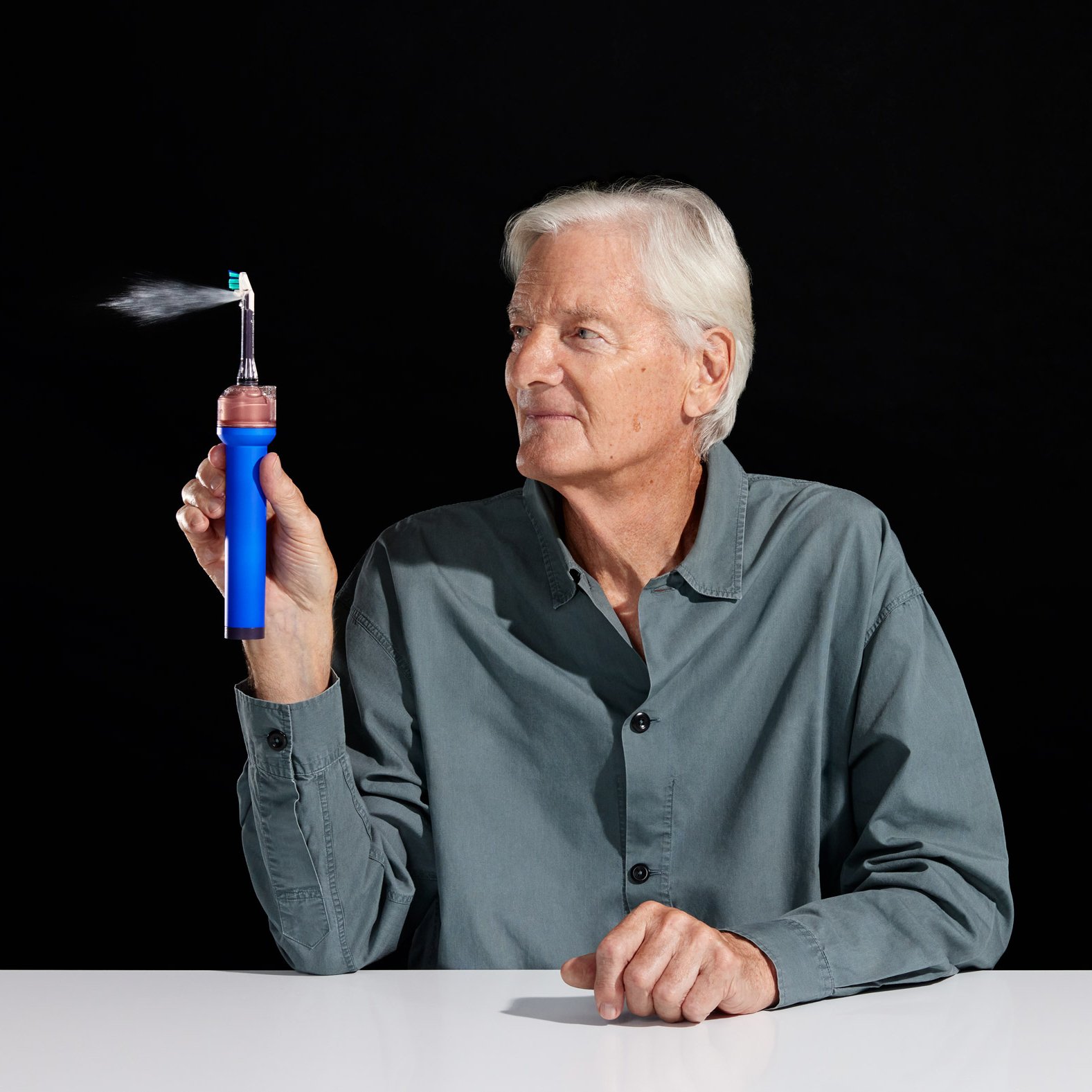
““The more complex someone’s mouth is, and the more they struggle with conventional interdental cleaning, the easier it becomes to see where technology like this might earn its price tag.”
”
Separating the Marketing From the Evidence
This is where Dr Lomas gets most exacting, and it's worth slowing down for.
Dyson has run a six-week clinical study involving 204 participants, comparing its Brush and Auto-jet mode against manual brushing, which he calls encouraging. But the headline figure attached to the launch, that the CameraJet removes 69% more plaque, comes from a separate piece of laboratory testing, comparing the brush-only mode against other premium electric toothbrushes. “Those aren't the same experiment, and I think that distinction matters when we're talking about evidence.”
Zoom out, and the problem the CameraJet is aiming at is a real one. Research cited in the material supplied to Dr Lomas puts average plaque removal from a single manual brushing at around 42%. Brushing alone, done well, still leaves well over half the job undone.
The water jet is the genuinely interesting part, and also the part most likely to be oversold. “Independent research appears to suggest that water flossers can be useful for reducing gingival inflammation and bleeding, although the evidence for plaque removal is less compelling,” Dr Lomas explains. A network meta-analysis comparing interdental cleaning methods ranked interdental brushes highest for plaque reduction, while water-jet devices performed more strongly on outcomes like gingivitis and bleeding. One group where water flossing shows a clearer advantage is around dental implants, with substantial reductions in bleeding compared with string floss. For natural teeth in the general population, though, the picture is far more balanced.
“So I wouldn't say that spending £400 automatically buys you £400-worth of additional oral health,” he says. “The value is more likely to come from whether the technology improves your behaviour, which for most people it does, but it doesn't replace flossing or interdental cleaning. This needs to be done fifty per cent of the time.”Words by Ellie Hammond for The Well Edit.
Where £420 Might Be Better Spent
Before recommending anyone hand over the money, Dr Lomas starts somewhere else entirely.
“If somebody came into my clinic with £400 to invest in their oral health, I wouldn't automatically tell them to spend all of it on a toothbrush. I'd rather first understand what's actually happening in their mouth. Do they have gingival inflammation? Periodontal disease? Early decay? Are they cleaning between their teeth? Are they applying too much pressure when brushing? What's their diet like? Are they mouth breathing? What does their oral microbiome and overall oral environment look like?”
For most people, he says, that £420 would go further split across professional hygiene visits, a good-quality electric toothbrush, an appropriate toothpaste and the correct interdental method for their particular mouth, than sunk entirely into one device. He points to the BON CHARGE red light toothbrush as one example, at roughly 35% of the CameraJet's price, of something addressing a related set of concerns for considerably less outlay. “That's the thing we sometimes lose with health technology: expensive doesn't necessarily mean healthier, usually just easier to achieve the same end result.”
The Actual Benefit Isn't the Motor
Ask Dr Lomas what he thinks the CameraJet genuinely gets right, and he doesn't point to the hardware.
“The biggest potential benefit for me isn't necessarily the motor in the toothbrush, it's the feedback and compliance. Most people brush their teeth on autopilot. They clean the same areas well and repeatedly miss the same areas without knowing it. A camera that allows technology to identify where you're cleaning, and potentially where you're missing, could be genuinely useful.” Paired with a jet that automates the interdental step most people skip, he can see it building a routine that actually sticks for someone who would otherwise never floss.
His one reservation is around independence. He'd like to see third-party clinical research, particularly longer-term studies that compare the CameraJet directly against established premium electric toothbrushes used alongside proper interdental cleaning, rather than relying on the manufacturer's own data.
And, as with any premium device, the sticker price isn't the whole cost. Proprietary replacement brush heads and the ongoing cost of ownership are part of the real total.
-
It depends who's asking. Dr Lomas says it isn't necessary for good oral health and shouldn't be recommended universally, but it can be genuinely worthwhile for people with complex restorative work (crowns, bridges, implants) or anyone who brushes consistently but won't floss, if the camera and built-in jet actually get them cleaning interdentally every day.
-
The 69% figure comes from separate laboratory testing of the brush-only mode against other premium electric toothbrushes, not from Dyson's clinical study, which tested the combined Brush and Auto-jet mode against manual brushing. They're two different pieces of evidence, and it's worth reading the claim with that distinction in mind.
-
Not entirely. Evidence reviewed by Dr Lomas suggests interdental brushes remain more effective at mechanically removing plaque, while water flossers tend to perform better for gum health and bleeding, especially around dental implants. Most mouths benefit from a combination rather than one replacing the other.
-
Two groups in particular: people with significant restorative dentistry (implants, crowns, bridges) where plaque-retentive margins are harder to clean, and people who brush well but have never taken up interdental cleaning of any kind.
-
Dr Lomas points to the BON CHARGE red light toothbrush, at roughly a third of the price, as one option addressing related concerns for considerably less. More broadly, he suggests most people would get more value from splitting their budget across professional hygiene visits, a good electric toothbrush and the correct interdental method for their mouth.
So, Is It Worth It?
“'Worth it' and 'necessary' are two completely different questions,” Dr Lomas says. “Is a £400 toothbrush necessary for excellent oral health? Absolutely not. Could this particular toothbrush be worth £400 to somebody who loves technology, can comfortably afford it, and most importantly cleans their mouth significantly better because the camera, feedback and integrated water jet make them more engaged and consistent? Yes, potentially.”
The patient he keeps coming back to is the one who brushes religiously but, despite being told at every appointment, has never once cleaned between their teeth. “If a device like this changes that behaviour, it could make a meaningful difference. Ultimately, the best oral-care technology isn't necessarily the one with the highest price tag. It's the one that helps you consistently clean the right areas, in the right way, without causing damage, and that you'll actually use every day.”
Even he's curious enough to want to try one. “I'd love to try it myself, though if nothing else, it could save me an extra minute or two on some days. That said, I personally wouldn't rely on water flossing alone. I'd still alternate it with mechanical interdental cleaning, such as the Slate flosser, because the evidence suggests water flossers can be particularly useful for improving gum health and reducing bleeding, but mechanical interdental cleaning remains more effective at physically disrupting plaque.”
“I’d never want patients to think that buying the most expensive toothbrush means they’ve bought the healthiest mouth.
”
Words by Dr Seb Lomas for The Well Edit
The content published by The Well Edit is for informational and educational purposes only. It is not intended as, and should not be relied upon as, a substitute for professional medical, health, nutritional, legal, or financial advice. While articles may reference insights from qualified practitioners or experts, the views expressed are their own and do not necessarily reflect the views of The Well Edit. Always seek the guidance of a qualified professional before making changes to your diet, lifestyle, supplementation, or healthcare routine.
Use of any information provided is at your own discretion and risk.