
Why Your Botox Isn’t Lasting
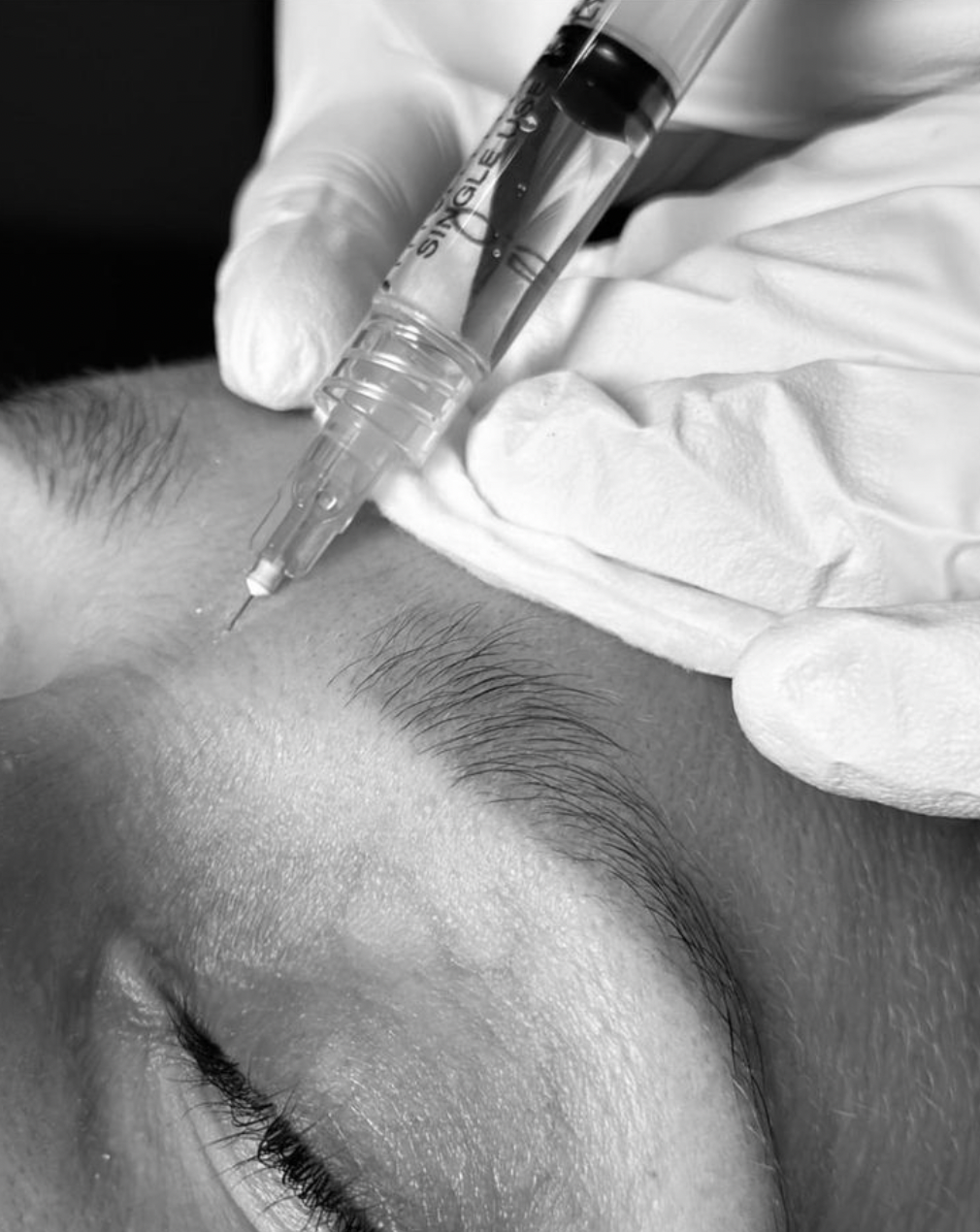
And The Rise Of The Skin-First Era
For years, Botox has been beauty’s favourite shortcut. A few strategic units, a softened forehead, the illusion of eight hours’ sleep. From “preventative” baby tox to routine top-ups once lines have etched themselves in, it has quietly become part of the maintenance calendar.
We’ve noticed more and more of us, both men and women, seeking the natural solution to most things, inflammation, recovery, coughs and colds and throwing everything at our wellness routines. But lately, a question being asked through treatment rooms and reported amongst practitioners: why isn’t my botox lasting like it used to?
At the same time, something else is happening. Searches for cosmetic acupuncture have surged, and the #NoTox conversation has drifted from niche to mainstream. Skin health, circulation, fascia, lymph, hormones. The new glow conversation is less about freezing and more about function. Whilst some of the most known individuals on the red carpet are undergoing facelifts beyond our capactiy, others (and the ones we idolise) and opting to showcase their finelines and instead focus on skin health. Rather than freezing the face, they’re optimising and embracing.
We spoke to leading practitioners across corneotherapy, cosmetic acupuncture and skin physiology to investigate what’s really going on and find out if there really is an alternative, and if not why isn’t it lasting.
If You’ve Had Botox Already, Why Doesn’t It Last?
Botox is a purified neurotoxin. It works by interrupting communication between nerves and muscles. How long it lasts depends on more than dose.
1. Heat Matters More Than You Think
If you’re a sauna regular, this one is for you. High heat increases circulation and metabolic activity. Infrared saunas, especially, are brilliant for relaxation and circulation support, but that same circulatory boost may accelerate how quickly Botox is metabolised. At the end of the day, you go into a sauna to support the natural detoxification of toxins, and botox is, a toxin.
Hence the rise of the “head out” sauna movement. Protect the face, protect the tox a little more like those from Bon Charge.
2. Your Metabolism Plays A Role
Ironically, the more efficient your detox pathways, the faster you may clear it. Robust liver function, strong kidney clearance, high metabolic turnover. All excellent markers of health. All potential reasons your Botox fades before the three-month mark.
If you prioritise sleep, movement, protein, hydration and sauna rituals, you might simply process it more quickly than someone who doesn’t. This isn’t to say that we shouldn’t be prioritising these things, at the end of the day these are the practices that will have the most impact on the appearance of your skin overall.
3. Muscle Memory And Repetition
Over time, muscles can adapt. If dosing is inconsistent or treatments are spaced irregularly, the pattern of contraction returns faster. It becomes less about “it stopped working” and more about neuromuscular retraining.
The Shift: From Paralysis To Physiology
For many, the bigger question isn’t how to make Botox last longer. It’s whether to rely on it at all.
Sarah Bradden, cosmetic acupuncturist and founder of The Bradden Method, describes her approach as a “natural facelift with a nervous system reset.” Think cosmetic acupuncture layered with microcurrent, LED, fascia release and lymphatic stimulation.
Unlike Botox, which pauses movement, these modalities ask the face to perform better whilst Sarah alos uses Traditional Chinese Method Practies as part of her treatments.
Microcurrent re-educates muscle tone.
LED stimulates collagen and repair pathways.
Facial massage enhances lymphatic drainage, reducing puffiness and stagnation.
All whilst a careful TCM assessment has been carried out looking at your tongue, pulse and addressed with acupuncure needles
The outcome is different. Less frozen stillness and instead, more luminous vitality.
Cosmetic acupuncture in particular bridges ancient medicine with modern aesthetics. Ultra-fine needles increase circulation, encourage collagen production and support systemic balance. It is not simply cosmetic. It is regulatory.
Skin Health First: The Corneotherapy Perspective
Ingrid Raphael, London aesthetician and corneotherapist at Skin Wisdom, reframes the entire conversation.
“Skin is a barrier organ first,” she explains. “If the barrier is compromised, no injectable will truly compensate.”
Corneotherapy focuses on restoring the stratum corneum, strengthening the skin’s outermost layer so it can hold hydration, resist irritation and respond optimally to treatment. Without that foundation, results may appear inconsistent or short-lived.
Her preferred protocol combines microneedling with tailored actives, enhanced by medical-grade LED such as Dermalux, alongside disciplined home care.
Can You Really “Eat Your Botox”?
There is no supplement that replicates neuromodulation. But skin resilience is absolutely nutritional. Collagen is protein dependent. Elastin integrity relies on micronutrients. The barrier requires essential fatty acids.
As a registered practitioner who specialises in skin conditions, the prescription we often start with for a skin-supportive baseline looks like:
Adequate protein intake for collagen synthesis, not just supplementing collagen but eating enough protein too
Omega-3 rich fats to maintain membrane integrity
Polyphenols from matcha, berries and greens
Vitamin C for antioxidant support and collagen formation
Zinc for repair
Reduced refined sugar to limit glycation and androgen excess contributing to breakouts
Hydration remains foundational. Dehydrated tissue exaggerates fine lines, reduces elasticity and compromises treatment outcomes. We’ve all looked in the mirror after consuming alcohol or too much caffeine to freak out about lines, but actually we need some cellular hydration.
Interestingly, each practitioner confirmed that in clinic, they are increasingly seeing clients pairing internal support with external technologies such as LED masks or microcurrent devices such as NuFACE or Therabody to reinforce tone between appointments.
The real question is not whether you can eat your Botox. It is whether you can build skin robust enough to need less of it.
Lifestyle: The Invisible Lever
So who’s going to think they need to be at the clinic? Well, sleep fragmentation elevates cortisol, which degrades collagen. Alcohol increases oxidative stress, and smoking directly damages dermal fibres.
Conversely, strength training, restorative yoga, breathwork and adequate protein intake all support connective tissue health.
Your face is not separate from your physiology. It is an extension of it and truly a reflection of what is going on inside.
The New Tweakments
The aesthetic landscape is expanding. Beyond Botox, we’re seeing increased interest in:
Microneedling for collagen induction
Polynucleotides to support repair and elasticity
Exosome-based regenerative treatments
Cosmetic acupuncture for systemic and dermal support
Each works differently. None rely on freezing movement. All aim to train the skin to function more intelligently.
So, Is Botox Over?
Not necessarily.
Botox remains a useful tool when applied thoughtfully. But it works best as part of a broader ecosystem. Barrier health. Circulation. Nutrition. Nervous system regulation.
The future of aesthetics feels less like erasure and more like optimisation whilst bringing together different therapies that compliment and optimize the other. Rather than being anti-ageing, it’s prioritising pro-function.
Let’s continue this exploration in part 2 where we can find out what we can do instead and in addition to optimise the tweakments and treatments.
Words by Eleanor Hoath for The Well Edit
The content published by The Well Edit is for informational and educational purposes only. It is not intended as, and should not be relied upon as, a substitute for professional medical, health, nutritional, legal, or financial advice. While articles may reference insights from qualified practitioners or experts, the views expressed are their own and do not necessarily reflect the views of The Well Edit. Always seek the guidance of a qualified professional before making changes to your diet, lifestyle, supplementation, or healthcare routine.
Use of any information provided is at your own discretion and risk.